
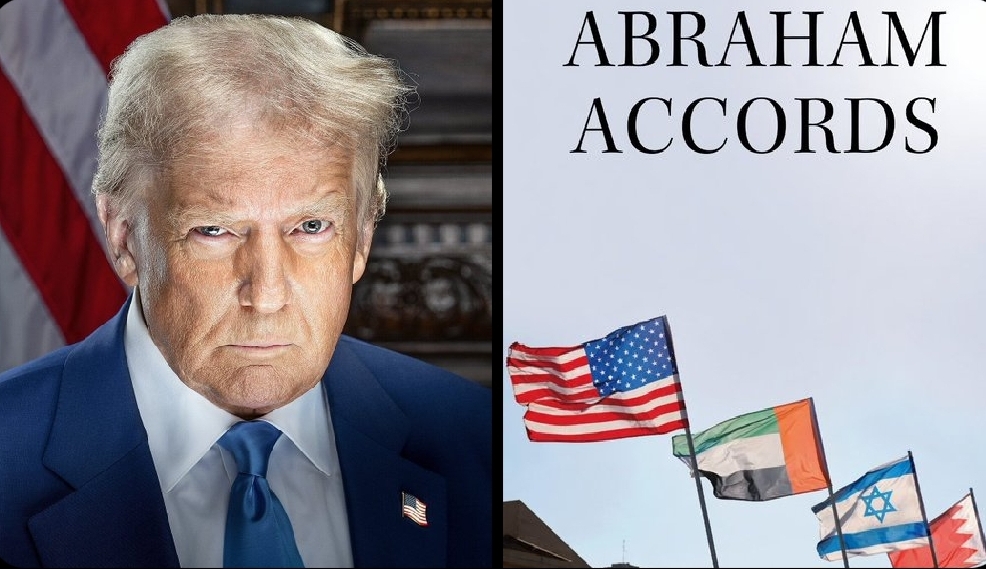
U.S. President Donald Trump has reportedly intensified pressure on Middle Eastern diplomacy by demanding that countries including Saudi Arabia, Pakistan, and several others formally sign onto the Abraham Accords as part of any future agreement involving Iran. The development signals a broader attempt to reshape regional alliances while using diplomatic normalization as leverage within ongoing negotiations surrounding Iran’s nuclear ambitions and regional influence.
The Abraham Accords, initially brokered during Trump’s first administration, established diplomatic normalization agreements between Israel and several Arab nations, fundamentally reshaping political alignments in the Middle East. Supporters viewed the accords as a historic breakthrough capable of reducing regional hostility and increasing economic cooperation, while critics argued they bypassed unresolved Palestinian issues and primarily served strategic anti-Iran objectives.
Trump’s latest position suggests that any future engagement with Iran would extend beyond nuclear negotiations and evolve into a wider geopolitical restructuring effort. By encouraging additional Muslim-majority nations such as Pakistan and Saudi Arabia to formally join the normalization framework, Washington appears to be pursuing a broader coalition designed to contain Iranian regional influence politically, economically, and militarily.
Saudi Arabia’s involvement would carry especially significant implications because of the kingdom’s religious influence and strategic standing in the Islamic world. Pakistan’s inclusion also introduces a complex dimension given its domestic political sensitivities, longstanding ties across the Muslim world, and cautious balancing between competing regional powers.
Analysts believe the proposal reflects a major shift away from isolated nuclear diplomacy toward a more comprehensive regional realignment strategy. However, such ambitions may face resistance from countries unwilling to publicly deepen ties with Israel amid ongoing regional tensions and domestic political considerations. The push nonetheless demonstrates how future Iran negotiations may increasingly become tied to wider Middle Eastern power structures rather than focusing solely on nuclear restrictions.
