
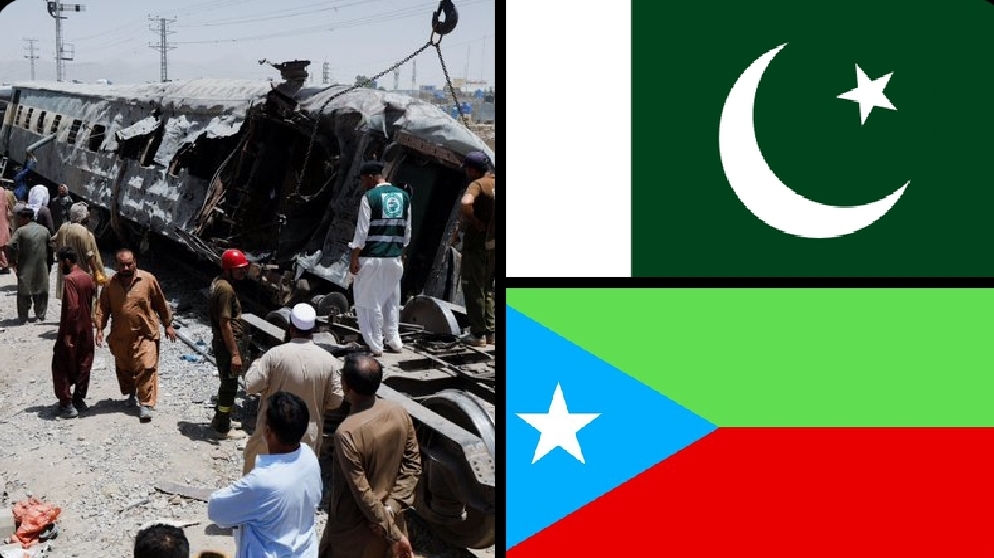
More than 30 people have reportedly been killed following a devastating train bombing in Pakistan, an attack claimed by the Baloch Liberation Army as part of its long-running separatist insurgency in the country’s southwestern Balochistan region.
The bombing represents one of the deadliest recent attacks linked to the insurgent movement, which has operated for years claiming that the province’s natural resources are exploited without adequate economic benefit reaching local populations. The Baloch Liberation Army, designated as a militant organization by several countries, has repeatedly targeted security forces, infrastructure projects, and transportation networks in pursuit of greater autonomy or independence.
Pakistan’s railway system remains a critical transportation backbone connecting major cities and economic corridors, making attacks on passenger trains especially alarming due to their civilian impact and symbolic significance. Authorities immediately launched security operations and investigations while emergency services responded to casualties and survivors.
The incident also raises broader concerns about regional security and internal stability at a time when Pakistan already faces economic pressures, political tensions, and growing geopolitical sensitivities linked to neighboring Afghanistan and Iran. Analysts warn that escalating insurgent violence could complicate infrastructure investment and regional trade initiatives, particularly projects connected to the China-Pakistan Economic Corridor.
The tragedy underscores the persistent security challenges confronting Pakistan and highlights how unresolved regional grievances continue fueling cycles of violence despite years of military operations and counterinsurgency efforts.
