
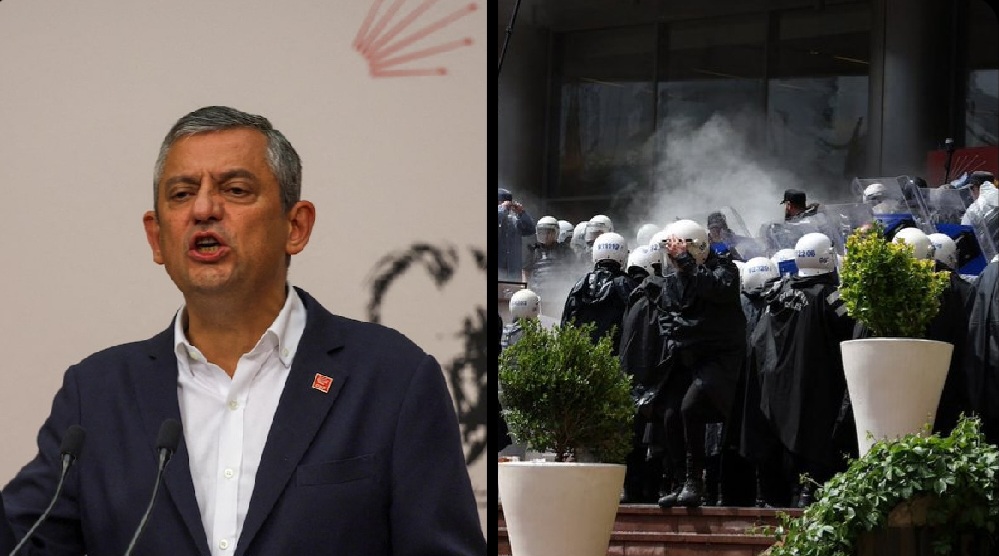
Ankara, Turkey – In a scene reminiscent of political turmoil in one of the region’s most strategically vital nations, Turkish riot police deployed tear gas and rubber bullets on Sunday, May 24, 2026, to forcibly evict ousted Republican People’s Party (CHP) leader Özgür Özel and his supporters from the party’s headquarters in the capital. The dramatic confrontation marks a sharp escalation in Turkey’s deepening political crisis, raising fresh alarms about judicial independence, democratic norms, and the stability of the main opposition force challenging President Recep Tayyip Erdoğan’s long-standing rule.
The operation unfolded after days of tension, with Özel and his allies barricading themselves inside the CHP building following a controversial appeals court ruling earlier in the week. On Thursday, the court annulled the results of the party’s 2023 congress, citing alleged irregularities such as vote-buying and issues with delegate selection. In a sweeping decision, the court reinstated Kemal Kılıçdaroğlu—the 77-year-old veteran politician who had previously led the CHP for over a decade and lost to Erdoğan in the 2023 presidential election—as the interim chairman.
Özel, who defeated Kılıçdaroğlu in that 2023 internal contest and had steered the CHP to notable gains in recent local elections, vehemently rejected the ruling. He labeled it a “judicial coup” orchestrated to weaken the opposition and consolidate power ahead of potential early elections. Vowing to remain “day and night” at the headquarters, Özel called for legal appeals, protests, and internal unity, framing the move as an attack not just on his leadership but on Turkish democracy itself. Supporters erected makeshift barricades, turning the party offices into a site of resistance as crowds gathered outside.
By Sunday, the standoff reached a boiling point. According to reports, representatives aligned with Kılıçdaroğlu requested police intervention to facilitate the handover of the building. Riot police moved in, dispersing crowds with tear gas and physical force. Videos and images circulating on social media showed chaotic scenes: clouds of gas billowing near the gates, officers clashing with party members, and injuries reported among protesters, including a provincial chair. Özel and several MPs were eventually removed, though the exact details of his departure remain under scrutiny.
This latest chapter in Turkey’s political drama comes at a sensitive time. The CHP had emerged as a formidable challenger to Erdoğan’s AKP party, capitalizing on economic discontent and securing victories in key municipalities. Analysts suggest the court intervention could fracture the opposition, reignite internal rivalries between the Özel and Kılıçdaroğlu factions, and pave the way for further instability. Markets reacted sharply to the initial ruling, with Borsa Istanbul dropping significantly and bond yields spiking, reflecting investor unease over governance and predictability.
Critics, including international observers, have expressed concern over the judiciary’s role. Human rights groups and some EU voices have highlighted patterns of legal actions targeting opposition figures, from mayors to party leaders. The CHP has announced plans to escalate the matter to higher courts, including the Supreme Court of Appeals, while calling for broader public mobilization. Kılıçdaroğlu’s team, meanwhile, positions the reinstatement as a return to legitimate order within the party statutes.
As night fell on Ankara, thousands of CHP supporters reportedly marched toward Parliament in protest, chanting in defense of their ousted leader. The events underscore the fragile balance in Turkish politics, where institutional decisions increasingly intersect with street-level confrontations. Whether this eviction strengthens or backfires on the ruling establishment remains to be seen, but one thing is clear: the battle for the soul of the CHP—and by extension, the opposition’s future—has entered a volatile new phase.
For Turkey watchers, this is more than an internal party dispute. It is a litmus test for democratic resilience in a country pivotal to regional security, migration, and global energy dynamics. As legal appeals proceed and protests mount, the coming days promise further developments that could reshape the political landscape ahead of any national vote.
