
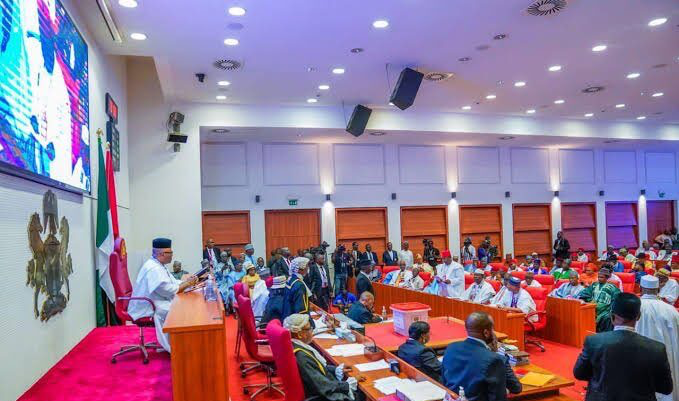
In a major move to reform the nation’s security structure, the Nigerian Senate has passed a constitutional amendment bill to establish state police across the country.
The executive bill, transmitted to the National Assembly by President Bola Tinubu, seeks to transition Nigeria from its current centralized single-force model to a dual policing system. Under the new framework, individual states will be legally empowered to run their own police services alongside the existing Federal Police Service.
The decision comes at a time when Nigeria faces intense pressure over rising security challenges, including widespread banditry and mass kidnappings. Proponents have long argued that a decentralized, community-based approach is essential for faster response times and better local intelligence gathering.
Key Provisions and Safeguards
To address long-standing fears that state governors might abuse local police forces for political gain, the legislation includes several strict oversight mechanisms:
Appointment Process: State governors will hold the power to appoint their respective Commissioners of Police. However, these appointments must be recommended by the National Police Council and officially confirmed by the state’s House of Assembly.
Political Protections: The bill explicitly prohibits state police forces from arresting, detaining, or investigating individuals, activists, or political groups simply for criticizing the government.
Federal Intervention Limits: The Federal Police Service retains the right to temporarily step in and take operational command if a state’s public order collapses and the local force cannot cope. This federal intervention must be personally authorized in writing by the President, and the relevant state leadership and the National Assembly must be formally notified within 48 hours.
