
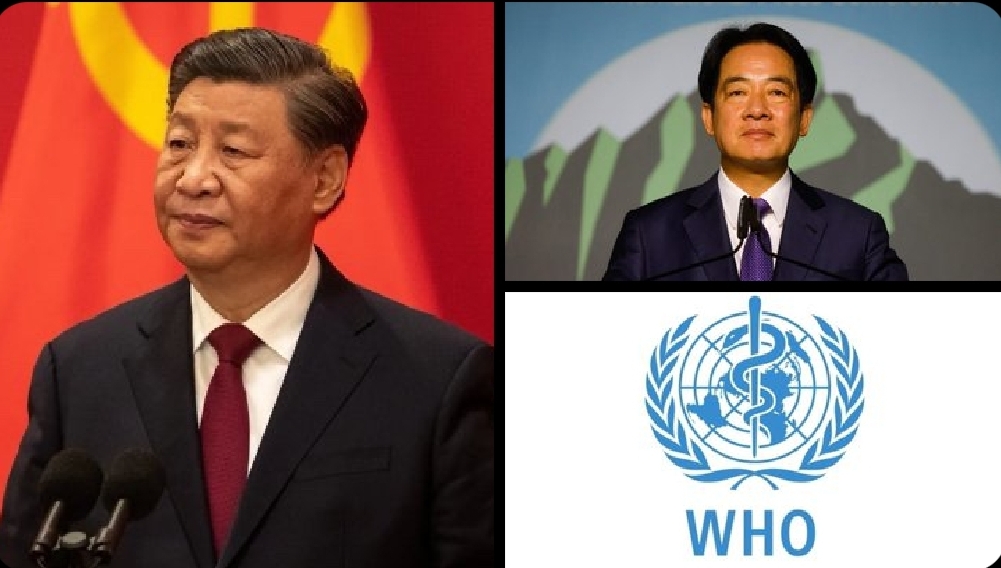
China has once again intensified geopolitical tensions in Asia after declaring it will not permit Taiwan to participate in the upcoming World Health Organization annual assembly, reigniting a long-standing dispute that blends global health cooperation with sovereignty politics. The decision underscores Beijing’s firm position that Taiwan is not an independent state but a province under Chinese authority, a stance that continues to shape international institutions and diplomatic engagement worldwide.
The World Health Organization operates under United Nations frameworks where membership and observer participation often reflect broader geopolitical alignments rather than purely technical health considerations. Taiwan previously attended the assembly as an observer between 2009 and 2016 under a diplomatic compromise, but participation ended as cross-strait relations deteriorated following the election of Taiwanese leadership viewed by Beijing as pro-independence.
Officials from China argue that allowing Taiwan to attend would violate the “One China” principle, which many countries formally recognize to maintain diplomatic relations with Beijing. Taiwanese authorities, however, maintain that exclusion from global health forums weakens international pandemic preparedness, pointing to Taiwan’s strong public health response during COVID-19 as evidence that political barriers undermine global cooperation.
The dispute reflects a wider strategic rivalry shaping the Indo-Pacific region. As tensions grow between China and Western powers over trade, technology, and military influence, Taiwan’s international participation has become a symbolic battleground representing competing visions of global order. Analysts warn that even technical organizations like health agencies are increasingly drawn into geopolitical competition, turning public health diplomacy into
