
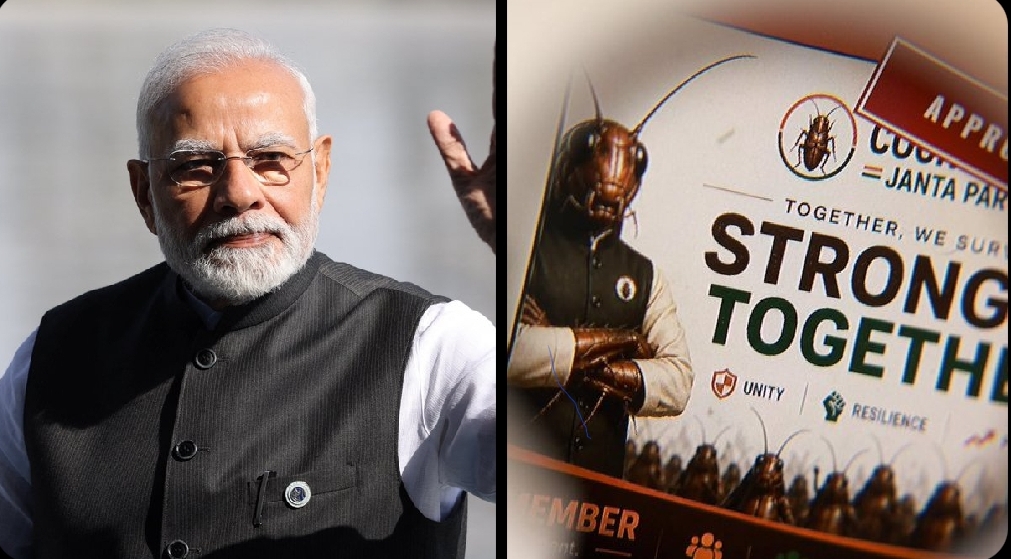
A rapidly growing youth-driven movement known as the “Cockroach” group has become one of the most talked-about political developments in India, drawing millions of online supporters while organizing street protests against issues ranging from unemployment and inflation to controversial examination scandals. What began as an internet-driven campaign has now evolved into a significant social movement that many observers believe reflects deeper frustrations among India’s younger generation.
The movement, formally known as the Cockroach Janta Party, has gained extraordinary traction on social media, reportedly attracting tens of millions of followers in a remarkably short period. Unlike traditional opposition parties, the group has positioned itself as a youth-centered protest platform rather than a conventional political organization. Its supporters argue that rising unemployment, increasing living costs, and repeated examination paper leaks have damaged confidence in institutions that many young Indians depend on for education and economic advancement.
The issue of examination integrity has become particularly sensitive. Several recent controversies involving leaked exam papers and grading disputes triggered widespread public outrage, especially among students who spent years preparing for highly competitive tests.
Combined with concerns about employment opportunities in a rapidly growing but uneven economy, the controversies have fueled a sense of frustration that the Cockroach movement has successfully tapped into.
What makes the movement especially notable is its willingness to directly challenge the political dominance of Narendra Modi, whose leadership has shaped Indian politics for more than a decade. While the group does not yet possess the organizational structure of a major political party, its influence online has generated enough attention to attract national scrutiny. Reports indicate that planned protests could place additional pressure on government officials already facing criticism over youth-related economic concerns.
Analysts caution against overstating the movement’s immediate political impact, but many agree it highlights an emerging reality in modern politics: digital communities can evolve into real-world mobilization forces with remarkable speed.
Whether the Cockroach movement develops into a lasting political force or remains a protest phenomenon, its rapid rise demonstrates the growing power of youth-driven activism in one of the world’s largest democracies. At a time when more than half of India’s population is under the age of 30, the concerns driving the movement may ultimately prove more significant than the movement itself.
