
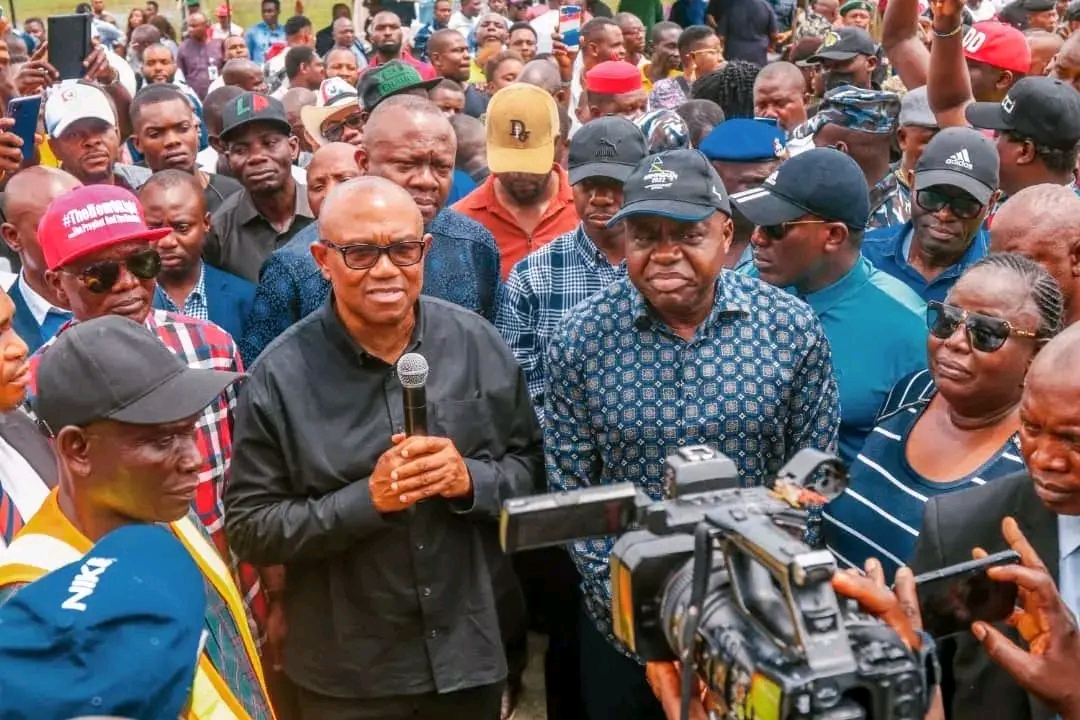
Political conversations across Nigeria have recently intensified following discussions and speculation about Peter Obi and possible political realignments involving the African Democratic Congress (ADC). Although Nigerian politics has always experienced party movements and alliances, any potential shift involving Obi attracts national attention because of his strong youth support base and growing political influence since the 2023 elections.
One major issue surrounding the debate is political strategy ahead of future elections. Since emerging as a major opposition figure under the Labour Party during the 2023 presidential race, Peter Obi built what many analysts describe as a movement-driven campaign rather than a traditional party structure. Supporters, popularly known as the “Obidient Movement,” see his political identity as larger than any single party. Therefore, discussions about decamping raise questions about whether a new platform could strengthen or weaken that political momentum.
Another concern revolves around ideological consistency. Nigerian voters increasingly demand politicians who demonstrate loyalty and clear political direction. Critics argue that frequent party changes in Nigerian politics often suggest opportunism rather than ideological conviction. Supporters, however, counter that party switching may sometimes be necessary when internal party structures fail to support reform-minded candidates or broader coalition building aimed at challenging dominant political forces.
Internal party dynamics also form part of the controversy. Political parties in Nigeria often struggle with leadership disputes, candidate selection processes, and power negotiations. Analysts suggest that conversations around ADC may reflect wider attempts by opposition figures to build a stronger alliance capable of competing effectively in future elections. In this context, potential political alignment discussions are viewed less as defection and more as strategic coalition politics.
Public perception remains another critical issue. Many young Nigerians who supported Obi during the 2023 election view him as a symbol of political change, transparency, and accountability. Any movement away from the Labour Party could therefore trigger mixed reactions among supporters — some may interpret it as political growth, while others may fear fragmentation of the reform movement that energized millions of first-time voters across Nigeria.
There is also the broader question of opposition unity. Nigeria’s political landscape has historically been dominated by large parties such as the All Progressives Congress and the People’s Democratic Party. Discussions about Obi’s possible alignment with ADC highlight ongoing attempts among smaller parties and reformist politicians to create a unified opposition capable of presenting a credible national alternative.
Ultimately, much of the debate reflects the evolving nature of Nigerian democracy. Political mobility, alliances, and party restructuring are common features of democratic systems worldwide. Whether or not Peter Obi formally decamps, the conversation itself shows how influential his political presence has become and how deeply citizens are invested in the future direction of opposition politics.
