OYO Gist
  • Home
  • Advertise With Us
  • Breaking News
  • Politics
    • Lagos
    • Oyo State
  • Entertainment
  • Celebrities
  • Business
    • money
    • Technology
  • International
  • People
  • sports
  • Health
Tuesday, June 9, 2026
OYO Gist
Your browser does not support the video tag.
  • Home
  • Advertise With Us
  • Breaking News
  • Politics
    • Lagos
    • Oyo State
  • Entertainment
  • Celebrities
  • Business
    • money
    • Technology
  • International
  • People
  • sports
  • Health
Breaking News
Kanye West officially a billionaire according to Forbes, see the breakdown
Here are the Top 10 Afrobeats Albums of the Decade (iTunes)
BREAKING: Supreme Court confirms Gov Seyi Makinde as the elected governor of Oyo State.
Victor Osimhen Asked to Convince Ademola Lookman to Join Galatasaray
Binance Stocks Surpasses $400 Million in Assets Under Management Within One Week
Nigerian Police Order Nationwide Seizure of Vehicles Without Number Plates
Ian Wright Blasts World Cup Travel Restrictions as Visa Chaos Overshadows Tournament
Arsenal Dreaming Big? Mikel Arteta Reportedly Wants Vinícius Júnior
Barcelona’s Camp Nou Renovation Hits Financial Roadblock
UAE Reportedly Reviewing Exposure to U.S. and British Banks Amid Global Financial Uncertainty
Real Madrid’s €150 Million Move for Julián Álvarez Rejected by Atlético Madrid
Iran Claims World Cup Ticket Allocation for Supporters Has Been Revoked
Trump Vows Response After Claiming Iran Shot Down U.S. Apache Helicopter
OYO Gist
OYO Gist
  • Politics
  • Entertainment
  • International
Copyright 2021 - All Right Reserved
How pricing, fibre and 5G collided in African telecoms in 2025
Breaking NewsTechnology

How pricing, fibre and 5G collided in African telecoms in 2025

by Ayodeji Onibalusi December 24, 2025
written by Ayodeji Onibalusi

In 2025, Africa’s telecommunications sector reached a pivotal moment. While cellular towers and base stations now cover vast swaths of the continent, a significant portion of the population remains offline due to prohibitive costs. Mobile network providers grappled with conflicting pressures-raising prices to sustain profitability amid fierce tariff wars, even as they offered discounts to retain customers. Meanwhile, fiber-optic infrastructure extended rapidly along coastlines and into urban centers, and 5G networks began illuminating city skylines. Yet, for many Africans, the expense of compatible devices remained a formidable barrier to connectivity.

This year was marked by stark contrasts. Africa’s digital infrastructure expanded at an unprecedented pace, but the benefits were unevenly distributed. The divide between network availability and affordability widened, and the gap between physical infrastructure and meaningful internet access became glaringly apparent. By 2025, these tensions forced telecom operators, regulators, and investors to confront difficult decisions regarding pricing strategies, network expansion, and the true meaning of sustainable growth.

Connectivity vs. Affordability: The Persistent Divide

By the end of 2024, mobile network coverage in Africa had reached approximately 88.4% of the population, according to the International Telecommunication Union (ITU). This theoretically meant that nearly everyone was within range of a mobile signal. However, actual mobile internet usage lagged significantly behind, with only about 416 million Africans-roughly 28% of the population-actively using mobile internet services as of September 2025, based on GSMA data. Overall internet penetration, including fixed broadband, remained between 36% and 38%, the lowest globally.

The core challenge lies in the disparity between coverage and actual usage. Although over 80% of Africans live within reach of 3G or higher networks, many remain disconnected due to the high cost of devices, limited digital skills, and low household incomes. Consequently, infrastructure is no longer the main obstacle; instead, demand-side factors dominate the connectivity landscape.

Economic Significance Amidst Slower Growth

Despite these hurdles, telecommunications continued to be a vital economic driver. In 2024, mobile services contributed an estimated $220 billion to Africa’s GDP, representing about 7.7% of the continent’s economic output. Unique mobile subscribers numbered around 710 million, nearly 47% of the population. While growth persisted, it was more gradual and contested compared to the rapid expansion seen in previous decades.

Intense Pricing Battles in an Inflationary Environment

Pricing strategies became the most visible arena of competition in 2025. Operators in key markets such as Nigeria, Kenya, South Africa, and Ghana launched aggressive promotions, bonus data packages, and app-specific bundles to protect market share amid rising inflation and the ongoing erosion of traditional voice and SMS revenues by over-the-top (OTT) services.

New entrants, including mobile virtual network operators (MVNOs) and satellite-based providers, intensified competitive pressures. Established players responded by adopting sophisticated segmentation tactics, bundling mobile data with fintech solutions, entertainment platforms, and fixed-wireless broadband offerings.

In Nigeria and South Africa, these tensions were particularly pronounced. In January 2025, the Nigerian Communications Commission authorized a historic 50% increase in regulated telecom tariffs-the first such hike in over ten years. Voice call rates rose from approximately ₦11 to ₦15.40 per minute, SMS fees increased from ₦4 to ₦5.60, and the benchmark price for 1GB of data climbed from about ₦1,000 to at least ₦1,400.

The market reacted swiftly. MTN Nigeria and SWIFT Networks were among the first to implement price increases, with MTN adjusting popular bundles beyond the official tariff rise before issuing a public apology. Airtel Nigeria followed suit, restructuring plans and raising prices by roughly 50%. By mid-2025, the average cost of 1GB of data had surged to approximately ₦430-₦450 ($0.31), up from under ₦300 prior to the tariff adjustment and bundle repricing.

Meanwhile, South Africa reignited debates over “data expiry” policies. Parliament advocated for non-expiring or extended-validity data bundles, citing consumer protection concerns, while operators like MTN and Vodacom argued that eliminating data expiry was impractical and could disrupt pricing models, potentially increasing costs for low-income users.

Revenue Growth and Consumer Backlash

The tariff revisions provided operators with much-needed financial relief, enabling increased investment. By Q2 2025, MTN and Airtel reported average revenue per user (ARPU) growth of around 31% to 32%. Industry figures indicated that Nigerians were spending approximately ₦721 billion ($480.7 million) monthly on data services by mid-year, even as consumer advocacy groups raised alarms about worsening affordability.

Telecoms’ contribution to Nigeria’s GDP rebounded sharply, with Q3 output reaching about ₦4.4 trillion ($2.93 billion). Operators unlocked over $1 billion in new infrastructure investments, directly linking higher tariffs to capital expenditure increases.

However, the price hikes also exacerbated the digital divide. For millions of low-income users, rising data costs forced them to ration internet usage or disconnect entirely, despite the expansion of network coverage around them.

Fiber Optics: The Strategic Backbone

While pricing dominated consumer-facing competition, fiber-optic infrastructure became the strategic battleground behind the scenes. Across Africa, telecom companies, governments, and neutral-host infrastructure providers raced to secure fiber routes connecting subsea cables to urban centers, data centers, and 5G sites.

New subsea cable systems, such as the Medusa cable-which landed in Bizerte, Tunisia, in November 2025-and the SEA-ME-WE-6 cable, which completed its Egyptian landing in July 2025, have transformed regional connectivity. By September 2025, the 2Africa cable had established landings along both the west and east African coasts, significantly boosting international bandwidth for countries including Nigeria, South Africa, Kenya, Senegal, and Ghana. Together with Google’s Equiano cable, these systems have driven down wholesale bandwidth costs and positioned key coastal markets as regional interconnection hubs.

Governments have also played a crucial role. In Nigeria, the World Bank approved $500 million toward a $2 billion public-private initiative to deploy 90,000 km of fiber by late 2025, enhancing inland coverage and 5G readiness. Similar national and regional fiber backbones are emerging across East and Southern Africa.

Kenya is expanding its National Optic Fibre Backbone Infrastructure (NOFBI) to connect counties and border regions, linking neighboring countries such as Uganda, Ethiopia, South Sudan, and Tanzania. World Bank-supported transport corridors, including the Northern Corridor and the Lamu Port-South Sudan-Ethiopia Transport (LAPSSET) project, are also facilitating fiber deployment.

In Southern Africa, providers like Openserve, Liquid Intelligent Technologies, and WIOCC connect subsea cable landings to major cities and neighboring countries, creating multi-country backbone rings. Landlocked nations such as Uganda, Rwanda, and Zambia have developed wholesale fiber backbones aligned with the African Union’s “digital superhighway” vision, reducing costs and dependence on a limited number of mobile network operator-controlled routes, similar to Nigeria’s open-access fiber model.

Data Centers and the AI Revolution

Africa hosts over 150 active data centers, with South Africa (25.1%), Nigeria (15%), and Kenya (13.3%) holding the largest shares. New carrier-neutral data centers are clustering near major subsea cable landing stations and are interconnected by high-capacity fiber rings. This infrastructure reduces latency and backhaul expenses, enabling low-latency services for enterprises and global cloud providers.

This evolution has shifted telecom operators’ growth strategies. While consumer mobile services remain important, enterprise connectivity, data center interconnection, and wholesale fiber have emerged as more reliable revenue streams. Control over prime fiber routes is increasingly critical to capturing the next wave of digital demand.

In 2025, leading African operators accelerated fiber backhaul investments to support 5G rollouts and high-speed home broadband in key markets. Airtel Africa, MTN, Safaricom, and Liquid Intelligent Technologies expanded long-haul capacity in Nigeria and Kenya. Airtel Nigeria increased capital expenditure to $875-$900 million, Safaricom expanded its 5G network to 1,700 sites covering 30% of the population, MTN’s Bayobab project targeted 135,000 km of proprietary fiber, and Liquid leveraged its 110,000 km network to enhance middle-mile connectivity for 5G and cloud services.

Vodacom Group pursued a similar approach, acquiring a 30% stake in Maziv (Vumatel and DFA) for $790.49 million, allocating $1.38 billion in regional capital expenditure, and entering an infrastructure-sharing agreement with Airtel Africa to accelerate 5G backhaul in Tanzania, Mozambique, and the Democratic Republic of Congo.

5G Expansion and Monetization Challenges

While fiber quietly reinforced the industry’s foundation, 5G remained the most visible symbol of progress. In 2025, South African operators transitioned from pilot projects to broader mid-band 5G deployments, focusing on Fixed Wireless Access (FWA) to deliver high-capacity broadband to homes and businesses.

Telkom South Africa emphasized FWA to grow its broadband ecosystem, Vodacom deployed dual-band massive MIMO technology to enhance FWA capacity, MTN achieved 44% population coverage with a focus on mid-band FWA and private networks, and Rain solidified its position with uncapped 5G home WiFi services. FWA emerged as a significant revenue contributor, accounting for 24% of 5G earnings as router prices dropped below $80.

In Nigeria, operators continue to market 5G as a fixed broadband alternative, offering home routers and uncapped or high-capacity data plans in urban centers like Lagos, Abuja, and Port Harcourt, where fiber or copper infrastructure is limited.

In East Africa, Safaricom more than doubled its 5G sites in Kenya during 2025, increasing from 803 to 1,700 sites and covering about 30% of the population as part of national broadband objectives.

North African countries such as Tunisia and Egypt launched commercial 5G services in early to mid-2025. Morocco’s telecommunications regulator, ANRT, awarded 5G licenses to Maroc Telecom, Orange, and inwi, mandating at least 45% population coverage by 2026 and 85% by 2030, making regulatory targets a key driver of rollout.

Despite these deployments, 5G monetization remains limited. By 2024-2025, 5G accounted for only 1-2% of mobile connections in Sub-Saharan Africa, with 98-99% of SIM cards still operating on 2G to 4G networks. Depending on the country, 4G connections comprised roughly one-third to nearly half of all mobile subscriptions.

Entry-level 5G smartphones in markets like Nigeria cost between ₦160,000 ($114) and ₦200,000 ($143), more than three times the monthly minimum wage. GSMA estimates that a basic smartphone consumes about 48% of a low-income earner’s monthly income. As a result, millions continue to use 3G and 4G devices, which provide sufficient speeds for popular applications such as WhatsApp, streaming, and mobile money. This creates a paradox: capital-intensive 5G networks are being deployed in markets where basic affordability remains a significant constraint.

Operator Transformation and Strategic Shifts

These challenges have compelled operators to reconsider their business models. T2 Nigeria, formerly known as 9mobile and the country’s fourth-largest operator, exemplifies this trend.

Under new ownership, T2 embarked on a multi-stage turnaround, beginning with stabilization and progressing to extensive modernization. Years of underinvestment had left its infrastructure outdated, necessitating a comprehensive rebuild of radio networks, core systems, transmission infrastructure, and billing platforms.

The transformation culminated in a full rebranding to “T2” in August 2025, positioning the company as a digital-first contender. Executives framed the new identity as a symbol of renewed competitiveness, supported by shareholder commitments to fund network upgrades and reposition the brand in an increasingly competitive market.

While the success of this reinvention remains uncertain, it reflects a broader industry reality: stagnation is no longer an option.

Satellite Connectivity Joins the Mix

Alongside fiber and 5G, 2025 marked a turning point for satellite and mobile network integration. On May 5, 2025, Airtel Africa announced a landmark partnership with SpaceX to introduce Starlink Direct-to-Cell connectivity across its 14 markets, serving 174 million customers.

Scheduled to launch in 2026, this service will enable compatible smartphones to connect directly to satellites in areas lacking terrestrial coverage. For Airtel, the partnership offers a means to extend connectivity into remote regions where fiber and towers are economically unviable, reinforcing its commitment to digital inclusion.

This collaboration signals a shift in network strategy: satellite connectivity is increasingly viewed not as a replacement for terrestrial infrastructure but as a complementary solution that fills coverage gaps in hard-to-reach areas.

Facing Complex Trade-offs in Africa’s Telecom Future

In 2025, Africa’s telecommunications sector entered a more nuanced phase of development. Pricing reforms restored operators’ investment capacity but intensified affordability challenges. Fiber deployment surged, primarily in urban and economically strategic corridors. 5G networks expanded rapidly, even as many consumers hesitated to upgrade due to cost constraints.

This convergence of pricing pressures, fiber expansion, and 5G rollout forced the industry to grapple with a fundamental dilemma: how to balance financial viability with inclusive growth. A definitive solution remains elusive.

What is undeniable is that 2025 marked a structural turning point. The era of effortless subscriber growth has ended. Africa’s telecom trajectory will be shaped not only by the speed of network expansion but also by who can afford to access these networks-and who risks being left behind.


December 24, 2025 0 comments
0 FacebookTwitterPinterestLinkedinRedditWhatsappTelegramViberEmail
Here is why bank transfers in Nigeria will cost more from 2026
Breaking NewsTechnology

Here is why bank transfers in Nigeria will cost more from 2026

by Ayodeji Onibalusi December 24, 2025
written by Ayodeji Onibalusi

Welcome to Follow the Money, our weekly deep dive into the revenue streams, operational tactics, and expansion plans of African fintech companies and financial institutions. Tune in every Monday for fresh insights.

Upcoming Changes in Nigeria’s Electronic Transfer Fees

Starting January 2026, transferring ₦50,000 (approximately $34.14) via your banking app could incur an additional ₦100 in fees. This increase isn’t due to banks altering their charges but stems from a government policy shift regarding who shoulders the cost of electronic money transfers.

Five years after the Electronic Money Transfer Levy (EMTL) replaced the traditional stamp duty, Nigeria is reinstating stamp duties as outlined in recent budget proposals. This policy reversal will significantly impact how everyday digital transactions are processed and charged. Introduced in 2020, the EMTL imposed a flat ₦50 fee on electronic transfers of ₦10,000 ($6.83) and above, paid by the recipient. This was part of Nigeria’s strategy to diversify government revenue beyond oil and capitalize on the booming e-payments sector, which reached a staggering ₦1 quadrillion in transaction value in 2024.

From EMTL to Stamp Duty: What’s Changing?

Under the Nigeria Tax Act 2025, the EMTL has been rebranded as stamp duty and broadened to cover various chargeable instruments, including tax stamps, electronic tagging, digital receipts, and certificate issuance. The government has emphasized strict enforcement of these regulations to maximize revenue collection over the coming years.

Crucially, the ₦50 charge will no longer be deducted once from the recipient’s funds. Instead, from 2026 onward, the sender will bear this cost, making stamp duty an additional fee layered on top of existing transfer charges.

This shift transforms what was previously a hidden cost for recipients into a visible, recurring expense for senders, potentially altering consumer habits, fintech pricing strategies, and the government’s reliance on digital payments as a sustainable revenue source.

Impact on Consumers and Businesses

Currently, most bank customers pay transfer fees based on the amount: ₦10 for transfers under ₦5,000; ₦25 for amounts between ₦5,001 and ₦50,000; and ₦50 for transfers exceeding ₦50,000.

From 2026, sending ₦10,000 or more will cost between ₦75 and ₦100 per transaction, depending on the amount, with the sender absorbing the full fee. Recipients will receive the full amount without deductions.

For businesses, this change means they no longer need to deduct ₦50 from incoming payments, simplifying accounting. Point-of-Sale (PoS) agents, who typically incorporate all fees into withdrawal charges, will also no longer deduct the ₦50 from transfers above ₦10,000. However, this adjustment increases the financial burden on those initiating transactions, unlike before when costs were shared between sender and receiver.

Fintech companies such as OPay and PalmPay, which have attracted users through low or zero transfer fees, will now face challenges as transactions above ₦10,000 incur additional costs for senders. The rapid adoption of digital payments in Nigeria has been driven by their speed, convenience, and affordability. Each new fee layer threatens to erode these advantages. While the government’s goal is to fund public services through these charges, Nigerians will feel the impact as they pay ₦50 more every time they send money across platforms.

Financial Implications and Revenue Projections

The EMTL has become a modest but expanding revenue source for the Nigerian government. In 2024, it generated ₦219.11 billion ($149.61 million), surpassing the projected ₦174.24 billion ($118.98 million). From January to July 2025 alone, collections reached ₦211.75 billion ($144.59 million), already 92% of the full-year target of ₦228.85 billion ($156.27 million).

This growth was largely fueled by extending the levy to fintech platforms like OPay, PalmPay, and Moniepoint, which were initially exempt. Since December 2024, fintech transactions have been fully incorporated into the tax net.

With the expanded stamp duty framework, the government forecasts revenues of ₦456.07 billion ($311.42 million) in 2026, increasing to ₦579.82 billion ($395.92 million) in 2027, and reaching ₦752.45 billion ($513.79 million) by 2028. These projections are integral to medium-term fiscal planning, positioning stamp duty as a cornerstone of Nigeria’s non-oil revenue strategy.

Revenue distribution under EMTL allocated 15% to the federal government, 50% to states, and 35% to local governments. The new tax law adjusts this split, reducing the federal share to 10% while increasing states’ portion to 55%.

Broader Tax Reform Context

The replacement of EMTL with stamp duty is part of a comprehensive tax reform package set to take effect in January 2026. According to government statements, these reforms aim to enhance tax collection efficiency and boost non-oil revenue streams, critical for Nigeria’s economic diversification.

While the additional ₦50 fee per transfer may seem minor individually, when multiplied by millions of daily transactions, it accumulates into hundreds of billions of naira in government revenue. However, this also gradually diminishes the affordability of digital payments for everyday Nigerians who depend on fast, low-cost money transfers.

Exchange rate used: ₦1,464.5 = $1

December 24, 2025 0 comments
0 FacebookTwitterPinterestLinkedinRedditWhatsappTelegramViberEmail
Day 1-1000 of Travella: “We are the future of decentralised logistics”
Breaking NewsTechnology

Day 1-1000 of Travella: “We are the future of decentralised logistics”

by Ayodeji Onibalusi December 24, 2025
written by Ayodeji Onibalusi

Revolutionizing Nigerian Logistics: The Story of Travella’s Consumer-Powered Delivery Model

Identifying the Flaws in Nigeria’s Traditional Logistics Landscape

In 2016, Moses Ogunranti encountered firsthand the inefficiencies embedded in Nigeria’s logistics framework. After collaborating with GreenLab Microfactory-a social innovation hub-to create affordable robotic kits for children, he quickly realized that distributing these kits nationwide was prohibitively expensive. Despite the kits’ low production costs, domestic shipping fees severely eroded profit margins. Even sourcing components locally posed challenges; for instance, purchasing parts in Lagos for ₦1,500 (approximately $1.03) would cost an additional ₦4,500 ($3.08) just to transport them to his office.

The core issue was that no existing logistics providers were effectively addressing these problems. Established companies charged steep fees with slow delivery times, while informal transporters offered speed but lacked accountability. Startups that simply aggregated prices from popular logistics firms failed to offer a genuine solution. Ogunranti recognized that a fresh approach was necessary to disrupt the status quo.

Innovating with Peer-to-Peer Logistics: The Birth of Travella

By 2018, an innovative idea sparked in Ogunranti’s mind: what if everyday travelers could carry packages along their routes and earn income simultaneously? This concept laid the foundation for Travella, a pioneering consumer-driven logistics platform launched in January 2021 alongside co-founder Olufemi Christopher Agboola.

Travella empowers anyone commuting between cities-whether by public transport or private vehicle-to participate in parcel delivery. Travelers can carry up to five packages, each weighing less than 3 kilograms, and earn an average of ₦10,000 per trip. Senders declare the weight and value of their parcels upfront, ensuring transparency and ease of use.

Scaling Up: From Startup to Funded Venture

Within three months of operation and a user base of 100, Ogunranti sought to expand Travella’s reach. He appeared on Lion’s Den Nigeria, a prominent pan-African investment show inspired by Shark Tank. As a 23-year-old student at the Federal University of Technology, Akure (FUTA), Ogunranti successfully secured funding from three investors, validating the potential of his peer-to-peer logistics model.

However, a significant hurdle was trust-how could senders be confident that travelers would deliver packages reliably? Travella tackled this by treating travelers as independent contractors, subjecting them to background checks and a rating system similar to ride-hailing platforms. Each traveler is verified through their Bank Verification Number (BVN), providing essential identity and location data.

Additionally, Travella employs GPS tracking to monitor parcel journeys in real time and offers insurance coverage to protect customers against loss or damage. Yet, ensuring seamless communication between senders and travelers remained a challenge to overcome.

Building Momentum: Gaining Market Traction and Customer Loyalty

Following the Lion’s Den broadcast in early 2022, Travella’s visibility surged, fueled by social media buzz and word-of-mouth referrals. Small and medium-sized enterprises (SMEs) especially embraced the platform, attracted by its promise of affordable, rapid delivery-an elusive combination in Nigeria’s centralized logistics sector.

Ogunranti emphasizes, “We provide clients with cost-effective, 24-hour delivery services, which traditional logistics companies struggle to offer simultaneously.” Initially, Travella operated a negotiation-based pricing system, allowing customers to propose delivery fees. While innovative, this approach soon revealed practical limitations.

Refining the Model: Transitioning to Standardized Pricing

By late 2023, the bargaining system began to generate friction between senders and travelers, complicating transactions and frustrating users. Ogunranti reflects, “The constant haggling was stressful and inefficient, especially for small business owners who needed straightforward logistics solutions.”

In response, Travella adopted a fixed pricing structure in early 2024, charging a flat fee of ₦4,500 ($3.08) for parcels up to 3 kilograms. This change streamlined operations and improved user satisfaction, while allowing the company to generate sustainable revenue.

Expanding Reach and Enhancing Reliability: The Road Ahead

Having completed over 10,000 successful deliveries nationwide, Travella is steadily earning the trust of its growing customer base. Ogunranti guarantees delivery within 36 hours; if delays occur, a dedicated recovery team intervenes to expedite shipments and issue full refunds to senders.

To address last-mile delivery challenges, Travella has established offices at strategic transit hubs across key routes such as Ibadan-Lagos, Abuja-Lagos, and Ondo-Lagos. Travelers drop off packages upon arrival, and Travella coordinates final deliveries based on customer preferences.

Looking forward to 2026, Travella plans to introduce more flexible drop-off options and expand its national footprint. The company is also laying the groundwork for international logistics services, aiming to become the world’s leading decentralized delivery network.

December 24, 2025 0 comments
0 FacebookTwitterPinterestLinkedinRedditWhatsappTelegramViberEmail
Cardtonic eSim vs Airalo eSim: Which Offers Better Value for Frequent Travellers?
Breaking NewsLifestyle

Cardtonic eSim vs Airalo eSim: Which Offers Better Value for Frequent Travellers?

by Ayodeji Onibalusi December 23, 2025
written by Ayodeji Onibalusi

Revolutionizing Travel Connectivity: A Comparative Review of Cardtonic and Airalo eSIMs in Africa

In today’s digital age, eSIM technology has transformed how travelers maintain seamless mobile connectivity without the hassle of physical SIM cards. The traditional inconvenience of waiting in long lines to purchase local SIMs upon arrival is rapidly becoming a thing of the past. This innovation is gaining significant traction across Africa, offering a convenient and efficient solution for globetrotters.

For frequent travelers, securing dependable network coverage at a reasonable cost remains paramount. Beyond just connectivity, users seek reliability and flexibility in their mobile data plans.

Introducing the Leading eSIM Providers in Africa: Cardtonic and Airalo

Among the eSIM options available, Cardtonic and Airalo have emerged as prominent contenders, each with unique features tailored to different traveler needs. This article delves into a detailed comparison of these two platforms, evaluating their coverage, pricing structures, plan variety, payment methods, customer support, and additional benefits to help you decide which offers superior value for frequent travelers.

Cardtonic eSIM: A Fintech Powerhouse Tailored for African Travelers

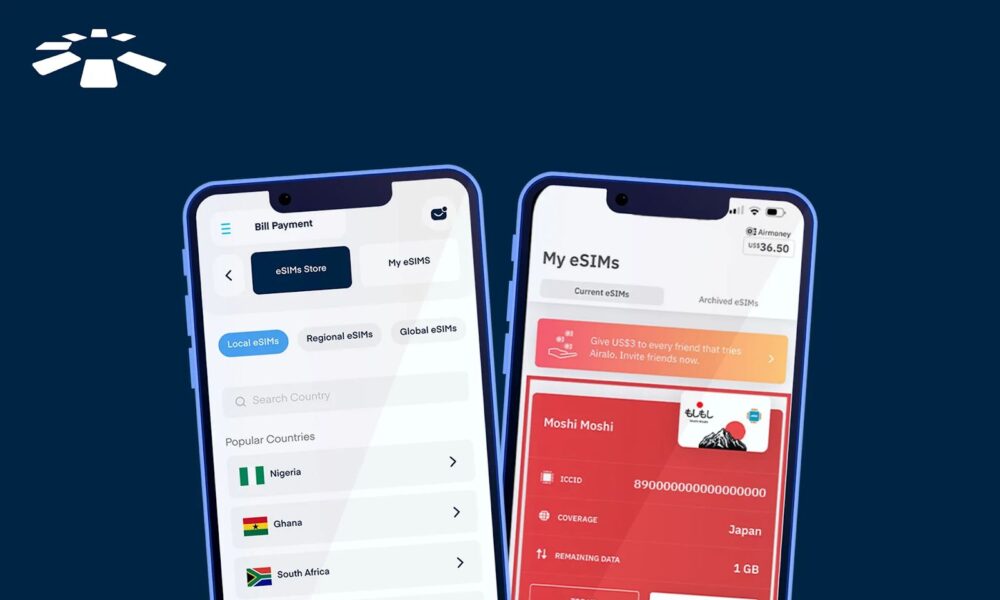
Launched in 2025, Cardtonic is a leading fintech company operating primarily in Nigeria and Ghana. Its eSIM service supports connectivity in over 140 countries, enabling travelers to enjoy flexible data plans abroad without incurring roaming charges. Beyond eSIMs, Cardtonic’s app integrates multiple services including gift card trading, local and international bill payments, gadget sales, and virtual card issuance, making it a versatile digital platform.

Airalo eSIM: A Global Pioneer in eSIM Solutions

Founded in Singapore in 2019, Airalo has rapidly grown into one of the world’s largest eSIM marketplaces, offering coverage in over 200 countries. It caters to a global audience with a wide range of local, regional, and international data plans accessible through a dedicated mobile app. Airalo’s extensive reach and multilingual support make it a favorite among international travelers.

Head-to-Head Comparison: Cardtonic vs Airalo eSIM

S/NCriteriaCardtonic eSIMAiralo eSIM
1User ExperienceInstant activation with a straightforward app interface; supports direct installation, QR code, or manual setup.Quick and simple installation via app; offers detailed device compatibility guides; supports direct, QR code, or manual installation.
2Network CoverageConnectivity in 140+ countries, including major African, European, and American destinations.Extensive coverage spanning 200+ countries worldwide, with app support in over 50 languages and six currencies.
3Pricing and PlansAffordable plans starting at $4.50 for 1GB valid for 7 days (~$0.64/day), ideal for light to moderate data use.Plans begin at $4 for 1GB valid for 3 days (~$1.33/day); offers global plans with data, calls, texts, and unlimited data options.
4Payment MethodsSupports payments via bank transfers and gift cards; wallet funding available in Nigerian Naira and Ghanaian Cedis.Accepts debit cards, PayPal, and Google Pay; supports transactions in six major currencies including USD, GBP, and EUR.
5Customer Support & RatingsRated 4.6 stars from 19,000+ Play Store reviews; offers 24/7 responsive customer service.Rated 4.5 stars from 137,000+ Play Store reviews and 4-star Trustpilot rating; 24/7 support via in-app chat and WhatsApp.
6Additional FeaturesMulti-service app integrating eSIMs, virtual cards, bill payments, and gadget sales; offers discounts.Loyalty rewards program with up to 10% cashback; Refer and Earn scheme to accumulate Airmoney credits.

User-Friendliness and Setup Process

Getting started with Cardtonic is intuitive: users simply navigate to the “Bills and eSIM” section within the app, select their preferred plan, and complete the purchase. Installation is seamless, with options for direct device support, QR code scanning, or manual input, all completed within minutes without technical complications.

Similarly, Airalo emphasizes ease of use, guiding users through plan selection and installation with comprehensive instructions. Its app supports multiple installation methods and provides device compatibility information to ensure smooth activation.

Global Reach and Network Reliability

Cardtonic’s partnerships with local carriers across 140+ countries ensure reliable and fast internet access, particularly benefiting travelers within Africa and popular international hubs like London and Dubai.

Airalo’s broader footprint covers over 200 countries, making it an excellent choice for globetrotters visiting diverse regions. Its multilingual app and multi-currency support enhance accessibility for users worldwide.

Cost-Effectiveness and Plan Flexibility

Cardtonic’s pricing model favors budget-conscious travelers, offering 1GB data plans valid for a full week at $4.50, translating to a daily cost of approximately $0.64. This is ideal for users engaging in everyday browsing and app usage without heavy data consumption.

In contrast, Airalo’s entry-level plans start at $4 for 1GB but expire after just 3 days, resulting in a higher daily cost. However, Airalo compensates with a wider variety of plans, including unlimited data and bundled call and text options, catering to users with more intensive connectivity needs.

Payment Flexibility Tailored to Regional Preferences

Cardtonic stands out for its localized payment options, allowing users in Nigeria and Ghana to fund their wallets in local currencies via bank transfers or gift card sales, minimizing foreign exchange hassles.

Airalo supports a broader range of international payment methods, including debit cards, PayPal, and Google Pay, with pricing available in six major currencies, appealing to a global clientele.

Customer Satisfaction and Support Services

Cardtonic enjoys a strong reputation with a 4.6-star rating on the Play Store and offers round-the-clock customer support, ensuring prompt assistance for users.

Airalo, with a larger user base, maintains a 4.5-star Play Store rating and a solid Trustpilot score, providing 24/7 support through multiple channels, including WhatsApp, enhancing user engagement.

Value-Added Benefits and Loyalty Programs

Cardtonic’s all-in-one app approach allows users to manage various digital services beyond eSIMs, such as virtual cards and bill payments, offering convenience and potential cost savings through discounts.

Airalo incentivizes user loyalty with a cashback program and a referral system that rewards users with Airmoney credits, fostering community growth and repeat usage.

Common Queries About Cardtonic and Airalo eSIMs

What Distinguishes Cardtonic eSIM from Airalo eSIM?

Cardtonic primarily targets African travelers, especially those from Nigeria and Ghana, by providing localized payment options and tailored services. Airalo, on the other hand, serves a global audience with extensive country coverage and multiple currency payment options.

Do These eSIMs Support Voice Calls and SMS?

Yes, both Cardtonic and Airalo offer plans that include voice calls and SMS alongside data, particularly in their global or bundled packages.

What Are Some Limitations of Airalo eSIM?

Airalo’s higher daily data costs and shorter validity periods for budget plans may be less economical for some users. Additionally, its focus is predominantly on data services, with voice and SMS features limited to select global plans.

Which eSIM Provider Offers More Affordable Plans for Frequent Travelers?

Cardtonic provides more cost-effective options, with longer validity periods for its data plans, making it a better choice for travelers seeking value over short-term usage.

Which eSIM Is More Suitable for Nigerian and Ghanaian Travelers?

Cardtonic’s localized payment methods, affordable pricing, and flexible plans make it the preferred option for travelers from Nigeria and Ghana, minimizing currency exchange issues and offering tailored services.

Final Thoughts

The advent of eSIM technology has revolutionized mobile connectivity for travelers, eliminating the need for physical SIM cards and lengthy queues. In the African context, Cardtonic and Airalo stand out as leading providers, each catering to distinct user needs.

Cardtonic excels in affordability, instant activation, and a comprehensive app ecosystem tailored for African users, making it an excellent choice for frequent travelers from Nigeria and Ghana. Conversely, Airalo’s extensive global coverage, multilingual support, and loyalty incentives appeal to a broader international audience.

Ultimately, the choice between Cardtonic and Airalo depends on your travel patterns, budget, and preferred payment methods. Both platforms offer reliable connectivity solutions that keep you online wherever your journey takes you.

December 23, 2025 0 comments
0 FacebookTwitterPinterestLinkedinRedditWhatsappTelegramViberEmail
#BN2025Epilogues: Ashaolu Prevailer’s 2025 Started With Intense Struggle, But Starting a Business Turned Things Around
Breaking NewsLifestyle

#BN2025Epilogues: Ashaolu Prevailer’s 2025 Started With Intense Struggle, But Starting a Business Turned Things Around

by Ayodeji Onibalusi December 23, 2025
written by Ayodeji Onibalusi

Reflecting on a Year of Growth and Resilience at 15

As 2025 draws to a close, I find myself contemplating the profound experiences that have shaped my year. At just 15 years old, I have encountered obstacles that challenged my endurance and tested my emotional strength in ways I never anticipated.

Overcoming Physical and Emotional Hardships

This year was punctuated by a severe illness that confined me to bed for an entire week. For four consecutive days, I lacked the energy even to change my clothes, feeling the chill settle deep within me. My feet remained numb and icy for three days, a stark reminder of my vulnerability. During these moments of fragility, I often found myself overwhelmed with tears, seeking comfort and strength through heartfelt prayers.

Facing Financial Uncertainty with Faith

Financial difficulties cast a heavy shadow over my family, leaving us uncertain about what the future held. There were times when despair seemed inevitable, yet amidst the darkness, my faith became a source of unwavering hope. Through persistent prayer and trust in divine mercy, we gradually emerged from these hardships, finding stability and renewed optimism.

Launching a Business: A Journey of Passion and Perseverance

Amidst these trials, I took a courageous step by starting my own business at 15. This venture, named Everythin’ by Tee, reflects my enthusiasm for creating and sharing products that bring comfort and style. My offerings include tote bags, self-care essentials, home accessories, and innovative items like influencer-inspired lighting and electric fans. While the path of entrepreneurship is filled with challenges, it has been an invaluable teacher-imparting lessons in discipline, resilience, and growth.

Building this business has been both rewarding and demanding, and I am eager to expand its reach with continued support. The skills I’ve gained through this experience have not only empowered me but also deepened my understanding of what it takes to succeed.

Looking Ahead: Embracing Hope and New Opportunities

Reflecting on the highs and lows of 2025, I recognize that even in the toughest times, hope remains a guiding light. This year has tested my determination but also sparked significant personal development and self-awareness. I am thankful for the strength I have cultivated and the lessons I have embraced, and I eagerly anticipate the possibilities that 2026 holds.

December 23, 2025 0 comments
0 FacebookTwitterPinterestLinkedinRedditWhatsappTelegramViberEmail
Mercy Aigbe Slays in Fire-Inspired Look at “Colours of Fire” Premiere
Breaking NewsLifestyle

Mercy Aigbe Slays in Fire-Inspired Look at “Colours of Fire” Premiere

by Ayodeji Onibalusi December 23, 2025
written by Ayodeji Onibalusi

Mercy Aigbe: A Fashion Icon Who Commands Every Event

When it comes to style and elegance, Mercy Aigbe consistently reigns supreme. Whether attending lavish parties, high-profile weddings, or prestigious film events, she never fails to impress. Her impeccable fashion sense has become synonymous with grace and boldness, making her a standout figure on red carpets, premieres, and exclusive screenings alike.

A Striking Appearance at the “Colours of Fire” Premiere

At the recent premiere of “Colours of Fire”, where Aigbe stars as Efunsetan, her outfit was a powerful statement of artistry and symbolism. The actress donned a stunning deep red gown that accentuated her silhouette before flowing into an elegant train. The dress was intricately adorned with gold and red embroidery, designed to mimic the dynamic movement of flames. The corset bodice featured a sweetheart neckline, enhanced by bold, wing-inspired stitching in vibrant gold and orange hues.

Embodying Fire Through Fashion

The highlight of her ensemble was undoubtedly the dramatic feathered wings that emerged from the back of the gown. These oversized layers of crimson, orange, and yellow feathers vividly evoked the essence of fire, making a fearless and unapologetic visual impact. This creative choice not only complemented the film’s theme but also showcased Aigbe’s daring approach to fashion.

Completing the Look with Elegant Accessories and Makeup

To complement the fiery gown, Mercy selected a striking ruby-colored statement necklace paired with matching earrings, both positioned close to the neckline to maintain balance. Her hair cascaded in long, dark curls, while her makeup emphasized sharp eyeliner, sculpted cheekbones, and a glossy nude lip, perfectly harmonizing with the boldness of her outfit.

Mercy’s Own Words: A Manifesto of Strength

Sharing her look on social media, she captioned the photos with the words “Fearless, formidable, fire” accompanied by a fire emoji – a fitting description that encapsulates her presence and the essence of her ensemble.

Explore more captivating images from the premiere below.

December 23, 2025 0 comments
0 FacebookTwitterPinterestLinkedinRedditWhatsappTelegramViberEmail
Mary Mmoh: How Struggling With Branding Pushed Me In Build 25+ AI Tools
Breaking NewsLifestyle

Mary Mmoh: How Struggling With Branding Pushed Me In Build 25+ AI Tools

by Ayodeji Onibalusi December 23, 2025
written by Ayodeji Onibalusi

Mary Mmoh

From Vulnerability to Vision: My Unexpected Journey into Tech Innovation

My entry into the technology world was far from a calculated plan. I never envisioned myself crafting artificial intelligence solutions or steering a solo enterprise powered entirely by my own creations. Instead, my story began with a glaring personal limitation I could no longer ignore.

Early Career Struggles: Mastering Code but Missing the Art

For several years, I worked as a web designer in Nigeria, where I thrived in the technical realm-debugging, structuring websites, and integrating various tools came naturally to me. However, when it came to branding, graphic design, and visual storytelling, I consistently fell short. I could build functional websites, but the logos lacked impact, color schemes clashed, and the overall aesthetics failed to captivate clients.

One client’s candid feedback hit me hard: “Your technical skills are impressive, but your branding and graphic design need work.” That moment of honesty was uncomfortable but pivotal. It exposed a weakness I could no longer overlook.

Turning Weakness into Innovation Through AI

Determined not to be confined by my shortcomings, I sought solutions beyond traditional learning. I embraced artificial intelligence as a tool to bridge my gaps. What began as a simple fix evolved into a transformative journey. I developed a website mockup generator to streamline layout creation, followed by a brand identity generator to simplify color and style selection, and then a social media post creator to polish my designs effortlessly.

Each AI tool emerged from a personal frustration. One became five, five multiplied into ten, and eventually, I had crafted over twenty-five unique applications. Unbeknownst to me, I was assembling a comprehensive AI ecosystem that would redefine my confidence and workflow. I wasn’t aiming to launch products-I was striving to overcome obstacles.

Building Practical Solutions That Matter

My innovations extended beyond design. I created a photo enhancer to improve low-quality client images, a landing page generator to save time, a Facebook ads strategist to ease the burden of copywriting, and a logo creator to finally achieve professional branding. Each tool was a direct response to a challenge I faced, turning personal pain points into practical solutions.

A Defining Moment: Creating Cost-Saving Systems for Others

A turning point came when the office I supported needed an automated attendance and stipend system. The quoted price from a web developer was ₦1.7 million-far beyond their budget. Believing I could deliver a solution without the hefty cost, I built the entire system myself, free of charge, saving them a significant sum.

This experience revealed a new purpose: my creations could extend beyond personal use to generate real-world impact by saving money, reducing stress, and simplifying workflows. These were not mere experiments but meaningful innovations.

Running a One-Person Agency Powered by AI

Today, my business operates entirely on an AI-driven platform I developed. What appears externally as a full-fledged agency-handling content creation, branding, marketing assets, and workflow management-is actually the product of my own automated systems. Many assume I have a large team, but it’s just me and the technology I built.

This achievement fills me with pride-not arrogance, but gratitude. Without mentors, investors, or a clear roadmap, I transformed my limitations into a foundation for innovation.

Challenges and Triumphs as a Female Founder in Africa

Being a woman entrepreneur in Africa comes with unique hurdles. Often underestimated and expected to seek permission before taking bold initiatives, women in tech are rarely seen as creators. My journey defied these stereotypes. My venture into AI was driven not by a desire to impress but by resilience and the need to adapt.

Admitting my weaknesses and building tools to overcome them became a powerful act of self-empowerment. It’s a testament to how growth often begins with discomfort and honest self-reflection.

Inspiration for African Entrepreneurs: Turning Weakness into Strength

If there’s one message I hope to share, it’s this: your vulnerabilities can be the catalyst for extraordinary achievements. If one woman working solo in Nigeria can develop over two dozen AI tools born from real challenges, imagine the possibilities for millions of African entrepreneurs equipped with access, resources, and the courage to innovate.

Continuing the Journey: Embracing Growth and Innovation

I am still evolving, learning, and building. This path was unplanned, yet every moment of doubt, every piece of tough feedback, and every frustration fueled my creativity rather than breaking me. These experiences taught me a vital lesson:

“Often, the very area where you feel weakest holds the key to unlocking your greatest potential.”

December 23, 2025 0 comments
0 FacebookTwitterPinterestLinkedinRedditWhatsappTelegramViberEmail
Nairobi County Introduces Paid Menstrual Leave for Women Workers
Breaking NewsLifestyle

Nairobi County Introduces Paid Menstrual Leave for Women Workers

by Ayodeji Onibalusi December 23, 2025
written by Ayodeji Onibalusi

Nairobi County Menstrual Leave Policy

Historic Paid Menstrual Leave Policy Launched by Nairobi County

The Nairobi County government in Kenya has pioneered a groundbreaking initiative by officially recognizing menstrual discomfort as a valid reason for paid leave for its female employees. This policy marks a significant advancement in workplace health rights within the region.

Details of the New Menstrual Leave Provision

Under this newly enacted regulation, women employed by Nairobi County are eligible for up to two days of paid menstrual leave every month. Importantly, this leave is granted independently of sick or annual leave entitlements and does not require any medical certification. The policy received formal approval from Governor Johnson Sakaja, reflecting the county’s commitment to employee wellbeing.

Objectives and Expected Impact on Workforce Wellness

County officials emphasize that this initiative aims to enhance women’s health and overall workplace morale, while simultaneously boosting productivity. They assert that the policy is budget-neutral, having been seamlessly integrated into the existing human resources framework without additional financial burden.

Addressing a Widespread Workplace Challenge

Menstrual pain is a common issue affecting a large proportion of women globally. Research published in the National Institutes of Health highlights that approximately 80% of women endure menstrual cramps severe enough to disrupt daily functions, including professional responsibilities. Given that Nairobi County’s workforce predominantly consists of women, this policy is particularly impactful in supporting their health needs.

Public Reaction and National Discourse

The announcement has ignited vibrant discussions across Kenya. Advocates hail the policy as a progressive milestone in acknowledging menstrual health as a legitimate workplace concern. Conversely, some critics question the policy’s fairness and practical application across diverse employment sectors.

Contextualizing Nairobi’s Policy Within Africa and Beyond

On the African continent, Zambia stands out as the only country with a nationwide menstrual leave law, offering women one paid day off monthly, colloquially known as “Mother’s Day.” Internationally, nations such as Japan, South Korea, Indonesia, and Spain have also adopted various menstrual leave schemes, reflecting a growing global recognition of menstrual health in labor policies.

Nairobi’s Role in Shaping Kenya’s Labor Rights Landscape

By instituting this policy, Nairobi County becomes the first public sector employer in Kenya to formally incorporate menstrual pain into its leave system. This development elevates menstrual health to a prominent position in national conversations about labor rights, gender equality, and workplace inclusivity.

December 23, 2025 0 comments
0 FacebookTwitterPinterestLinkedinRedditWhatsappTelegramViberEmail
Breaking NewsFinance

Operational readiness for Nigeria’s next fintech chapter: A practical guide 

by Ayodeji Onibalusi December 23, 2025
written by Ayodeji Onibalusi


  • Nigeria’s fintech sector is poised for transformation with the potential establishment of a single regulatory body, promising enhanced standards, streamlined oversight, and a heightened focus on interoperability, data accuracy, and consumer safeguards.
  • To adapt, fintech companies should prioritize API-centric architectures, robust data governance frameworks, embed compliance into everyday processes, and maintain flexibility for swift innovation.
  • Solutions like Oradian provide essential infrastructure for interoperability, secure data management, and compliance readiness, empowering financial institutions to navigate evolving regulations and flourish in an integrated ecosystem.

As Nigeria contemplates the creation of the National Fintech Regulatory Commission (NFRC), a unified authority overseeing payments, digital lending, banking-as-a-service, and embedded finance, the fintech landscape is entering a phase of elevated regulatory demands.

This consolidation is more than a bureaucratic change; it signals the introduction of stricter compliance requirements, clearer supervisory roles, and a reinforced commitment to interoperability, data integrity, and consumer protection.

For fintech innovators, the critical question shifts from “what will the regulations be?” to “how can we operationally prepare today?” This article outlines actionable strategies to enhance system robustness, organize data effectively, and ensure compliance readiness.

1. Embrace Interoperability and Open Banking Standards

Should the NFRC come into effect, one of its primary objectives will be to unify how fintech entities connect, exchange data, and integrate with national payment infrastructures. This will necessitate standardized APIs, uniform data formats, and streamlined onboarding procedures to minimize fragmentation.

Fintech firms must evaluate their technology stacks to ensure they can:

  • Consume and expose APIs in a standardized, version-controlled manner.
  • Seamlessly connect with KYC/AML databases, payment gateways, mobile money platforms, credit bureaus, and digital wallets.
  • Trigger real-time notifications for events such as customer onboarding, loan repayments, or fraud alerts to partners and regulators.

Oradian’s platform exemplifies an API-first design philosophy, enabling secure integration with payments, identity verification, credit infrastructure, and third-party applications through webhooks and event-driven frameworks. As regulatory expectations for connectivity intensify, such interoperability foundations will be indispensable.

Antonio Separovic, CEO of Oradian, emphasizes: “Unified regulation elevates data quality and connectivity standards. Organizations that standardize their APIs and streamline data flows will lead the market and mitigate risks effectively.”

2. Fortify Data Infrastructure and Secure Access Controls

A centralized regulatory framework demands real-time, accurate, and well-managed data. Fintechs relying on fragmented datasets, manual reporting, or undocumented data transformations will encounter significant challenges under a unified supervisory regime.

Key readiness measures include:

  • Developing governed, reconciled datasets across all product lines.
  • Implementing role-based access controls to safeguard sensitive customer information.
  • Ensuring rapid data retrieval capabilities for audits, regulatory reporting, and consumer inquiries without compromising system stability.
  • Preparing data infrastructure to support advanced analytics, AI-driven risk assessments, and automated compliance reporting.

Oradian’s Database Access feature offers governed read replicas, audited query capabilities, and role-based permissions, enabling teams to leverage real-time data for analytics and reporting without impacting production environments.

As an Oradian representative notes: “Open banking interoperability is only effective if your core systems can provide clean, governed data on demand. That’s the critical gap we address.”

3. Integrate Compliance into Everyday Operations

The NFRC is expected to raise the bar on internal controls, monitoring, consumer protection, and auditability. Fintechs must embed compliance mechanisms into daily workflows rather than treating them as afterthoughts.

Essential operational capabilities include:

  • Comprehensive audit trails capturing all transactions and user activities.
  • Maker-checker approval workflows to ensure transaction integrity.
  • Defined, time-bound processes for dispute resolution.
  • Automated logging of data access, staff actions, and system exceptions.
  • Pre-built templates or modules to simplify periodic regulatory reporting.
  • Clear policies governing data retention, user privacy, and incident reporting.

Oradian’s platform incorporates many of these features natively, such as audit logs, role-based permissions, policy enforcement, dashboards, and templated reports, reducing compliance burdens and enabling swift demonstration of regulatory adherence.

4. Balance Agility with Rigorous Control

In Nigeria’s fast-evolving fintech market, the ability to rapidly launch compliant products is a competitive advantage. As regulatory frameworks stabilize under a unified body, fintechs that combine speed with operational discipline will thrive.

Operational readiness involves:

  • Maintaining dedicated sandbox environments for safe feature testing.
  • Automating and auditing deployment pipelines.
  • Ensuring cloud infrastructure scales securely during peak demand.
  • Enabling rapid prototyping and piloting of new financial products or workflows.

Oradian’s cloud-native platform supports fast iteration cycles while enforcing strict operational controls, striking a vital balance between innovation and compliance that will become increasingly important as regulations mature.

5. Account for Local Nuances and Regional Integration

Despite a unified regulator, Nigeria’s fintech ecosystem remains intricately linked with regional payment networks, telecom operators, agency banking, and identity systems. Providers must navigate local integration patterns, data residency laws, and operational realities.

Oradian’s extensive experience supporting large-scale lending and financial services across Nigeria and Sub-Saharan Africa, including partnerships with FairMoney and SEAP, demonstrates its capability to deliver scalable, compliant solutions tailored to local market needs.

Additionally, Oradian’s Customer Success and Product Adoption teams assist institutions in translating regulatory mandates into practical workflows and best practices.

Practical Steps for Fintech Leaders to Navigate the Transition

Fintech companies can begin implementing the following immediately to build resilience and compliance readiness:

Technology & Systems

  • Assess API maturity and improve documentation quality.
  • Map all integrations ensuring adherence to consistent standards.
  • Establish sandbox environments mirroring production behavior for testing.

Data & Reporting

  • Develop governed, centralized datasets.
  • Implement query auditing and access controls.
  • Automate recurring regulatory reports.

Operations & Compliance

  • Set up maker-checker approval workflows.
  • Document dispute resolution, incident management, and SLA processes.
  • Maintain comprehensive audit trails organization-wide.

Product & Innovation

  • Shorten product development cycles using modular architectures.
  • Conduct controlled pilots to validate compliance readiness.
  • Enhance monitoring, observability, and system uptime processes.

Organizational Preparedness

  • Train teams on new data standards and API protocols.
  • Engage vendors early to align with regulatory expectations.
  • Monitor policy developments while prioritizing internal readiness.

Nigeria’s move toward a unified fintech regulator signals a shift toward regulatory coherence that rewards institutions with mature systems, disciplined data governance, and strong operational foundations.

While the exact form of the NFRC remains uncertain, fintechs need not wait to prepare. The outlined steps enhance resilience, build customer trust, and position organizations to excel in a more standardized and interconnected regulatory environment.

Platforms like Oradian provide a solid foundation for building interoperability, secure data access, and rapid compliance into core operations. Ultimately, success depends on proactive leadership and a commitment to strengthening internal systems today.

Nigeria’s fintech future will belong to those who prepare early and design for sustainable growth beyond mere regulatory compliance.

December 23, 2025 0 comments
0 FacebookTwitterPinterestLinkedinRedditWhatsappTelegramViberEmail
Breaking NewsFinance

Cardoso inaugurates new agricultural credit board to boost farm financing  

by Ayodeji Onibalusi December 23, 2025
written by Ayodeji Onibalusi

Central Bank of Nigeria Revamps Agricultural Credit Guarantee Scheme Board

In a significant move to enhance agricultural financing and productivity, the Governor of the Central Bank of Nigeria (CBN), Mr. Olayemi Cardoso, has officially inaugurated a new Board for the Agricultural Credit Guarantee Scheme Fund (ACGSF). This initiative underscores the CBN’s dedication to expanding financial access and fostering growth within Nigeria’s agricultural sector.

Strengthening Partnerships to Boost Agricultural Finance

The CBN announced the Board’s reconstitution via a statement on X (formerly Twitter), emphasizing that the refreshed leadership aims to deepen cooperation among key stakeholders. The goal is to improve the delivery and management of agricultural credit, ensuring that farmers and agribusinesses receive timely and adequate financial support.

Cardoso Emphasizes the Scheme’s Vital Role in Agriculture

During the inauguration, Governor Cardoso highlighted the ACGSF’s pivotal role since its inception in 1977 in mitigating risks associated with agricultural lending. He stressed the need for adopting innovative, inclusive, and technology-driven strategies to empower farmers, particularly women and youth, as Nigeria modernizes its agricultural value chains.

With repayment rates consistently ranging between 90% and 98%, the Scheme has demonstrated remarkable resilience and effectiveness over the decades, contributing significantly to the sector’s stability and growth.

New Board Members to Drive Innovation and Oversight

Dr. Olusegun Oshin chairs the newly appointed Board, which includes distinguished members such as Prof. Murtala Sabo Sagagi, Dr. Nneka Onyeali-Ikpe, Engr. Frank Satumari Kudla, Ms. Olusola Sowemimo, Ms. Adetoun Abbi-Olaniyan, and Mr. Wondi Philip Ndanusa. This team is tasked with enhancing collaboration, strengthening monitoring frameworks, and implementing real-time tracking systems to boost agricultural productivity and improve rural livelihoods.

The inauguration was attended by CBN Deputy Governors, departmental directors, and other senior officials, reflecting the high priority placed on agricultural development by the apex bank.

Recent Government Efforts to Revitalize Agriculture

This development follows closely on the heels of President Bola Tinubu’s recent appointments to the Boards of the Bank of Agriculture (BOA) and the National Agricultural Development Fund (NADF). These appointments are part of a broader strategy to reposition Nigeria’s agricultural sector for increased output and sustainability.

President Tinubu named Muhammad Babangida as Chairman and Ayo Sotinrin as Managing Director of the BOA. The Board also includes Executive Directors Fatima Garba (Sokoto), Ka’amuna Ibrahim Khadi (Borno), and Hakeem Oluwatosin Salami (Kwara), alongside Non-Executive Directors representing various geopolitical zones.

For the NADF, Muhammad Abu Ibrahim was appointed Executive Secretary and CEO, with Mallam Bello Maccido serving as Chairman. Other Board members include Dr. Nelson Henry Essien (Akwa Ibom), Amina Ahmed Habib (Jigawa), Akinyinka Olufela Akinnola (Ondo), Hassan Tanimu Musa Usman (Borno), Lufer Samson Orkar (Benue), and Felix Achibiri (Imo).

Key Agricultural Growth Indicators in Nigeria

Nigeria’s economy continues to benefit from robust agricultural and industrial expansion. According to the National Bureau of Statistics (NBS), the country’s GDP grew by 3.98% in the third quarter of 2025.

  • Agriculture recorded a growth rate of 3.79% in Q3 2025, up from 2.55% in the same period of 2024.
  • Nominal growth in the sector was 3.18% during Q3 2025, although this was 14.87 percentage points lower than the previous year’s quarter. However, quarter-on-quarter growth improved by 1.34 percentage points.
  • Crop production remains the dominant sub-sector, contributing 65.99% of the total nominal value within agriculture.

Looking Ahead: The Future of Agricultural Financing in Nigeria

The revitalized ACGSF Board, alongside the newly constituted BOA and NADF Boards, signals a renewed commitment to agricultural reforms. By leveraging technology, fostering inclusivity, and enhancing oversight, Nigeria aims to transform its agricultural landscape, improve food security, and elevate rural economies.

As the sector evolves, these institutional reforms are expected to catalyze increased private sector participation and innovation, positioning Nigeria as a leading agricultural economy in Africa.

December 23, 2025 0 comments
0 FacebookTwitterPinterestLinkedinRedditWhatsappTelegramViberEmail
Newer Posts
Older Posts

Subscribe to our newsletter!

Advertisement

Your browser does not support the video tag.

Categories

  • Auto
  • Breaking News
  • Business
  • Celebrities
  • Disasters
    • Pollution
  • Economy
    • Infrastructure
  • Education
  • Entertainment
    • Movies
  • Fashion
  • Finance
  • Global
  • Health
  • International
    • America
    • Climate Change
  • Lagos
  • Lifestyle
  • Linkinbio
  • Love and Sex
  • Luxury Market
  • money
  • Music
  • Opinion
  • Oscars
  • Oyo State
  • People
  • Politics
    • Security
      • Terrorism
  • Religion
  • Royal Family
  • Social Media
  • Sponsored
  • sports
    • Football
  • Technology
  • Transport
  • Travel
  • Travel Guides
  • Weddings

OYOGist brings you only the latest and most relevant news you need to make your day complete. For ads placements, reach out to us via ads (at)oyogist.com. If you have news tips or gossips, email us at tips (@) oyogist.com.

Subscribe to us

Subscribe to our newsletter!

Advertise

Want to promote your brand on OYOGist.com? Reach out to us via email at ads@oyogist.com

Recent Posts

Contact Us

    • Facebook
    • Twitter
    • Instagram
    • Politics
    • Entertainment
    • International

    OYOGist.com © 2025 - All Right Reserved.

    OYO Gist
    • Breaking News
    • Politics
    • Jobs
      • Post a Job
        • Job Dashboard
    • Advertise
    OYO Gist
    • Home
    • Advertise With Us
    • Breaking News
    • Politics
      • Lagos
      • Oyo State
    • Entertainment
    • Celebrities
    • Business
      • money
      • Technology
    • International
    • People
    • sports
    • Health
    OYOGist.com©2025. All right reserved.