
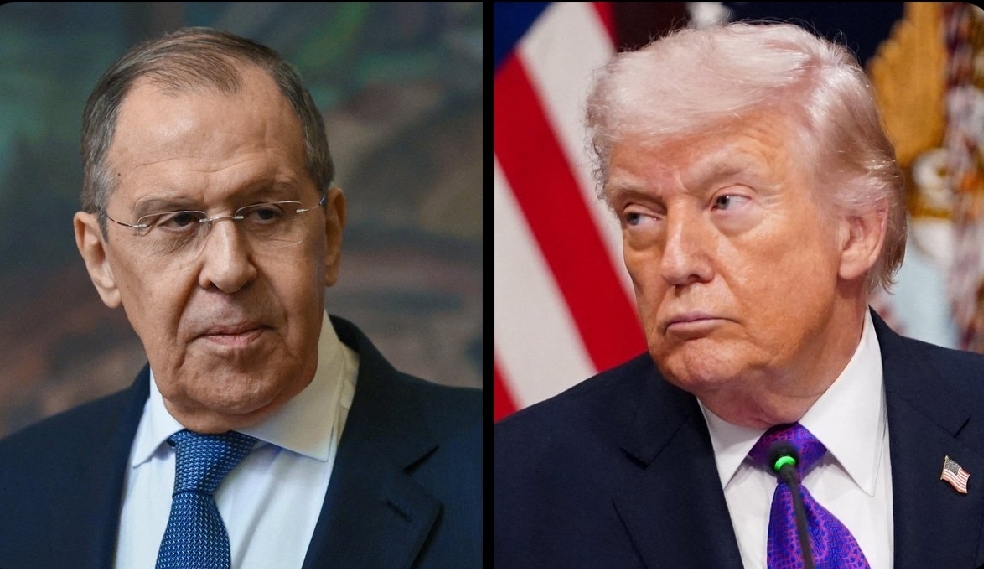
Global geopolitical tensions have once again taken center stage after Sergey Lavrov issued a sharp accusation against the administration of former U.S. President Donald Trump, claiming Washington is attempting to assert dominance over the global energy market.
The statement, delivered during a diplomatic briefing, immediately ignited debates across international media, financial markets, and political circles. According to Lavrov, recent American energy policies and strategic partnerships suggest a broader effort by the United States to reshape global energy supply chains in ways that could sideline competing exporters — particularly Russia, one of the world’s largest producers of oil and natural gas.
The accusation arrives at a time when energy has become the most powerful geopolitical weapon of the modern era. Control over oil, gas, and alternative energy routes now influences diplomacy, alliances, and even military strategy. Analysts note that energy independence policies pursued by Washington — including expanded liquefied natural gas exports and new international supply agreements — have significantly altered global pricing dynamics and reduced Europe’s historic reliance on Russian resources.
Across social media platforms, the reaction has been immediate and polarized. Supporters of Moscow’s position argue that Western sanctions and energy diplomacy are designed to economically weaken rival powers. Meanwhile, American commentators frame the policies as strategic diversification aimed at stabilizing global energy security rather than monopolizing it.
What makes Lavrov’s remarks particularly significant is their timing. The global energy landscape is undergoing rapid transformation, shaped by post-pandemic economic recovery, ongoing regional conflicts, and competition between major powers for influence over emerging markets in Asia, Africa, and the Middle East. Energy is no longer merely an economic commodity; it has become a central instrument of geopolitical leverage.
Observers also point to the broader narrative battle unfolding between Washington and Moscow. Diplomatic messaging now plays almost as large a role as military or economic action. Statements like Lavrov’s are not only directed at domestic audiences but also at developing nations deciding whose energy partnerships to trust in an increasingly multipolar world.
For international markets, rhetoric alone can trigger real consequences. Oil prices, investment flows, and currency stability often react instantly to diplomatic tensions between the United States and Russia. Every accusation, counterstatement, or policy shift signals potential changes in supply routes and long-term energy alliances.
Whether Lavrov’s claim represents genuine concern or strategic political positioning, one fact remains clear: the global energy market has become the newest arena of great-power competition. And as accusations intensify, the world watches closely — because in today’s geopolitical reality, energy is power, and power shapes the future of global order.
