
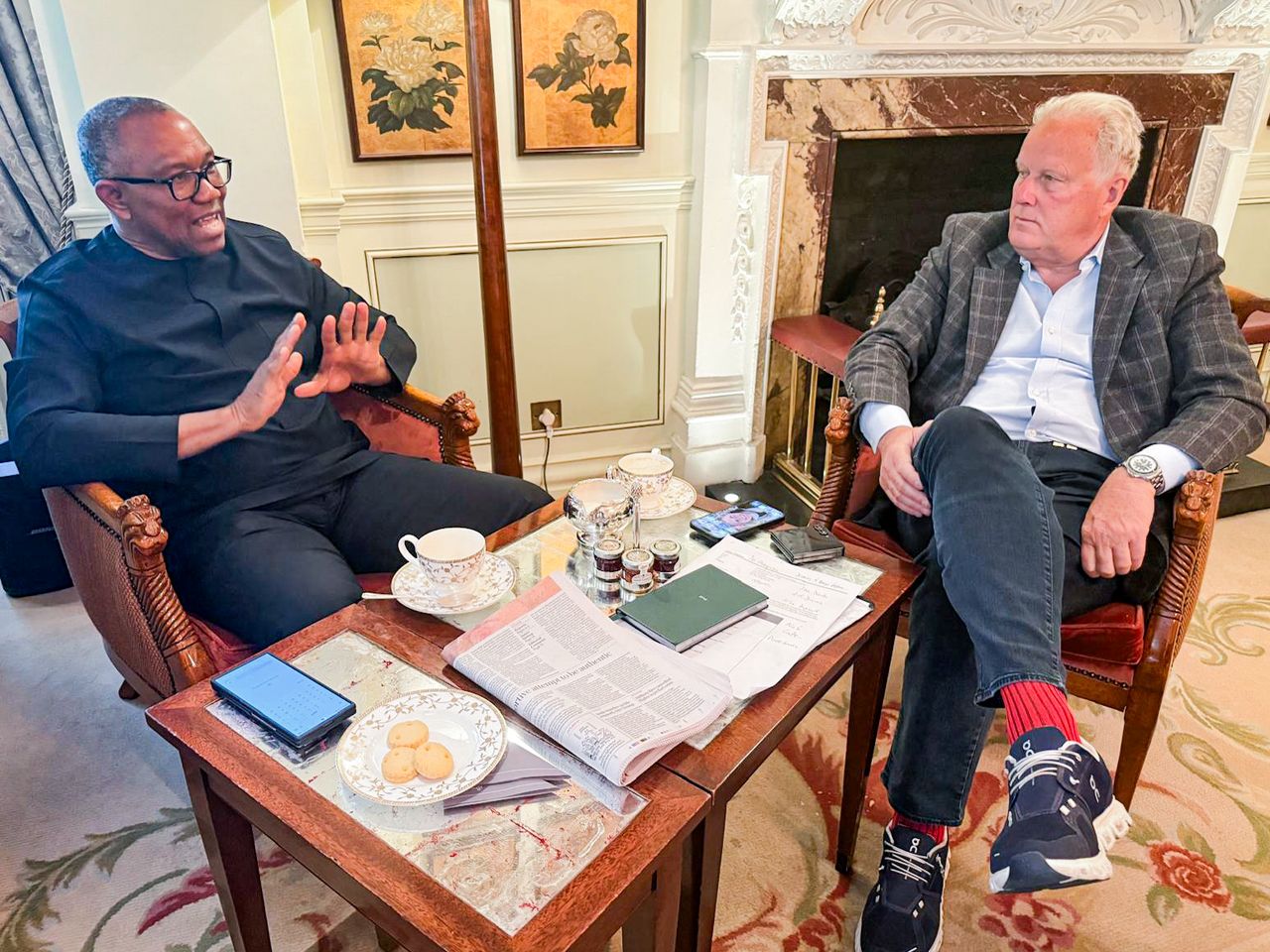
Former Nigerian presidential candidate Peter Obi has once again positioned economic reform and enterprise development at the centre of national discourse following his recent meetings in London with influential figures within Britain’s political and business ecosystem.
In a post shared across his social media platforms, Obi revealed that he held strategic discussions with stakeholders in British politics and the business community, notably Jonathan Marland, Chairman of the Commonwealth Enterprise and Investment Council (CWEIC). The engagement focused on expanding trade opportunities, stimulating economic advancement, and strengthening Nigeria’s small business sector — an area Obi has consistently described as the backbone of national prosperity.
The London meeting reflects a growing trend in modern political leadership where economic diplomacy extends beyond official government channels. By engaging international investors and policy influencers, Obi appears to be reinforcing a long-standing argument: Nigeria’s economic transformation will not emerge solely from oil revenues or large corporations but from empowering micro, small, and medium-sized enterprises (MSMEs).
Across global economic models, the evidence strongly supports this position. Countries such as China, Indonesia, and Vietnam achieved rapid economic expansion by deliberately investing in small-scale industries, manufacturing clusters, and agricultural value chains. These nations created employment not through isolated mega-projects but by enabling millions of entrepreneurs to participate actively in economic production. Obi’s reference to these examples signals a policy philosophy grounded in export-driven growth, industrial productivity, and grassroots enterprise development.
Nigeria’s economic challenge remains deeply connected to unemployment, currency instability, and limited industrial output. MSMEs account for a significant percentage of employment nationwide, yet many struggle with access to financing, infrastructure deficits, inconsistent policies, and limited global market integration. Obi’s message highlights a recurring theme in his public advocacy — that meaningful economic reform must begin with deliberate support systems for entrepreneurs, farmers, and manufacturers.
The emphasis on agriculture and manufacturing is particularly strategic. Agriculture holds the potential to secure food sustainability while supplying raw materials for domestic industries. Manufacturing, on the other hand, drives value addition, strengthens exports, and reduces dependency on imports. Together, both sectors represent pathways toward inclusive economic growth capable of absorbing Nigeria’s youthful workforce.
Social media reactions to the post show strong engagement among supporters who view the London meetings as part of a broader vision of international collaboration aimed at rebuilding Nigeria’s economic credibility. For many observers, the message reinforces Obi’s branding around competence, fiscal discipline, and private-sector-led development.
Beyond politics, the statement also speaks to a larger national aspiration. Economic revival, job creation, and sustainable development remain central concerns for Nigerians across political divides. By concluding with the declaration that “A New and revitalised Nigeria is possible,” Obi frames his international engagements not merely as diplomatic conversations but as steps toward redefining Nigeria’s economic future.
In an era where global partnerships increasingly shape domestic prosperity, the London discussions serve as a reminder that Nigeria’s next phase of growth may depend as much on strategic economic alliances as on internal reforms. Whether in governance or advocacy, the conversation around MSMEs continues to gain momentum — and for many Nigerians, it represents hope for a more productive and economically resilient nation.
