
Table of Contents
Artemis II Crew Unveils Stunning High-Resolution Earth Images from Deep Space
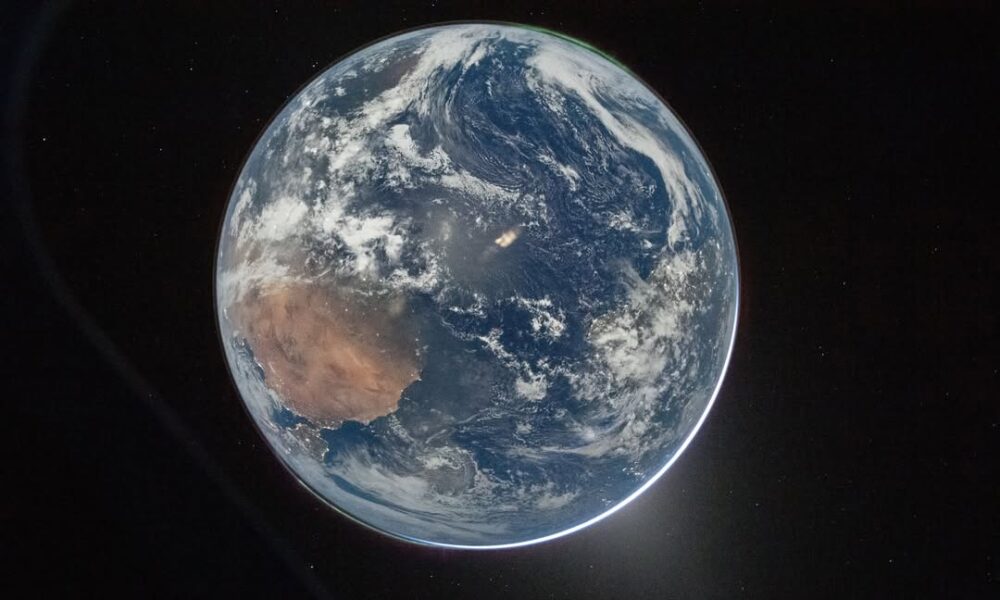
NASA’s Artemis II mission has delivered a groundbreaking glimpse of our planet from an extraordinary vantage point. Astronauts Reid Wiseman, Victor Glover, Christina Koch, and Jeremy Hansen, aboard the Orion spacecraft, have shared the first-ever high-definition photographs of Earth taken from approximately 100,000 miles away. These images mark the first crewed deep-space visual documentation of the African continent and atmospheric auroras in more than five decades.
A New Era of Earth Observation from Deep Space
Since the Apollo missions, no crewed spacecraft has captured such detailed views of Earth from beyond the Moon’s orbit. The Artemis II crew’s photographs provide a fresh perspective on our planet’s geography and atmospheric phenomena, showcasing the vibrant colors and dynamic weather patterns visible from deep space. This mission not only advances human space exploration but also enriches our understanding of Earth’s environment from an unprecedented distance.
Highlighting Africa and Atmospheric Auroras
Among the most striking images are those featuring the African continent, revealing its vast deserts, lush rainforests, and sprawling urban areas with remarkable clarity. Additionally, the crew documented spectacular auroral displays-natural light shows caused by solar particles interacting with Earth’s magnetic field. These auroras, rarely seen from such a remote vantage point, offer valuable scientific insights into space weather and its effects on our planet.
Significance of Artemis II’s Visual Milestone
The release of these images coincides with a renewed global interest in space exploration and Earth sciences. With over 60 years since the last crewed deep-space Earth photos, Artemis II’s contribution is a testament to technological advancements in spacecraft imaging systems and astronaut training. These visuals not only inspire public imagination but also support ongoing research in climate monitoring and planetary science.
Looking Ahead: The Future of Deep-Space Earth Imaging
As Artemis II paves the way for future missions, including Artemis III’s planned lunar landing, the potential for continuous Earth observation from deep space grows. Upcoming spacecraft are expected to carry even more sophisticated cameras and sensors, enabling real-time monitoring of environmental changes and natural disasters from a unique orbital perspective. This capability could revolutionize how scientists track global phenomena such as deforestation, ocean health, and atmospheric shifts.
In summary, the Artemis II crew’s “Hello, World” images represent a historic achievement in space exploration and Earth observation. By capturing our planet’s beauty and complexity from a distance few have witnessed, these photographs deepen our connection to Earth and underscore the importance of continued exploration beyond our home world.
