
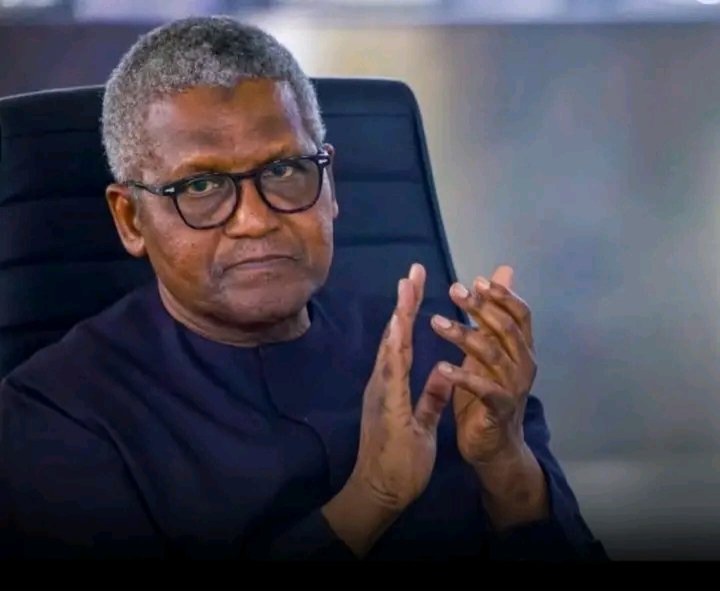
In a development that has ignited heated debates across African economic circles, Nigerian billionaire Aliko Dangote’s ambitious proposal to establish a major oil refinery in East Africa is reportedly encountering strong opposition from the International Monetary Fund (IMF) and the World Bank.
Critics, including voices on social media and pan-African commentators, accuse the global financial institutions of blocking the project under the pretext of preventing a monopoly, while conveniently overlooking the long-standing dominance of Western oil companies in the region’s refining sector.
Dangote, whose 650,000 barrels-per-day refinery in Nigeria has transformed the country’s energy landscape, has publicly offered to replicate this successful model in East Africa. The proposed facility — potentially sited in Tanzania, Kenya, or the Democratic Republic of Congo (DRC) — aims to process locally produced crude oil into refined petroleum products. This would drastically cut the region’s heavy dependence on imported fuel, create thousands of jobs, boost industrialization, and strengthen energy security for millions of East Africans. Supporters argue that such a project represents a bold step toward genuine economic sovereignty, moving Africa away from the centuries-old pattern of exporting raw commodities only to import finished goods at premium prices.
The proposal has garnered notable political backing. Kenyan President William Ruto and Ugandan President Yoweri Museveni have reportedly expressed support for collaborative regional refining initiatives that would harness East Africa’s emerging oil resources. These leaders envision a shared refinery that serves multiple countries, reducing the enormous foreign exchange drain caused by fuel imports and fostering intra-African industrial cooperation. For many observers, Dangote’s track record in Nigeria provides a compelling blueprint: before his refinery came online, Nigeria — despite being Africa’s largest oil producer — exported crude oil to Europe for refining and re-imported expensive petroleum products, a paradox that drained national resources and limited local value addition.
Yet, according to the narrative gaining traction online, the IMF and World Bank are pushing back against the project. The institutions allegedly cite concerns over market monopoly, warning that a large-scale Dangote-operated refinery could dominate the East African market. Critics find this position deeply ironic and hypocritical. French and other Western multinational corporations have long controlled significant portions of Africa’s oil exploration, production, and refining infrastructure with minimal interference from these same financial gatekeepers. Why, many ask, is local African ownership and large-scale private investment suddenly viewed as a threat to competition when foreign dominance has persisted for decades?This episode fits into a broader pattern of tension between African industrial ambitions and the policy prescriptions of international financial institutions.
For years, critics have accused the IMF and World Bank of promoting policies that favor trade liberalization and fiscal austerity at the expense of strategic industrialization in developing nations. Large flagship projects capable of catalyzing structural economic transformation are often scrutinized intensely or discouraged, while smaller, fragmented investments — frequently led by foreign entities — face fewer hurdles. Dangote’s Nigerian success story is frequently cited as a counter-example: a private African investor succeeding where state-led efforts had struggled, thereby challenging the old export-raw, import-refined model.
The controversy highlights deeper questions about Africa’s development trajectory in the 21st century. As the continent sits on vast untapped natural resources and a youthful population eager for opportunities, the ability to build homegrown industries like refining, petrochemicals, and manufacturing will determine whether Africa achieves sustainable prosperity or remains locked in cycles of dependency. Dangote’s proposal, if realized, could serve as a powerful symbol of what pan-African entrepreneurship backed by visionary political leadership can achieve.
As discussions continue behind closed doors and across public platforms, many Africans are watching closely. Will global financial institutions prioritize theoretical market competition concerns over tangible gains in energy independence and job creation? Or will East African leaders, supported by bold private investors like Dangote, push forward with projects that put African interests first?
The outcome could shape the region’s economic landscape for generations to come, potentially marking another milestone in Africa’s long quest for true economic liberation. The coming months will reveal whether this ambitious refinery vision overcomes institutional resistance or becomes yet another example of promising African initiatives stalled by external pressures. For now, the conversation underscores a growing assertiveness among African nations and business leaders determined to rewrite the rules of engagement with the global economy.
