
In a development that has sparked intense debate both within Afghanistan and across the international community, the Taliban government has introduced a comprehensive new 31-article family law regulation titled “Principles of Separation Between Spouses.” Approved by Taliban Supreme Leader Hibatullah Akhundzada and published in the regime’s official gazette in mid-May 2026, the decree outlines rules governing marriage, divorce, child marriages, and marital separations under the group’s interpretation of Islamic law.
At the heart of the announcement is a notable declaration regarding consent in marriage. According to the Taliban authorities, if a girl is married without her consent, she has the right to approach the court, file a complaint, and seek annulment of the marriage. Officials have emphasized that “a girl’s consent is her right, and no one can take that away from her.” This provision has been presented as a safeguard for women and girls, particularly in cases of forced unions.
However, the regulation includes several provisions that have drawn sharp criticism and raised questions about its practical impact. One particularly controversial article states that the silence of a “virgin girl” after reaching puberty may be interpreted as consent to marriage. Notably, this does not apply in the same way to boys or previously married women, whose silence cannot automatically be taken as agreement. The law also formalizes aspects of child marriage, allowing minors to seek annulment upon reaching puberty — but only through approval by a Taliban-controlled court.
This new framework builds on the Islamic legal concept of “khiyar al-bulugh” (option upon puberty), which permits challenges to childhood marriages once the individual matures. The regulation sets out conditions for such separations, including compatibility of spouses, dowry appropriateness, and various religious and legal grounds for dissolution. While the Taliban present these rules as a structured approach to family matters, critics argue that codifying child marriages with specific guidelines effectively legitimizes the practice rather than prohibiting it.
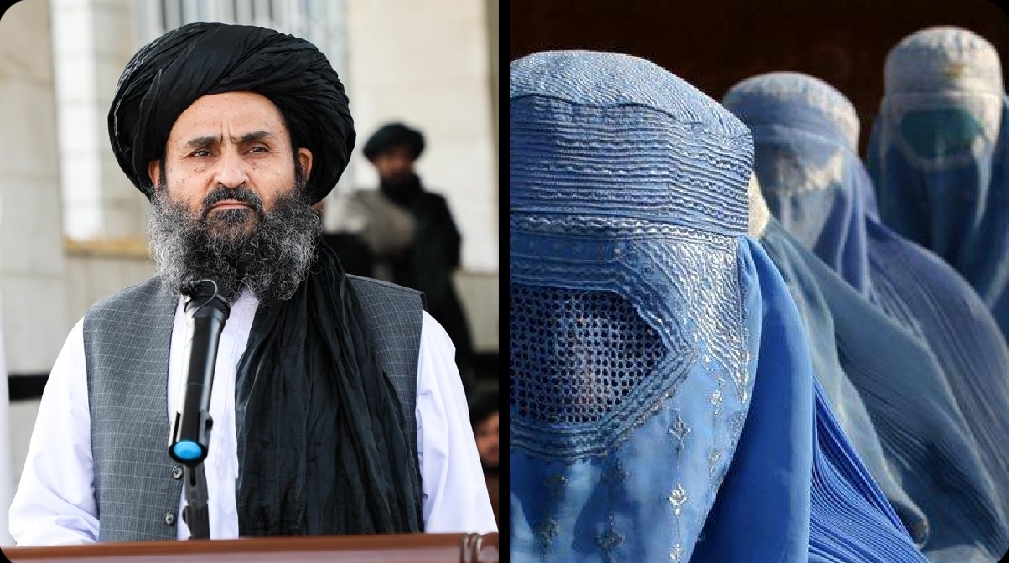
Afghanistan under Taliban rule since 2021 has seen sweeping restrictions on women and girls. Secondary education for females remains largely banned, women are barred from many public roles and jobs, and strict limits on movement and dress are enforced. In this context, many observers question how accessible courts truly are for girls seeking to challenge unwanted marriages. Social media reactions to the announcement reflect deep skepticism: comments range from outright dismissal as propaganda to concerns that filing a complaint could expose girls to family retaliation or further harm, especially without independent legal support or freedom of movement.
One reply highlighted the practical hurdle: “So she is supposed to ask her husband to accompany her to court for this purpose?” Others expressed doubt about enforcement, noting that in a society where women’s public agency is severely curtailed, the ability to navigate the judicial system remains an enormous barrier. Supporters, including some voices praising alignment with Sharia principles, view the decree as a formal recognition of existing rights, while international outlets and human rights advocates have described elements of the law as regressive and harmful.
The timing of this regulation comes amid ongoing isolation of the Taliban regime and continued humanitarian challenges in Afghanistan. Whether this family law represents a genuine, albeit limited, reform or serves primarily as a public relations effort remains to be seen. Enforcement, accessibility of justice, and real-world outcomes for Afghan girls and women will ultimately determine its significance.
As Afghanistan continues to navigate its complex social and legal landscape under Taliban governance, developments like this 31-article decree underscore the tension between stated principles and daily realities. The world will be watching closely to see if the proclaimed “inalienable right” to consent translates into meaningful protections or remains confined to official statements.
