
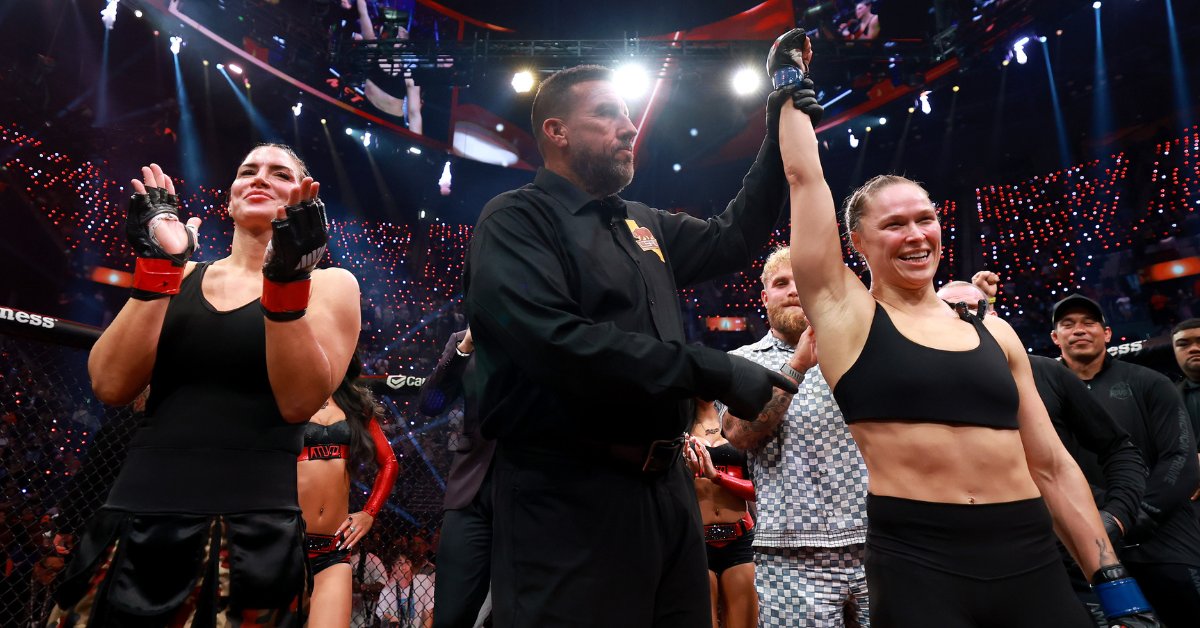
In a highly anticipated clash that pitted two of women’s MMA’s biggest trailblazers against each other, Ronda Rousey made a thunderous return to the cage only to deliver a lightning-fast finish that left fans both exhilarated and divided. On Saturday night at the Intuit Dome in California, Rousey submitted Gina Carano via armbar in just 17 seconds during the main event of Most Valuable Promotions’ inaugural MMA show, which was streamed live on Netflix. The bout, billed as a dream matchup between pioneers of the sport, ended almost as soon as it began, sparking immediate conversations about legacy, motherhood, and the evolving business of combat sports.
Rousey, the former UFC Women’s Bantamweight Champion and Olympic judoka who helped catapult women’s MMA into the mainstream, had not competed in mixed martial arts for several years. Her comeback under the Most Valuable Promotions banner carried significant weight—not just as a personal milestone, but as a symbolic reunion with Carano, a fellow pioneer who rose to fame in Strikeforce before transitioning to acting. The 17-second armbar submission showcased the trademark grappling prowess that defined Rousey’s prime, reminding observers why she was once considered nearly unbeatable inside the octagon. Yet the brevity of the contest also raised eyebrows, turning what many hoped would be a competitive showcase into one of the shortest high-profile fights in recent memory.
Following her victory, Rousey stepped into the spotlight for an emotional announcement that marked the definitive end of her fighting career. The 39-year-old champion revealed she is retiring from MMA to dedicate herself fully to motherhood. Rousey, who is already a mother of two, expressed her desire to focus on family life and plans to expand her household further. Her words carried a sense of closure, reflecting on a journey that transformed her from a judo Olympian into a global superstar who shattered barriers for female athletes in combat sports. For many fans, Rousey’s retirement feels like the closing of a groundbreaking chapter in women’s MMA history.
The event itself, however, did not escape scrutiny. Most Valuable Promotions’ debut drew criticism across social media platforms, with some observers labeling the promotion as more theatrical spectacle than legitimate sporting contest. Questions surfaced regarding actual attendance numbers at the Intuit Dome, and the ultra-quick finish fueled accusations of a potential cash grab designed primarily for streaming numbers rather than athletic competition. Detractors argued that such a brief encounter undermined the historic nature of the matchup between Rousey and Carano, while supporters celebrated the sheer dominance and the nostalgic value of seeing two icons share the cage one last time.
Regardless of the debates, the night undeniably highlighted the personal evolution of its central figure. Ronda Rousey leaves the sport with a complicated but undeniably influential legacy—one that includes pioneering pay equality conversations, mainstream crossover success, and a string of highlight-reel victories that inspired a generation of fighters. As she transitions into the next phase of her life centered on family, the conversation shifts from what she achieved in the cage to the broader impact she made on the sport and beyond.
While opinions on the fight’s brevity and the promotion’s execution will likely continue swirling, one fact remains clear: Ronda Rousey’s final chapter in MMA was written in signature fashion—decisively, dramatically, and entirely on her own terms.
