
Table of Contents
Uganda’s Progressive Approach to Integrating Health Services for Communicable and Non-Communicable Diseases
In response to the escalating dual challenge of communicable diseases (CDs) and non-communicable diseases (NCDs), Uganda is pioneering comprehensive strategies to merge health service delivery for these conditions. This integrated approach aims to enhance efficiency and improve health outcomes nationwide.
National Conference Highlights the Need for Collaborative Health Action
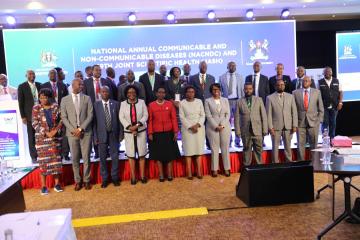
During the recent three-day National Annual Communicable and Non-Communicable Diseases Conference, which also marked the 19th Joint Scientific Health Conference, Uganda’s Minister of Health, Dr. Jane Ruth Aceng Ocero, underscored the critical importance of cross-sector collaboration. She stated, “Promoting health and controlling diseases extend beyond the health sector alone; it demands coordinated efforts across multiple sectors.” The event, themed “Unified Action Against Communicable and Non-Communicable Diseases,” focused on exploring the interconnections between CDs and NCDs and formulating practical strategies to eradicate priority illnesses while promoting equitable health access.
Global Perspectives Reinforce the Call for Integration
Dr. Queen Dube, representing the World Health Organization (WHO) headquarters, delivered a compelling keynote emphasizing the necessity of a multisectoral framework. She highlighted that “the root causes of many health issues lie outside traditional healthcare settings. Since CDs and NCDs often share risk factors and co-exist, competing for limited resources, integrating their management is not only rational but imperative.”
Key Pillars for Effective Integration Identified
Deliberations at the conference culminated in agreement on four foundational enablers to drive integration forward:
- Eliminating Programmatic Silos: Overcoming operational divisions between CD and NCD initiatives by adopting innovative, evidence-driven, and context-specific interventions.
- System Harmonization: Synchronizing health infrastructure through interoperable data systems, streamlined supply chains, and unified workforce development programs.
- Emphasizing Prevention: Enhancing public education and early intervention efforts alongside treatment services for both disease categories.
- Strengthening Primary Health Care (PHC): Integrating services for HIV, tuberculosis, malaria, and associated comorbidities within PHC and community health frameworks.
Leadership Voices Confidence in Integration Feasibility
Dr. Diana Atwine, Permanent Secretary at the Ministry of Health, expressed optimism about the integration process, noting that the primary barriers have been a lack of unified language and commitment rather than scientific or practical knowledge. “The evidence base is robust, and the implementation pathways are clear. Even with constrained resources, successful integration is achievable,” she affirmed.
Regional Impact and Future Outlook
WHO Representative Dr. Kasonde Mwinga, through remarks delivered by Dr. Christine Chiedza Musanhu, lauded Uganda’s leadership in championing integrated, patient-centered healthcare. She remarked, “Uganda’s dedication to harmonizing national health strategies with regional goals sets a powerful example. By working collectively, we can tackle complex health challenges and foster a healthier, more resilient Africa where equitable care is accessible to all.”
Expanding the Vision: Current Trends and Examples
Recent data from the Uganda Ministry of Health indicates that integrated service delivery has already contributed to a 15% increase in early detection rates for both HIV and hypertension in pilot districts. Similar models in neighboring Rwanda have demonstrated reductions in healthcare costs by up to 20% through shared resources and joint training programs. These successes underscore the potential for Uganda’s integrated approach to serve as a scalable model across sub-Saharan Africa.
