
Table of Contents
Table of Contents
Kenyan Agritech Startup Farm to Feed Secures $1.5 Million to Revolutionize Food Supply Chains in Africa
Farm to Feed, an innovative agritech company based in Kenya, has successfully raised $1.5 million in seed funding to accelerate its expansion within Kenya and across neighboring African markets. This funding round comprises $1.27 million in equity investment alongside $230,000 in non-dilutive capital from the DeveloPPP Ventures initiative, a program by DEG (German Investment Corporation) dedicated to fostering pioneering enterprises in sub-Saharan Africa.
Backing from Leading Investors
The equity portion of the round was spearheaded by Delta40 Venture Studio, with additional contributions from DRK Foundation, Catalyst Fund, Holocene, Marula Square, 54Co, Levare Ventures, and Mercy Corps Ventures. This diverse investor base underscores the growing confidence in Farm to Feed’s mission to transform agricultural supply chains.
Addressing Africa’s Food Waste Crisis Through Technology
Across the African continent, an estimated 40% of food produced never reaches consumers due to factors such as stringent cosmetic standards, fragmented supply chains, and limited market access. Farm to Feed, established in 2021, tackles this inefficiency by creating a digital marketplace that connects smallholder farmers with businesses seeking affordable, traceable produce-including “rescue-grade” fruits and vegetables. These are perfectly edible items often rejected for their unconventional appearance, such as misshapen cucumbers or undersized peppers, which are nutritionally equivalent to their visually perfect counterparts.
By bridging the gap between farmers and buyers, Farm to Feed enhances food system efficiency and reliability, reducing waste and increasing farmers’ incomes.
From Pandemic Relief to Sustainable Enterprise
The origins of Farm to Feed trace back to the early days of the COVID-19 pandemic in 2020, when Kenyan farmers were abruptly cut off from traditional markets due to lockdowns. The horticulture sector was losing approximately $3 million daily as crops went unsold. In response, Claire van Enk, then on a career hiatus from management consulting, launched a GoFundMe campaign to purchase surplus produce directly from farmers and distribute it to vulnerable communities in informal settlements. At its peak, this initiative provided meals to nearly 10,000 people each day.
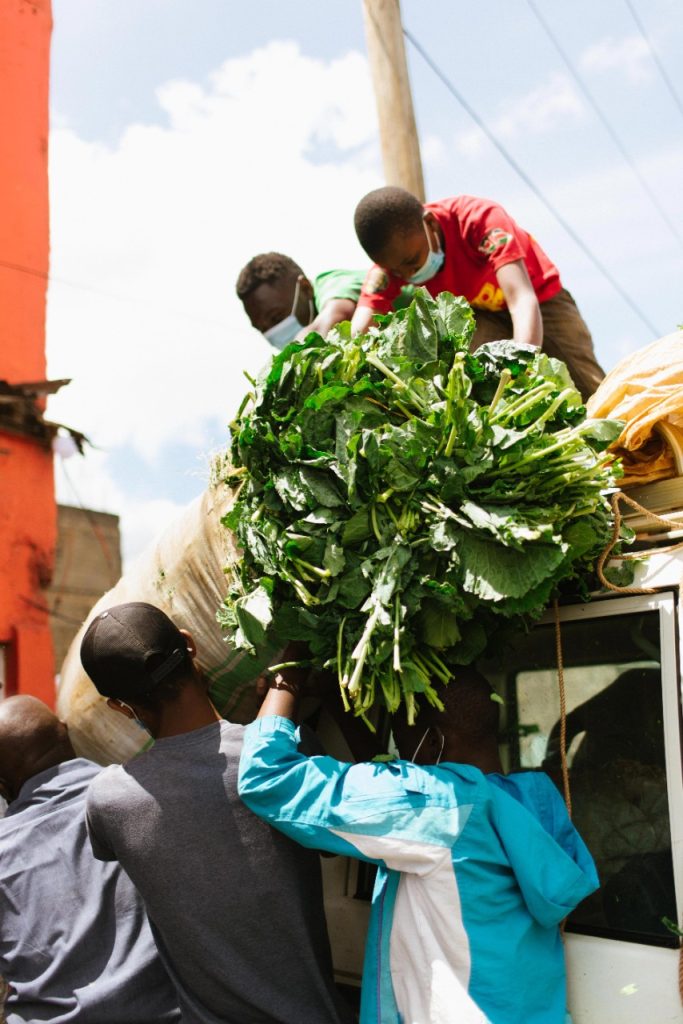
This relief effort revealed a significant volume of produce was being discarded not due to spoilage but because it failed to meet aesthetic standards-such as oddly shaped carrots or smaller-than-average tomatoes. Van Enk coined the term “rescue-grade” to describe this category of food, emphasizing that taste and nutritional value remain uncompromised despite unconventional appearances.
Recognizing the need for a sustainable solution, Van Enk, alongside co-founders Anouk Boertien and Zara Benosa, transitioned Farm to Feed from a temporary relief project into a commercial platform designed to absorb entire harvests, including imperfect produce, ensuring consistent market access for farmers.
Leveraging Digital Tools to Empower Farmers
Farm to Feed’s platform integrates technology to streamline operations and enhance transparency. Over 6,500 smallholder farmers have joined the network, collectively selling more than 2.1 million kilograms of produce and preventing approximately 247 tons of CO2 equivalent emissions.
The company’s proprietary digital infrastructure includes a mobile application and USSD system, enabling farmers without smartphones to access real-time pricing and delivery schedules. The backend comprises an enterprise resource planning (ERP) system to coordinate logistics and an e-commerce portal that provides buyers with traceability data, ensuring accountability throughout the supply chain.
Scaling Up: New Funding to Boost Growth and Innovation
In early 2024, Farm to Feed secured an additional $1 million in pre-seed equity and grant funding aimed at optimizing collection processes and improving payment systems for farmers. This capital injection will also support the expansion of sourcing and distribution networks across Kenya’s secondary cities and agricultural hubs, where supply is abundant but market linkages remain underdeveloped.
A key focus area is the development of a semi-processed product line, offering customers convenient, ready-to-use ingredients that reduce preparation time and minimize food waste in commercial kitchens. “By introducing semi-processed options, we can amplify our impact by preserving more produce, upcycling surplus, and enhancing customer convenience,” explains Claire van Enk, CEO and co-founder.
Vision for Regional Expansion and Sustainable Food Systems
While Farm to Feed prioritizes deepening its footprint within Kenya, the leadership team envisions future growth into export markets, which they consider vital for Africa’s agricultural future. Van Enk emphasizes the need to rethink food systems to be regenerative, inclusive, and climate-resilient-delivering value to farmers, nutrition to consumers, and environmental benefits.
