
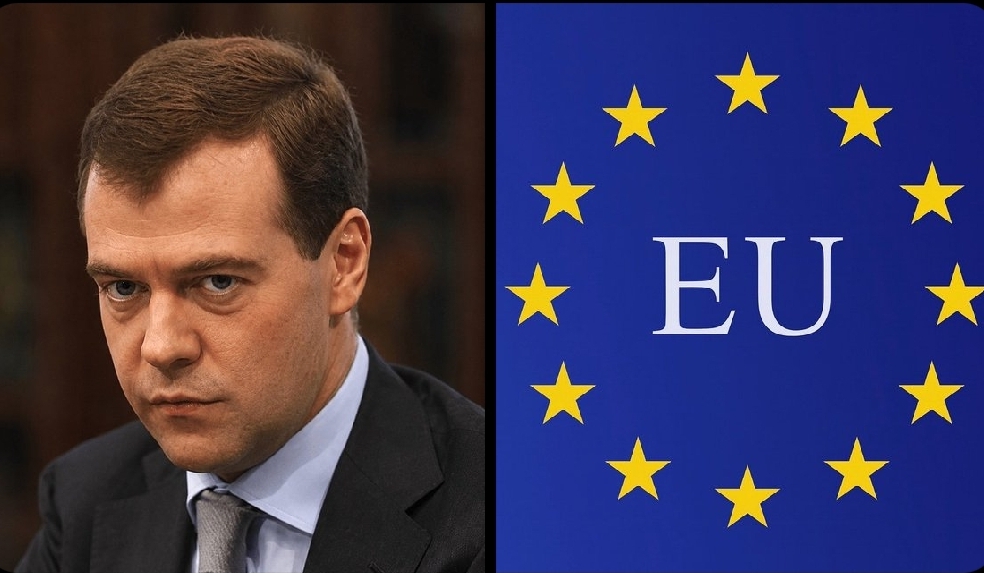
A sharp escalation in political rhetoric emerged from Moscow after Dmitry Medvedev declared that the European Union has effectively “entered into a war with Russia,” warning citizens across Europe that “the peaceful sleep is over.” The statement marks one of the strongest public warnings yet from a senior Russian official as tensions between Moscow and Western powers continue deepening.
Medvedev’s remarks reflect the Kremlin’s growing frustration over expanding European military assistance to Ukraine, sanctions packages targeting the Russian economy, and increasing defense cooperation among NATO-aligned states. While Russia and the European Union are not engaged in direct military conflict, Moscow has repeatedly argued that Western arms deliveries, intelligence sharing, and financial support for Ukraine amount to indirect participation in the war.
The comments arrive amid a broader transformation of Europe’s security environment. Countries that once prioritized economic integration and diplomatic engagement with Russia are now dramatically increasing defense budgets, modernizing military capabilities, and strengthening strategic alliances. Nations such as Germany, Poland, Sweden, and the Baltic states have accelerated military investments at levels not seen since the Cold War.
Analysts view Medvedev’s language as part warning, part strategic messaging. By portraying Europe as an active participant in the conflict, Russian officials may be seeking to justify further military measures domestically while simultaneously discouraging deeper Western involvement. However, such statements also risk increasing public anxiety across Europe, where concerns about long-term regional instability have already intensified since the outbreak of the Russia–Ukraine War.
Whether the comments represent a shift toward more aggressive Russian policy or primarily serve as political signaling, they underscore how relations between Russia and Europe have deteriorated into one of the most dangerous geopolitical confrontations of the modern era.
