
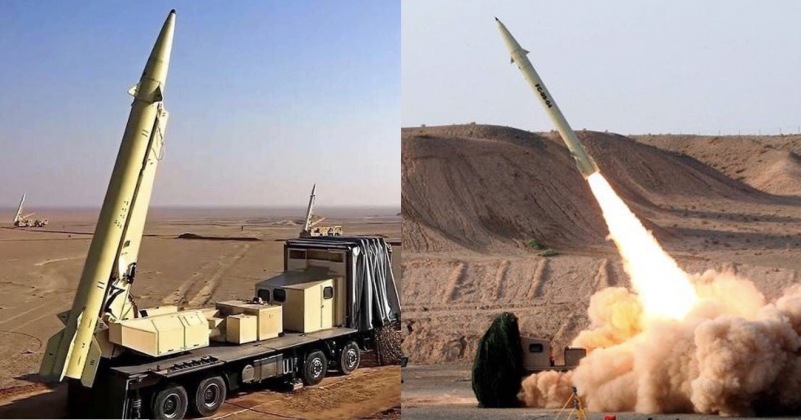
New reports suggest that an Iranian missile attack targeting a U.S. military facility in Kuwait may have caused significantly more damage than initially acknowledged, raising fresh questions about the vulnerability of American military infrastructure amid escalating tensions with Iran.
According to multiple reports, the incident involved an Iranian Fateh-110 ballistic missile aimed at the strategically important Ali Al Salem Air Base. While Kuwaiti air defense systems successfully intercepted the missile before a direct impact occurred, debris from the interception reportedly fell onto the base, injuring several American personnel and causing substantial damage to high-value military assets. Reports indicate that approximately five individuals, including active-duty service members and military contractors, sustained injuries. More significantly, two MQ-9 Reaper drones — among the U.S. military’s most important surveillance and strike platforms — were reportedly heavily damaged, with one believed to have been completely destroyed.
The MQ-9 Reaper is a critical component of modern American military operations, used extensively for reconnaissance, intelligence gathering, and precision strike missions. The destruction or severe damage of such systems represents not only a financial loss but also a potential operational setback, particularly in a region where surveillance capabilities are central to military
The incident has intensified scrutiny of regional air defense effectiveness. Although interception systems successfully prevented a direct missile impact, the damage caused by falling debris highlights a growing challenge in modern missile warfare: even successful interceptions can produce dangerous secondary effects capable of damaging infrastructure and personnel.
Strategic analysts argue that the attack sends a broader message about Iran’s ability to threaten U.S. military installations across the Gulf region. It also reinforces concerns that ongoing confrontations are steadily moving beyond symbolic deterrence toward increasingly direct military exchanges. As Washington evaluates future responses and regional deployments, the incident may become a key reference point in debates over force protection, missile defense readiness, and the evolving balance of power in the Middle East.
