
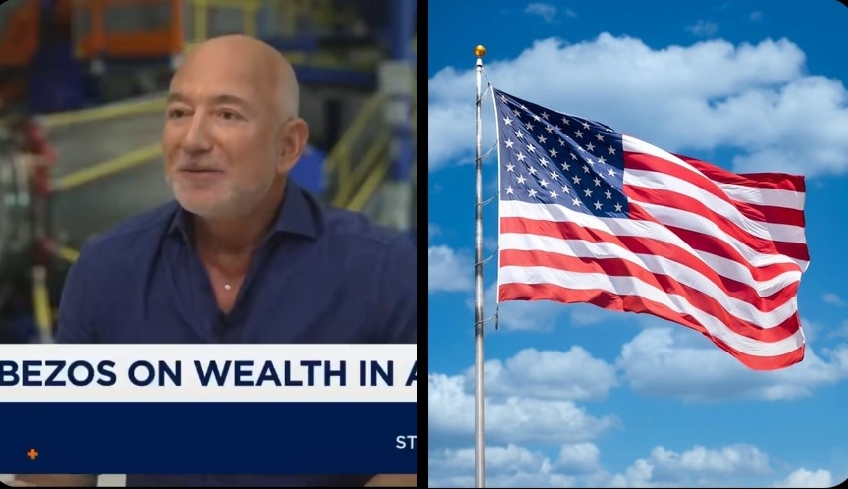
A fresh economic debate has erupted in the United States after Amazon founder Jeff Bezos suggested that Americans earning less than $100,000 annually should be exempt from federal income tax, a statement that has quickly gained traction across political and financial circles. The billionaire entrepreneur’s remarks arrive at a time when rising living costs, wage stagnation, and economic inequality dominate public discourse, placing taxation policy back at the center of national conversation.
Bezos’ argument reflects a growing belief among some economists that the American tax system places disproportionate pressure on middle- and lower-income earners while wealth creation increasingly concentrates at higher income levels. Advocates of such reforms argue that eliminating federal income taxes for households below the six-figure threshold could stimulate consumer spending, boost economic mobility, and ease financial strain on working families facing inflation, housing costs, and healthcare expenses.
However, critics immediately raised concerns about government revenue sustainability. Federal income taxes remain one of Washington’s largest funding sources for defense, infrastructure, healthcare programs, and social security obligations. Removing millions of taxpayers from the system would require either higher taxation elsewhere, increased borrowing, or major spending cuts — each politically controversial in its own right.
The proposal also highlights a broader ideological shift where even wealthy business leaders increasingly acknowledge economic pressures affecting ordinary citizens. Whether Bezos’ comments translate into legislative momentum remains uncertain, but the statement has already reignited long-standing questions about fairness, wealth distribution, and the future structure of taxation in the world’s largest economy.
