
In a move that signals a significant thaw in relations between Washington and Addis Ababa, the United States has officially lifted its long-standing arms embargo on Ethiopia. The decision, announced in mid-May 2026, ends a policy of denial under the International Traffic in Arms Regulations (ITAR) that had been in place since the height of the Tigray conflict. This development not only marks a diplomatic reset but also reflects evolving geopolitical priorities in one of the world’s most strategically vital regions.
The US State Department’s Directorate of Defense Trade Controls (DDTC) confirmed the change, removing Ethiopia from the list of countries subject to a blanket “policy of denial.” Going forward, applications for ITAR-controlled defense exports to Ethiopia will be reviewed on a case-by-case basis. A forthcoming regulatory amendment will formally excise Ethiopia from ITAR §126.1, the section governing strict defense export restrictions. This shift effectively terminates prohibitions on the import and export of defense equipment and services involving Ethiopian armed forces, police, and security institutions.
The embargo was originally imposed during the brutal Tigray war, which drew international condemnation over alleged human rights abuses and humanitarian crises. For years, the restrictions served as a lever to pressure the Ethiopian government. However, with the conflict having concluded and new regional dynamics at play, Washington appears ready to turn the page. Analysts view the decision as part of a broader realignment aimed at bolstering ties with key Horn of Africa nations.
The timing of this announcement is particularly noteworthy. It comes against the backdrop of escalating tensions in the Red Sea, where shipping routes face persistent threats and competition for influence among global and regional powers is intensifying. Ethiopia, as Africa’s second-most populous nation and a historical anchor in East Africa, holds considerable strategic weight. Strengthening military cooperation with Addis Ababa could help the US counterbalance other influences in the region while supporting Ethiopia’s role in promoting stability across East Africa.
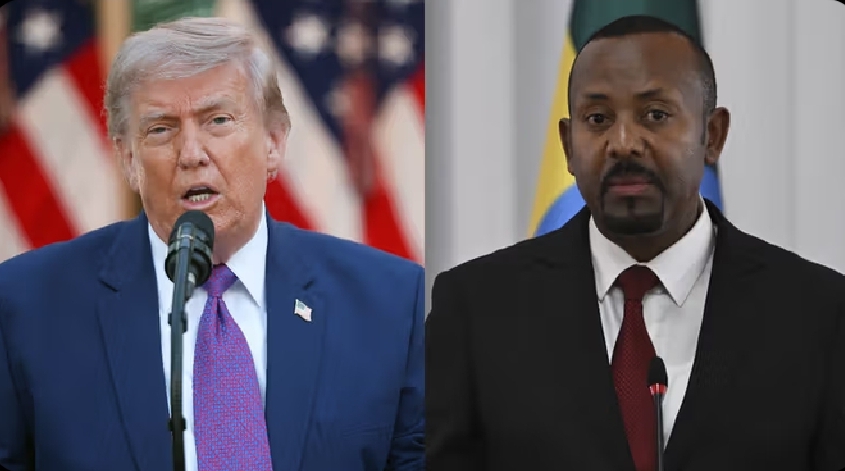
Images circulating alongside the news, featuring US President Donald Trump alongside Ethiopian Prime Minister Abiy Ahmed, underscore the personal and diplomatic dimensions of this reset. The move follows recent high-level engagements, including meetings between US officials and Ethiopian Foreign Minister Gedion Timotheos, where security partnerships and commercial opportunities were discussed.
Yet, the decision has elicited mixed reactions. Supporters hail it as a pragmatic step toward fostering stronger bilateral ties and enabling Ethiopia to address its legitimate security needs in a volatile neighborhood. Critics, however, raise concerns about regional stability and human rights. Some point to ongoing internal challenges in Ethiopia and potential ripple effects on relations with neighboring Eritrea, with whom Addis Ababa has a historically fraught relationship. The US has also reportedly eased certain measures toward Eritrea, further illustrating the complex web of alliances being reshaped.
For Ethiopia, the lifting of the embargo opens doors to enhanced defense capabilities, training, and equipment that could modernize its military and contribute to countering threats like terrorism and border instability. Prime Minister Abiy’s administration is likely to see this as validation of its post-Tigray diplomatic efforts and a boost to national sovereignty narratives.
As the Horn of Africa navigates shifting sands—marked by Red Sea security concerns, economic ambitions, and proxy influences—this policy change could herald a new chapter in US-Africa relations. Whether it leads to greater stability or inadvertently fuels arms races and tensions remains to be seen. What is clear, however, is that Washington is recalibrating its approach, prioritizing strategic partnerships in a region too important to ignore.The coming months will reveal how this renewed access to US defense technology translates on the ground and whether it paves the way for deeper economic and security collaborations between the two nations. For now, the lifting of the arms embargo stands as a bold statement of evolving priorities in international diplomacy.
