
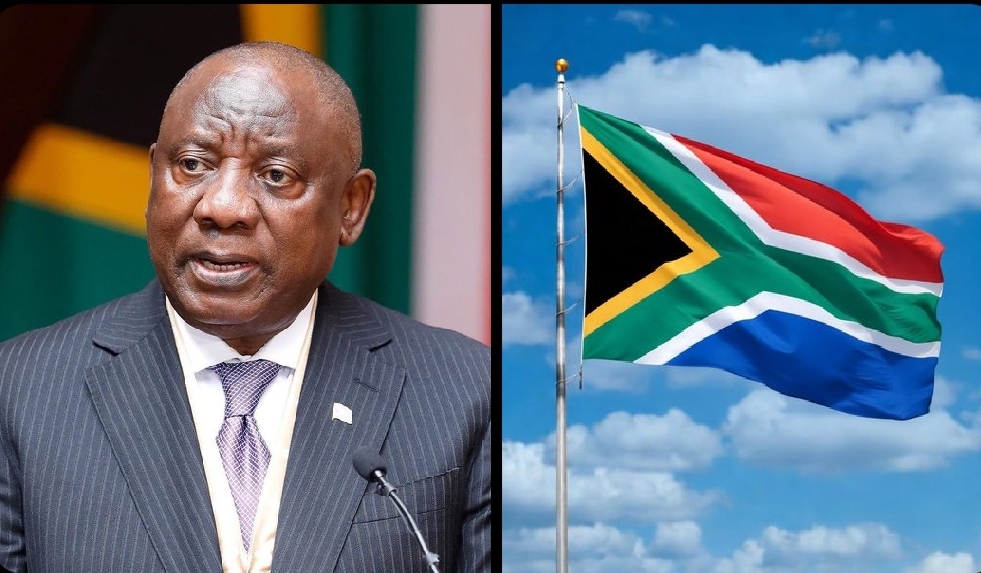
South African President Cyril Ramaphosa has publicly accepted a landmark Constitutional Court ruling that has revived the long-dormant impeachment process linked to the controversial Phala Phala scandal. The ruling, delivered by the country’s apex court, found that Parliament acted unconstitutionally when it previously blocked further investigation into allegations surrounding the 2020 burglary at Ramaphosa’s Limpopo game farm, where large sums of foreign currency were reportedly stolen.
The Phala Phala case has remained one of the most politically sensitive controversies in South Africa’s recent democratic history. At the heart of the matter is whether Ramaphosa properly declared and accounted for the cash—estimated in reports to be around $580,000—allegedly hidden in furniture on his farm. Ramaphosa has consistently maintained that the money came from legitimate buffalo sales, and he denies any wrongdoing. However, opposition parties have argued that the handling of the incident raises serious constitutional and ethical questions, especially around transparency, accountability, and the possible misuse of state resources during the aftermath of the burglary.
The latest court ruling effectively resets the political clock. It directs Parliament to reconsider the impeachment process, which had previously been shut down in 2022 when lawmakers voted against proceeding with an inquiry despite an independent panel suggesting there was sufficient evidence to investigate possible misconduct. This judicial intervention has now reopened a pathway for formal impeachment proceedings, placing renewed pressure on both Ramaphosa and the African National Congress (ANC), which has been steadily losing political dominance in recent years.
Ramaphosa’s response has been measured but firm. In his public statement, he emphasized respect for the judiciary and reiterated the importance of constitutional governance, stating that no individual stands above the law. This position reflects a broader attempt to balance political survival with institutional credibility, especially as South Africa’s political environment becomes increasingly fragmented and coalition-dependent following the ANC’s weakened electoral standing in 2024.
What makes this moment particularly significant is not just the legal dimension but the political reality surrounding it. While the court ruling revives the impeachment process, actual removal remains unlikely unless a two-thirds majority in Parliament supports it. Given the ANC’s continued influence—though reduced—it still holds enough parliamentary strength, alongside coalition partners, to potentially shield the president from removal. Political analysts suggest the process may stretch out over months, with legal and procedural battles likely to dominate the agenda rather than a swift conclusion.
Beyond the courtroom, the Phala Phala saga has become a symbol of South Africa’s broader struggle with governance, trust in institutions, and elite accountability. For supporters of Ramaphosa, the court ruling represents an overreach that risks politicizing the judiciary. For critics, it is a long-overdue correction that reopens accountability channels that were previously blocked by parliamentary politics.
As the impeachment process is set in motion once again, South Africa finds itself at a critical democratic crossroads. The outcome will not only determine Ramaphosa’s political legacy but also test the resilience of the country’s constitutional democracy in handling high-level executive accountability.
