
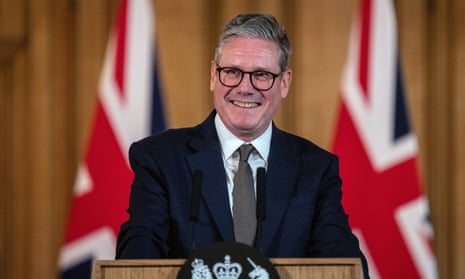
Political tensions are rising across the United Kingdom after Prime Minister Keir Starmer publicly rejected calls to resign following significant local election losses suffered by the Labour Party. The results have triggered intense debate within British politics, with analysts, opposition figures, and even some Labour supporters questioning what the outcome means for the government’s future direction.
Local elections in Britain are often seen as a political temperature check rather than a direct referendum on national leadership. However, the scale of Labour’s setbacks has drawn unusual attention, especially because the party entered the elections with strong expectations of consolidating public confidence after recent national political transitions. Instead, several councils shifted away from Labour control, while opposition parties and independent candidates gained unexpected ground.
Despite mounting criticism, Starmer has maintained that resignation is not under consideration. Speaking after the results, he acknowledged voter frustration but framed the outcome as a signal that his administration must “move faster” on economic recovery, public services, and cost-of-living pressures. According to his allies, stepping down immediately after local election losses would create instability rather than solutions at a time when Britain faces complex domestic and international challenges.
The election results reflect deeper concerns among British voters. Inflation pressures, housing affordability, healthcare waiting times, and economic uncertainty continue to dominate political conversations. Many analysts argue that local elections often allow voters to express dissatisfaction without necessarily rejecting a government entirely. Still, the symbolic impact of the losses has strengthened opposition narratives that Labour’s popularity may be softer than previously believed.
Within Labour itself, reactions have been mixed. Senior party figures publicly backed Starmer’s leadership, emphasizing that rebuilding trust after years of political turbulence requires long-term consistency. Yet behind the scenes, political commentators suggest internal debates may intensify over campaign strategy, messaging, and policy priorities ahead of future national contests. For governing parties, local election outcomes frequently act as early warning signs rather than final judgments.
Opposition parties have seized the moment to increase pressure on the Prime Minister, arguing that voters are already signaling disappointment with Labour’s performance in office. Critics claim that promises made during national campaigns have yet to translate into visible improvements in everyday life for many citizens. Meanwhile, Starmer’s supporters counter that structural economic issues inherited from previous administrations cannot be resolved within a short political timeframe.
Beyond party politics, the situation highlights a broader trend seen across democracies worldwide: voters are increasingly willing to shift support quickly when expectations are not immediately met. Political loyalty has become more fluid, and governments face constant scrutiny in an era shaped by social media reactions, rapid news cycles, and rising public demand for measurable results.
For now, Starmer’s refusal to resign signals a determination to stabilize his government and regain momentum rather than concede political ground. Whether this decision strengthens his leadership or deepens internal and public criticism will likely depend on how quickly tangible policy outcomes begin to resonate with voters.
As Britain moves forward, the local election outcome may ultimately serve less as a political defeat and more as a defining test of leadership resilience — one that could shape the trajectory of the current government and the future of British politics.
