
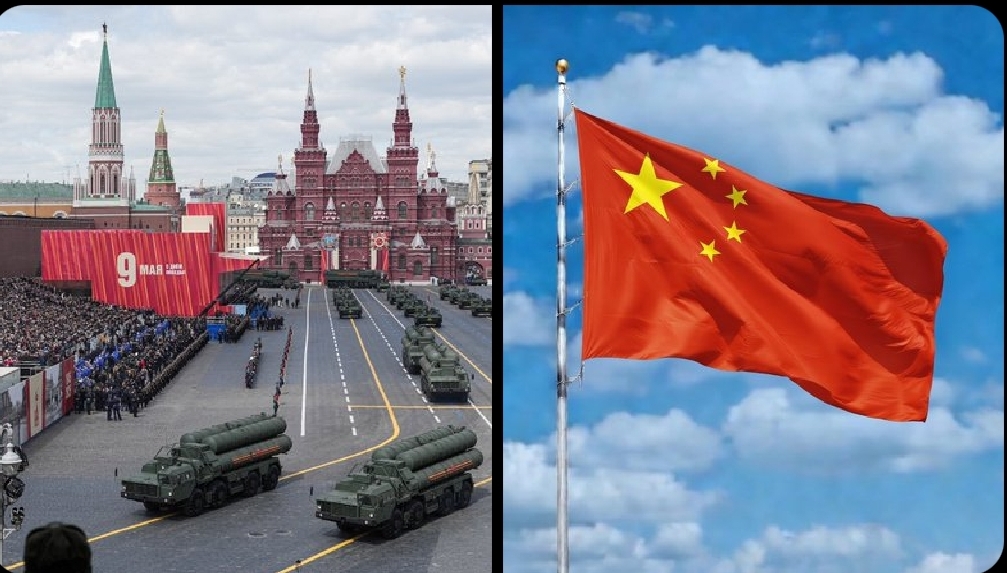
Global attention has shifted sharply to Moscow after reports emerged that China withdrew its delegation from Russia’s May 9 Victory Day military parade following warnings from Ukraine about possible attacks targeting the event. The development has added a fresh layer of geopolitical tension to an already volatile Russia-Ukraine war, signaling growing security fears even among Russia’s closest partners.
Russia’s Victory Day Parade, held annually on May 9 at Moscow’s Red Square, is one of the country’s most symbolic national ceremonies. The event commemorates the Soviet Union’s victory over Nazi Germany in World War II and has increasingly become a show of military strength and political messaging under President Vladimir Putin. In recent years, especially since the invasion of Ukraine, the parade has served as both a patriotic celebration and a demonstration of Russia’s resilience against Western pressure.
This year’s parade, however, carried unusual security concerns. Ukrainian President Volodymyr Zelenskyy had earlier warned that Ukraine could not guarantee the safety of events occurring inside Russia while the war continues. The statement was widely interpreted as a signal that Ukrainian drone or missile operations might extend deeper into Russian territory. Previous Ukrainian drone activities have already disrupted Russian airports and military infrastructure, raising fears that symbolic gatherings like Victory Day could become strategic targets.
Against this backdrop, reports surfaced that China chose to withdraw or scale back its official delegation, prioritizing the safety of its officials amid uncertainty surrounding potential attacks. While Beijing has maintained strong diplomatic and economic ties with Moscow throughout the conflict, the move suggests a careful balancing act. China continues to support dialogue and stability publicly, yet it appears unwilling to expose high-level representatives to heightened security risks.
The decision carries major diplomatic implications. China has positioned itself as a strategic partner to Russia, particularly in trade, energy cooperation, and global political alignment against Western dominance. However, stepping away from a high-profile military ceremony signals that even allied nations are wary of escalation risks linked to the ongoing war. Analysts interpret the move less as a political rejection of Moscow and more as a pragmatic security calculation.
For Russia, the optics matter. Victory Day parades traditionally showcase international attendance to demonstrate that Moscow is not isolated globally. Any reduction in foreign representation weakens that narrative, especially at a time when Russia seeks to project unity and legitimacy on the world stage. The absence or reduced participation of key partners subtly highlights the growing international caution surrounding the conflict.
The episode also reflects how the Russia-Ukraine war has expanded beyond battlefield lines into diplomacy, symbolism, and perception. Military ceremonies once viewed purely as historical remembrance are now intertwined with modern geopolitical risk. Ukraine’s warnings, China’s response, and Russia’s determination to proceed all illustrate how the war continues reshaping alliances and global security calculations.
As tensions persist, the May 9 parade remains more than a ceremonial event—it has become a test of political messaging, international alignment, and wartime security realities. The world now watches closely to see whether symbolic displays of power can proceed safely in an era where conflict increasingly reaches far beyond the frontlines.
