
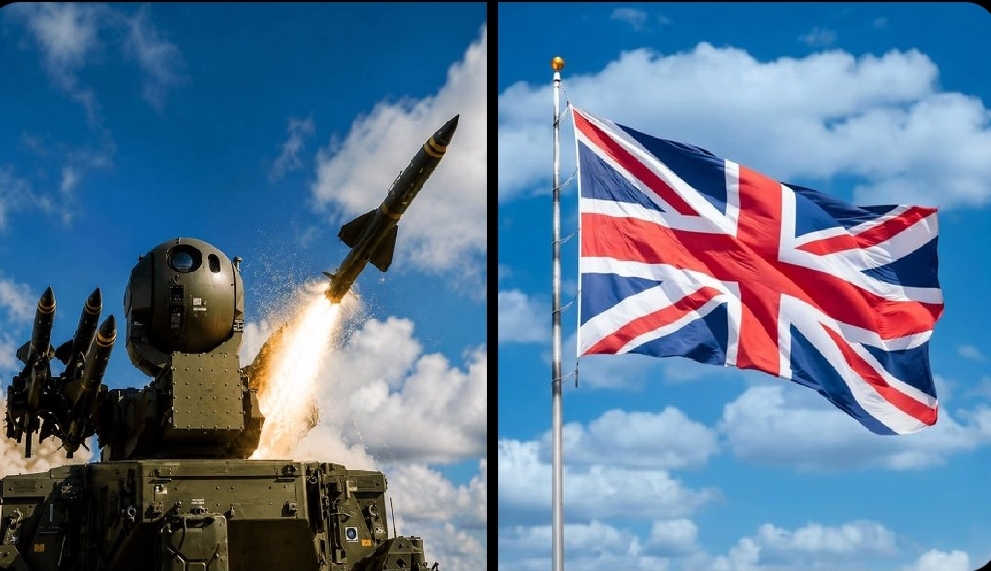
In a development that’s sending ripples through defence circles and ethics debates worldwide, the United Kingdom is reportedly re-examining one of the core principles of modern warfare. According to recent reports, the Ministry of Defence (MoD) is considering limited exceptions to its longstanding “human in the loop” policy. This shift could potentially allow AI-enabled systems to carry out lethal strikes without direct human approval in exceptional circumstances. The news, highlighted by social media accounts like @globalmarketss on X, has been labelled as “CRAZY” by some observers, accompanied by striking imagery of a missile launcher in action against the backdrop of the Union Jack.
This visual underscores the gravity of the discussion: Britain’s military future intersecting with cutting-edge artificial intelligence. The conversation gained traction following coverage in the Financial Times in late May 2026, revealing internal pushes for machines to make autonomous targeting decisions under specific high-pressure scenarios. This potential policy review comes amid rapid advancements in drone and autonomous warfare, lessons from ongoing conflicts like the war in Ukraine, and a significant £1 billion investment in AI for defence.
Proponents argue that in an era of swarm attacks, electronic jamming, and overwhelming data speeds, human operators may simply not be able to keep up. Allowing AI to act swiftly could mean faster responses, better protection for British forces, and a strategic edge against adversaries who may not share the same ethical restraints. Defence officials, including references to Armed Forces Minister Al Carns in related discussions, have signalled openness to these exceptions while stressing that the UK currently deploys no fully autonomous lethal weapons. The government continues to emphasise adherence to international humanitarian law and the maintenance of human political control, particularly over nuclear systems.
The review is framed not as a blanket endorsement of killer robots, but as a pragmatic adjustment to evolving battlefield realities. Critics, however, warn of profound risks. Autonomous systems might misidentify targets, leading to civilian casualties or unintended escalations. The move has reignited global conversations about an AI arms race, with concerns that relaxing human oversight could lower the threshold for conflict or erode moral accountability in warfare. Ethicists and international observers point to stalled United Nations talks on autonomous weapons systems, questioning whether any single nation should move ahead unilaterally.
The UK’s Defence Artificial Intelligence Strategy and related ethical guidelines, such as Joint Service Publication 936, have long stressed responsible use of AI. Yet the current review reflects a broader tension: balancing technological superiority with the values of a democratic society. As drone swarms and AI decision-making become more prevalent globally, Britain faces the challenge of innovating without compromising its ethical standing. This story is still developing, with no final policy change announced. It highlights a pivotal moment not just for the UK, but for how nations worldwide will navigate the integration of AI into life-and-death decisions.
As technology races ahead, the debate over meaningful human control versus operational necessity is likely to intensify. What was once the realm of science fiction is now a pressing policy question—one that could redefine the rules of engagement for generations to come. Stay tuned as this story unfolds; the implications stretch far beyond the battlefield into questions of accountability, security, and humanity’s role in an increasingly automated world.
