

Paris, once again, found itself at the center of a dramatic night that blended euphoric celebration with chaotic disorder. On Saturday, May 30, 2026, Paris Saint-Germain (PSG) secured their second consecutive UEFA Champions League title, defeating Arsenal 4-3 in a tense penalty shootout following a 1-1 draw after extra time at Budapest’s Puskás Aréna.
The victory marked a historic back-to-back achievement for the French club, sparking initial waves of pride and festivity across the French capital. However, as night fell, scenes of joy quickly gave way to violence, vandalism, and clashes that have drawn international attention. Thousands of fans poured into the streets, particularly along the iconic Champs-Élysées and areas near the Parc des Princes stadium. An estimated 20,000 supporters gathered in central Paris, waving flags, lighting flares, and chanting in honor of their team’s triumph.
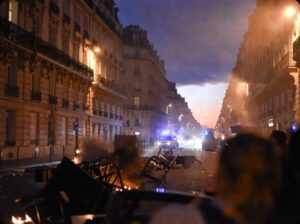
Fireworks illuminated the skyline as revelers celebrated what many called a dream European campaign. Yet, amid the legitimate festivities, pockets of unrest erupted. Groups of young men were seen setting fires to cars, scooters, and other debris, smashing shop windows, and clashing with law enforcement. Heavy smoke filled the air as police deployed tear gas to disperse crowds and regain control. French authorities reported significant numbers of arrests and injuries in the aftermath. Nationwide, police detained around 780 individuals involved in the violent clashes, with a large portion occurring in Paris and other cities across France. Reports indicate that roughly 57 police officers were injured during the operations.
In Paris alone, hundreds were taken into custody, including attempts by some groups to storm a police station and erect barricades using bicycles and other objects on the city’s ring road (Périphérique). One related road accident reportedly resulted in a fatality. The Interior Ministry mobilized thousands of officers to manage the situation, highlighting the scale of the response needed. This is not the first time PSG’s European success has been overshadowed by street disorder. Similar scenes followed their 2025 title win, raising recurring questions about football hooliganism, crowd management, and broader societal issues in France. While many fans celebrated peacefully, the involvement of opportunists, vandals, and known troublemakers turned parts of the night into what some social media users described as “war zone” footage. Videos circulating online showed burning vehicles, damaged storefronts, and chaotic chases through smoke-filled streets—images that have fueled intense online debates about integration, urban youth violence, and the challenges of managing large-scale public gatherings in major European cities.

PSG’s on-pitch heroes, including standout performers like Ousmane Dembélé and others who shone in the final, delivered a memorable victory that cements the club’s growing European legacy under its current ownership. The team’s ability to retain the Champions League title places them among an elite group in the competition’s modern era. Yet, the off-pitch events serve as a sobering reminder that sporting triumphs can sometimes expose deeper tensions within society.
As Paris cleans up and authorities assess the full extent of the damage, questions linger about preventive measures for future celebrations. Football has long been a unifying force, but nights like this underscore the thin line between passion and pandemonium. For PSG fans worldwide, the double Champions League glory remains a proud milestone—though one forever linked in memory to the fires that burned in the streets of their beloved city.
