
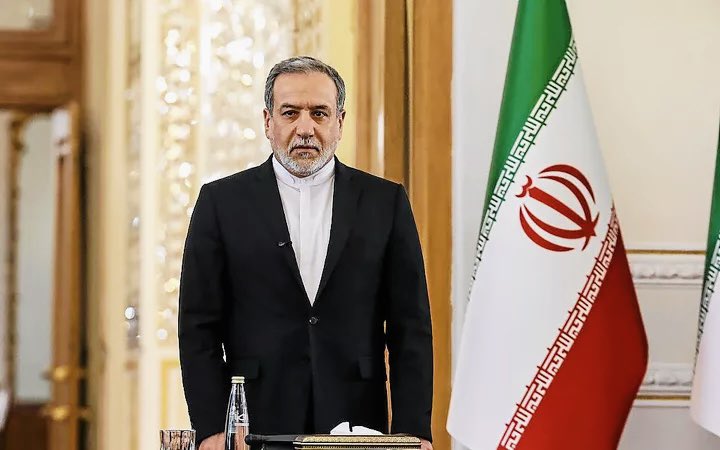
Iran’s Foreign Minister Abbas Araghchi has issued a sharply worded response following recent U.S. military strikes, accusing Washington of repeatedly undermining diplomatic solutions in favor of confrontation. His statement, delivered amid escalating regional tension, framed the strikes as evidence that negotiations are routinely disrupted by what Tehran describes as reckless American military decision-making.
According to Araghchi, diplomatic pathways were once again sidelined just as dialogue appeared possible, reinforcing Iran’s long-standing argument that external pressure tactics only deepen mistrust. The minister also directly challenged intelligence assessments from the Central Intelligence Agency, rejecting claims that Iran’s missile capabilities had significantly declined. Instead, he asserted that Iran’s missile inventory and launcher capacity had increased to 120 percent compared to earlier benchmarks, portraying the country as militarily stronger rather than weakened.
The statement’s most striking element was the declaration that Iran’s readiness to defend its population stands at “1,000%,” a rhetorical escalation designed to signal deterrence rather than immediate retaliation. Regional analysts note that such messaging serves multiple audiences simultaneously: domestic citizens seeking reassurance, regional rivals monitoring military posture, and global powers weighing the risks of further confrontation.
The exchange underscores a familiar pattern in Middle Eastern geopolitics where military action and diplomatic negotiation exist in constant tension. Each escalation narrows space for compromise while raising fears of broader regional instability involving allied forces and proxy groups. As international observers call for restraint, the latest rhetoric suggests both sides are entering a phase of heightened strategic signaling, where perception and deterrence may matter as much as battlefield realities.
