
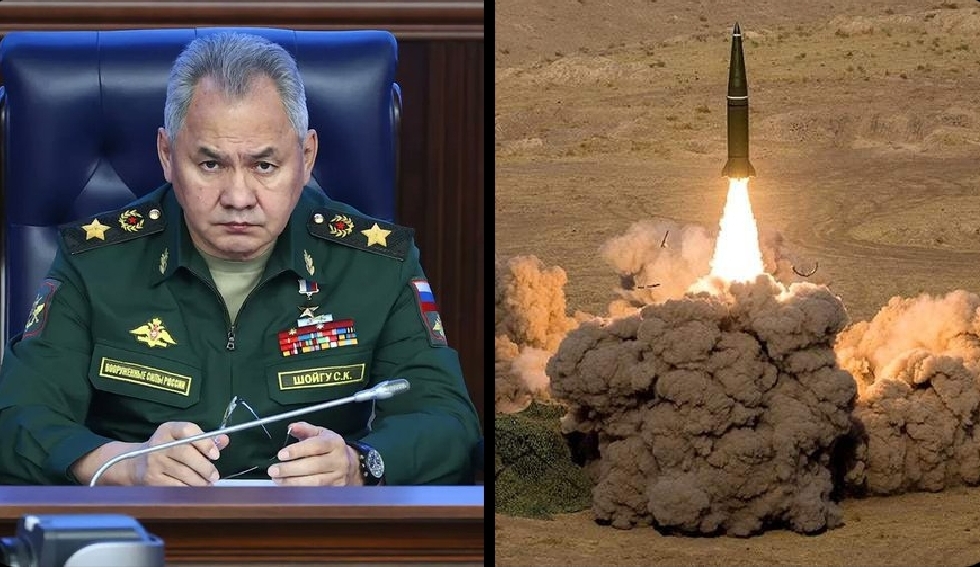
Global tensions surrounding the ongoing Russia–Ukraine War intensified sharply after senior Russian security official Sergei Shoigu declared that Moscow’s warning regarding a possible strike on Kyiv was “completely serious and deliberate,” adding that such an operation could occur at any moment. The statement has immediately heightened international concern over the possibility of a major escalation in the conflict, particularly as diplomatic efforts to stabilize the region remain fragile.
According to Shoigu, earlier warnings advising foreign ambassadors and diplomatic personnel to leave Kyiv were not symbolic political messaging but rather part of what Russia considers a genuine security warning. The remarks have intensified fears that Moscow may be preparing a significant military operation targeting critical infrastructure, government facilities, or strategic command positions within the Ukrainian capital.
Since the beginning of the war, Kyiv has remained both the political heart of Ukraine and a symbolic center of resistance against Russian military pressure. Although Russia initially attempted to rapidly seize the city during the early stages of the invasion, Ukrainian defenses — supported heavily by Western intelligence, weapons systems, and financial aid — prevented Moscow from achieving that objective. Since then, the conflict has evolved into a prolonged and highly destructive war involving missile strikes, drone warfare, trench combat, cyber operations, and economic confrontation.
Military analysts say statements like Shoigu’s often serve multiple strategic purposes. On one level, they may function as psychological warfare designed to pressure Ukraine and its allies by creating uncertainty around civilian safety and diplomatic presence. On another level, they can signal genuine military intent intended to prepare international actors for possible escalation while discouraging deeper Western involvement.
The warning also comes at a moment when Russia faces increasing pressure on several fronts. Continued Western military assistance to Ukraine, expanding NATO coordination, and long-range weapons support have significantly complicated Moscow’s strategic calculations. At the same time, Russia has intensified efforts to demonstrate that it retains escalation dominance and the ability to strike high-value targets whenever it chooses.
For foreign governments, the warning presents a difficult challenge. Diplomatic missions often balance security concerns with the symbolic importance of maintaining presence in conflict zones. Any evacuation of embassies or ambassadors from Kyiv could be interpreted internationally as confirmation that intelligence agencies believe the threat level has risen substantially.
The broader geopolitical implications are equally serious. A large-scale strike on Kyiv could trigger renewed calls for expanded military support to Ukraine, stronger sanctions against Russia, and deeper international isolation of Moscow. It could also increase fears of unintended escalation between Russia and NATO countries already heavily involved in supporting Ukrainian defense efforts.
Beyond military calculations, the situation underscores how unpredictable and dangerous the conflict has become after years of war. What initially began as a regional invasion has evolved into one of the defining geopolitical crises of the modern era, reshaping global energy markets, defense policies, diplomatic alliances, and international security priorities.
As global leaders monitor developments closely, attention now turns to whether Russia’s latest warning represents strategic intimidation or the prelude to another major phase in the war. Either way, the statement from Shoigu has reinforced growing international anxiety that the conflict may be approaching an even more volatile stage.
