
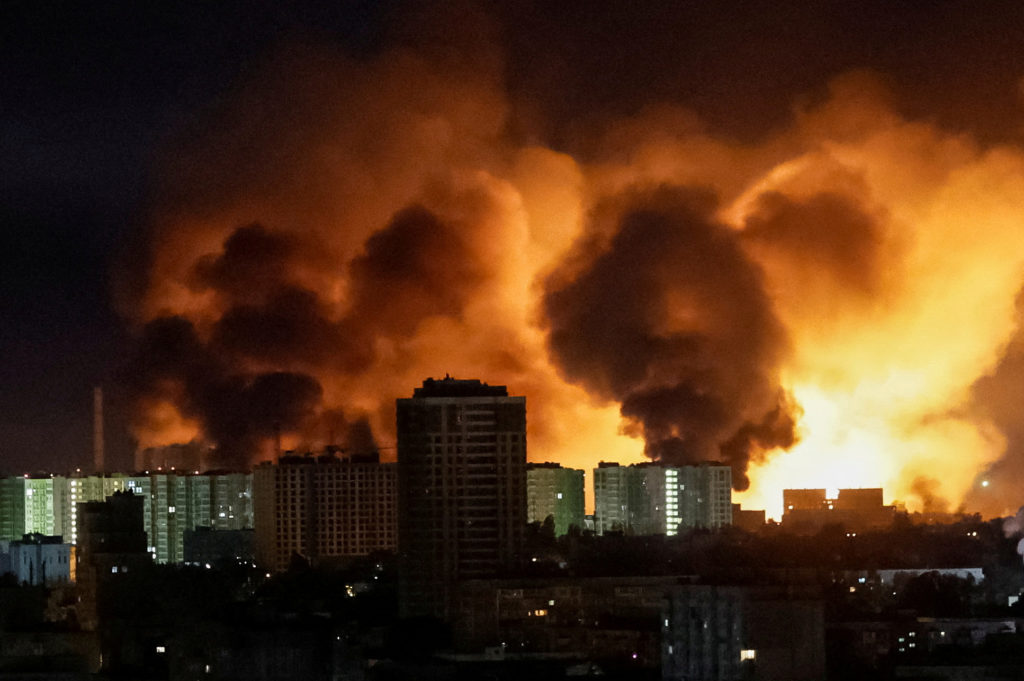
The war between Russia and Ukraine has entered another deeply tense phase, as renewed military strikes continued despite calls for calm from Ukrainian leadership. Hopes for even a temporary pause in hostilities weakened after Ukrainian President Volodymyr Zelenskyy publicly appealed for a ceasefire aimed at reducing civilian suffering and opening humanitarian space for relief efforts. Instead of signaling de-escalation, reports from multiple regions indicated fresh waves of drone and missile attacks, reinforcing fears that diplomatic progress remains distant.
In recent days, explosions and air-raid sirens once again became part of daily life for many Ukrainian communities. Ukrainian officials say several strategic locations, including infrastructure networks and urban areas, were targeted during overnight operations. Energy facilities, transportation systems, and logistical routes have remained particularly vulnerable, creating repeated disruptions that affect electricity supply, public services, and economic recovery efforts. For ordinary civilians, the continuation of strikes means another cycle of uncertainty, sleepless nights, and the ongoing challenge of rebuilding lives amid instability.
President Zelenskyy’s ceasefire appeal was widely interpreted as both a humanitarian request and a diplomatic signal to the international community. Ukrainian authorities argue that even a short pause could allow evacuation operations, delivery of aid, and repairs to damaged infrastructure. However, continued attacks suggest that military objectives currently outweigh negotiation efforts. Analysts observing the conflict note that both sides remain locked in fundamentally opposing positions regarding territory, security guarantees, and long-term geopolitical influence, leaving little immediate room for compromise.
International reactions have reflected growing concern over the conflict’s endurance. Western governments continue to provide political and military support to Ukraine while simultaneously encouraging diplomatic engagement. Yet repeated ceasefire proposals throughout the war have struggled to gain traction, often collapsing amid renewed fighting on the ground. The persistence of hostilities has contributed to wider global consequences, influencing energy markets, food supply chains, and international security strategies far beyond Eastern Europe.
Beyond geopolitics, the human impact remains the most profound dimension of the war. Millions of Ukrainians continue to live under the threat of sudden attacks, displacement, and economic hardship. Families separated by frontline movements and destroyed communities face an uncertain future, while humanitarian organizations warn that prolonged conflict risks creating long-term social and psychological scars across generations. Each renewed strike serves as a reminder that, despite diplomatic statements and global attention, the war’s reality is still defined by civilians navigating survival amid conflict.
As military operations continue, observers believe the path forward remains unclear. Some experts predict sustained escalation, while others suggest intermittent negotiation attempts could emerge under international pressure. For now, however, the continuation of strikes following ceasefire appeals highlights a sobering truth: peace negotiations remain fragile, and the war shows few signs of ending soon.
