
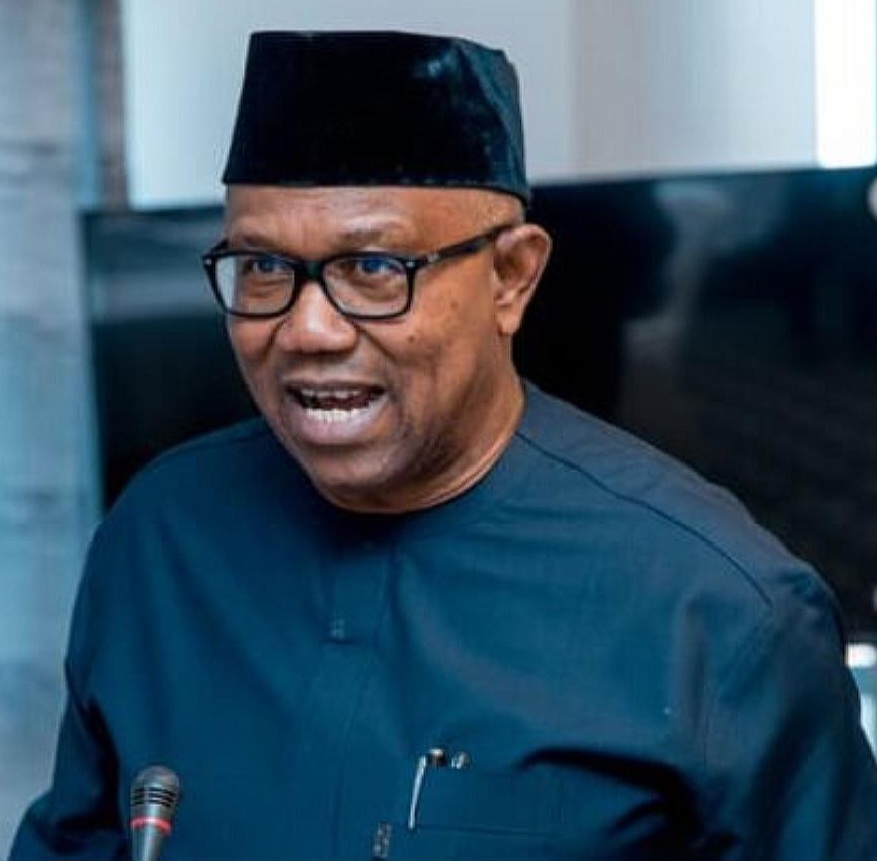
In a sharp critique that has ignited fresh national debate on fiscal responsibility, prominent Nigerian politician and former Anambra State Governor Peter Obi has expressed deep concern over the country’s projected $11.6 billion debt servicing obligation for 2026. Obi warned that this massive allocation, which is expected to consume nearly half of the nation’s projected revenue, should deeply worry every Nigerian invested in the country’s future.
The remarks come shortly after President Bola Tinubu disclosed the staggering figure during a recent foreign engagement at the Africa Forward Summit in Nairobi, Kenya. President Tinubu highlighted the burden imposed by the current global financial system, noting that debt servicing would significantly limit fiscal space for critical investments. For many observers, the revelation underscores the escalating debt challenges facing Africa’s largest economy under the present administration.
In a detailed statement shared on his official X account, Obi emphasized that there is nothing inherently wrong with borrowing, provided it is guided by prudence and channeled toward productive investments that generate long-term growth. However, he questioned the direction of Nigeria’s current borrowing practices, suggesting they appear more oriented toward consumption rather than building sustainable infrastructure, industries, or human capital. “This figure should alarm anyone invested in the nation’s economic future and long-term growth,” Obi stated, drawing attention to the opportunity costs involved.
Obi pointed out stark comparisons in the proposed 2026 budget, where the debt servicing cost—equivalent to approximately ₦17–18 trillion depending on exchange rates—dwarfs combined allocations for key social sectors. According to reports, this amount is nearly three times higher than the total budgeted for health (around ₦2.46 trillion), education (₦2.56 trillion), and social protection/poverty alleviation programs. Such priorities, he implied, risk undermining Nigeria’s development goals and trapping future generations in a cycle of debt repayment with little tangible progress to show.
The Labour Party chieftain’s intervention has resonated widely, sparking intense discussions across social media and political circles. Supporters view it as a timely call for accountability and a shift from what they describe as consumption-driven economics to a production-focused agenda. Obi has consistently advocated for this approach, arguing that true economic transformation lies in investing borrowed funds in sectors that create jobs, boost revenue generation, and reduce future dependency on loans.
However, the Channels Television report covering Obi’s statement also drew significant backlash for its wording. The outlet referred to him simply as “a former Anambra State Governor,” a description many Nigerians, particularly his supporters, found dismissive given his stature as the 2023 presidential candidate of the Labour Party and a leading voice in national discourse. Social media users accused the station of intentional disrespect and bias, with several replies urging media outlets to address public figures with appropriate recognition of their current influence and contributions.
This latest episode highlights the broader tensions in Nigeria’s economic management. As the country grapples with inflation, currency pressures, and the need for structural reforms, the debate over debt sustainability has taken center stage. Proponents of the current approach argue that borrowing remains necessary for development amid global headwinds, while critics like Obi insist on greater transparency, fiscal discipline, and a clear focus on returns on investment.As Nigeria prepares for the 2026 budget and beyond, Obi’s critique serves as a poignant reminder of the choices ahead. Whether the government will pivot toward more productive uses of debt or continue on the current trajectory could define the economic fortunes of millions of Nigerians for years to come. The conversation, it seems, is far from over.
