
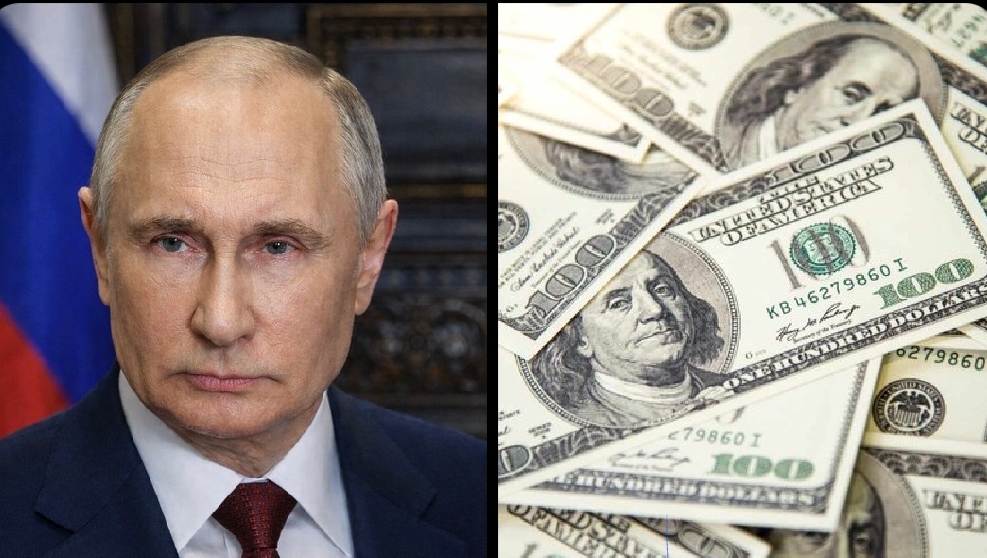
A significant shift in global economic power dynamics appears to be unfolding after Russia announced that future energy transactions with Europe will no longer be conducted in U.S. dollars, instead requiring payments in Russian rubles or Chinese yuan. The decision marks one of the boldest financial responses yet to Western sanctions imposed since the outbreak of the Russia–Ukraine War, signaling Moscow’s continued effort to reshape international trade away from dollar dependency.
Since the imposition of sweeping financial restrictions by Western governments, Russia has steadily pursued what analysts describe as a “de-dollarization strategy.” By insisting on alternative currencies, the Kremlin aims to reduce exposure to U.S.-controlled financial systems and minimize vulnerability to sanctions targeting banking channels and foreign reserves. Russian leadership under Vladimir Putin has repeatedly argued that reliance on the dollar gives Washington disproportionate influence over global commerce, particularly energy markets where oil and gas transactions traditionally settle in U.S. currency.
The policy could have profound implications for European economies still dependent on Russian energy flows despite diversification efforts. Energy importers may now face complex currency adjustments, increased transaction costs, and potential volatility linked to exchange rates. Economists note that if widely adopted, the move could accelerate broader international experimentation with alternative payment systems involving China’s yuan, strengthening financial cooperation between Moscow and Beijing.
However, the announcement also raises practical questions. Europe has spent the past two years reducing reliance on Russian energy through LNG imports and renewable expansion, meaning the effectiveness of Moscow’s policy may depend on how many European buyers remain willing — or able — to comply. Nonetheless, the decision reflects a deeper geopolitical contest: not merely over territory or security, but over the future architecture of global finance itself.
