
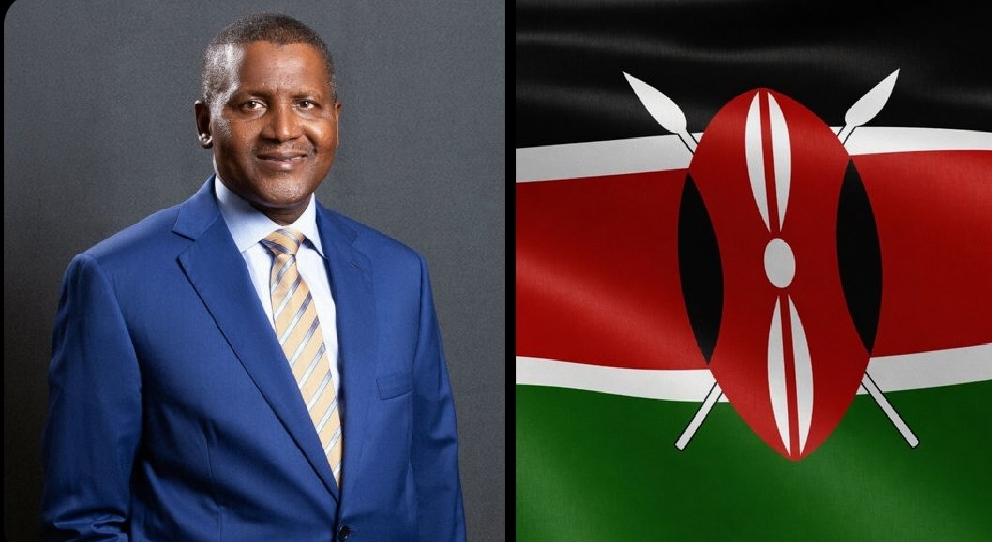
Africa’s industrial landscape may be on the verge of another historic shift as billionaire industrialist Aliko Dangote reportedly considers building a massive oil refinery in Kenya capable of producing more than 650,000 barrels of refined petroleum daily. The move comes barely two years after his landmark refinery project in Lagos began transforming Nigeria’s energy sector, reducing fuel import dependence and reshaping continental energy conversations. If executed, the proposed East African refinery would rank among the largest globally and signal a bold expansion of private African-led infrastructure investment across borders.
The interest in Kenya is strategic rather than symbolic. East Africa currently relies heavily on imported refined petroleum products, mostly shipped from the Middle East, leaving regional economies vulnerable to global price shocks, shipping disruptions, and geopolitical instability. By positioning a refinery near Kenya’s deep-water port of Mombasa, Dangote appears to be targeting both logistics efficiency and market demand, as Kenya represents one of the region’s largest consumer economies. Reports suggest the project could cost between $15 billion and $17 billion, underscoring its scale and long-term ambition.
Beyond energy production, the potential refinery reflects a broader economic philosophy emerging across Africa: industrial self-sufficiency. Dangote’s Nigerian refinery already demonstrated how domestic refining capacity can cut fuel shortages, stabilize pricing, and reduce foreign exchange pressure caused by fuel imports. Analysts believe replicating this model in East Africa could unlock regional energy security while creating thousands of jobs across construction, engineering, logistics, and petrochemicals.
Politically, the project also places African governments at the center of decision-making. Dangote himself has indicated that final execution depends largely on host government support, regulatory clarity, and regional cooperation. This highlights a growing trend where private capital leads development, but state policy determines success. If Kenya moves forward, the refinery could redefine intra-African trade under the African Continental Free Trade Area by keeping energy value chains within the continent rather than exporting crude and importing finished fuel.
Ultimately, the proposed Kenyan refinery represents more than an investment; it symbolizes Africa attempting to control its own energy destiny. In a global era defined by supply chain nationalism and economic competition, Dangote’s expansion could mark one of the most consequential industrial bets in modern African history — a move that may shift the continent from resource exporter to industrial powerhouse.
