
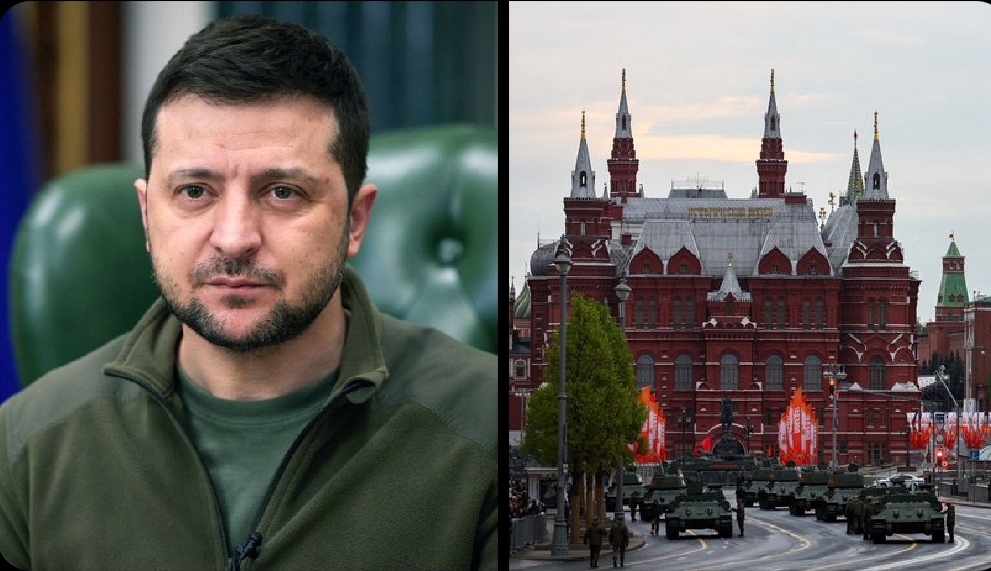
A dramatic diplomatic development has emerged in the ongoing Russia-Ukraine conflict after Ukrainian President Volodymyr Zelenskyy reportedly instructed Ukrainian military forces not to target Red Square, one of Russia’s most symbolic national sites, in exchange for the release of 1,000 Ukrainian prisoners of war. The decision marks one of the most unusual humanitarian-linked military understandings seen since the full-scale war between Ukraine and Russia escalated in 2022.
Red Square, located in the heart of Moscow, represents not only a historic landmark but also a powerful political and cultural symbol tied closely to Russian national identity, military celebrations, and state ceremonies. Any potential strike on the area would carry enormous psychological and political consequences, far beyond its military value. By agreeing to refrain from targeting the location, Kyiv appears to have prioritized the safe return of captured soldiers over symbolic escalation, signaling a rare moment where humanitarian considerations outweighed battlefield strategy.
The reported agreement highlights the growing importance of prisoner exchanges as one of the few functioning diplomatic channels between both sides. Throughout the war, thousands of soldiers from both nations have been captured, and negotiations over their return have often occurred quietly behind the scenes even while active fighting continued. Securing the release of 1,000 prisoners represents one of the largest potential exchanges since the conflict began, offering relief to families and reinforcing domestic morale inside Ukraine.
Military analysts interpret Zelenskyy’s order as a calculated strategic decision rather than a concession. By avoiding an attack on Red Square, Ukraine maintains international goodwill while demonstrating restraint toward culturally sensitive targets, a move likely intended to preserve Western support and reinforce Ukraine’s image as adhering to international norms of warfare. At the same time, the decision exposes how symbolic locations have become bargaining tools in modern conflicts, where perception and narrative carry as much weight as territorial gains.
The development also reflects broader war fatigue felt across Europe and beyond. After years of intense combat, both nations face mounting economic strain, human losses, and international pressure to explore humanitarian compromises even without a comprehensive peace settlement. While the agreement does not indicate an imminent end to hostilities, it suggests that limited cooperation remains possible despite deep political hostility.
As negotiations surrounding prisoner exchanges continue, the decision not to target Moscow’s most iconic square may stand as a reminder that even in prolonged war, moments of restraint can emerge — driven not by trust, but by the shared human cost of conflict.
