
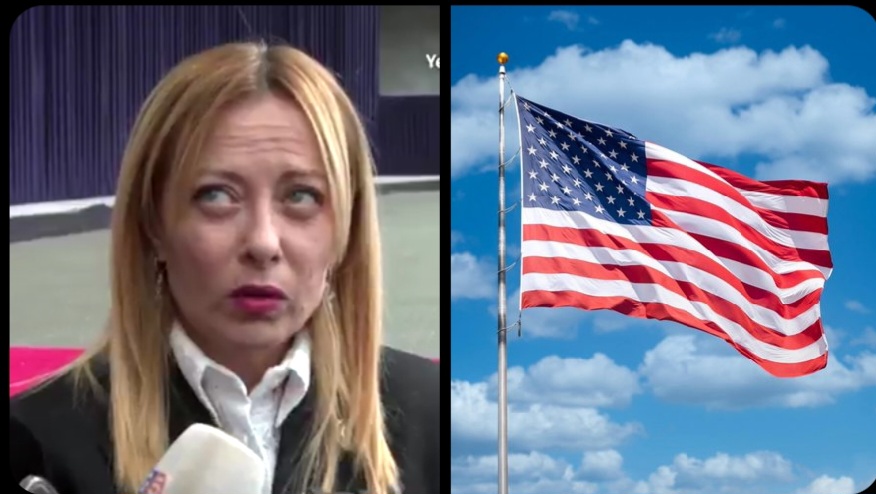
Italian Prime Minister Giorgia Meloni has firmly rejected the idea of a United States military withdrawal from Italy, reinforcing Rome’s commitment to maintaining strong transatlantic security cooperation amid growing global instability. Her statement comes at a time when debates about American military deployments overseas have intensified, particularly within NATO countries assessing their defense readiness against emerging geopolitical threats.
Italy hosts several strategic American military bases, making it one of Washington’s most important defense partners in Europe. These installations support NATO operations across the Mediterranean, Eastern Europe, and the Middle East, serving as logistical hubs for intelligence coordination, rapid deployment forces, and regional deterrence efforts. Meloni’s position signals that Rome views the continued U.S. presence not as foreign dependence but as a cornerstone of collective European security architecture.
The Italian leader’s remarks also reflect broader concerns among European allies about shifting U.S. foreign policy priorities. Discussions surrounding potential troop reductions abroad have resurfaced in American political debates, raising fears that Europe could face increased responsibility for its own defense during a period marked by ongoing tensions linked to the North Atlantic Treaty Organization and the prolonged security consequences of the Russia-Ukraine war. By opposing withdrawal, Meloni aims to reassure both domestic audiences and NATO partners that Italy remains committed to alliance cohesion and regional stability.
Italy’s strategic geography amplifies the significance of this stance. Located at the heart of the Mediterranean, the country acts as a gateway between Europe, Africa, and the Middle East. U.S. bases in Italy have historically played a key role in counterterrorism operations, humanitarian missions, and rapid military responses to crises across multiple continents. Meloni’s government argues that reducing American forces could weaken deterrence capabilities at a time when security challenges—from migration pressures to regional conflicts—continue to evolve.
Politically, the statement also highlights Meloni’s broader foreign policy approach, which emphasizes strong relations with Washington while maintaining Italy’s leadership role within Europe. Despite occasional diplomatic disagreements between European capitals and U.S. administrations, Italy has consistently supported maintaining deep defense cooperation, viewing the alliance as essential for both national security and international influence.
Analysts see Meloni’s comments as part of a wider European message urging continuity rather than retrenchment in transatlantic defense relations. With global security dynamics rapidly changing, her opposition to troop withdrawal underscores a belief shared by several NATO allies: that sustained American military engagement in Europe remains a stabilizing force rather than a temporary strategic arrangement.
As discussions continue within Western security circles, Italy’s position may shape broader NATO conversations about burden-sharing, military readiness, and the future of U.S. deployments across allied territories. For now, Rome’s message is clear—Italy considers the American military presence not only welcome but vital to preserving collective defense in an increasingly uncertain world.
