
Governors of Abia, Edo, and Delta States Take Charge of Road Funding Within Their Regions
The Ministry of Works, representing the Federal Government, has sanctioned an allocation exceeding N1.04 trillion dedicated to nationwide road infrastructure development.
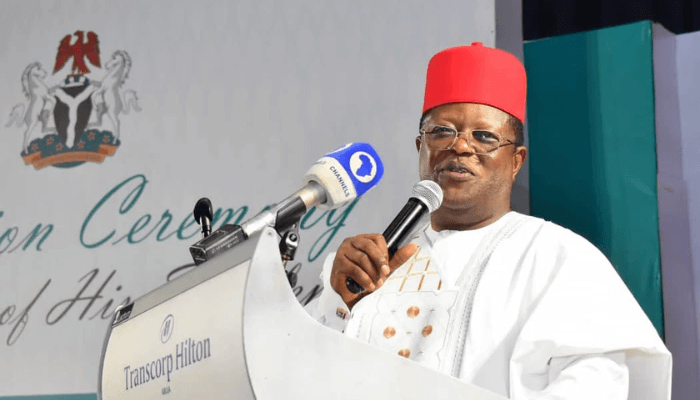
In a statement released over the weekend, Minister of Works David Umahi disclosed that during the Federal Executive Council meeting held on November 6, 2025, substantial funds were approved for several key road projects. These include the 163km Sokoto-Badagry Coastal Superhighway Section 3 (stretching from Badagry to the Ogun-Oyo border) with a budget of N553 billion, translating to approximately N3.39 billion per kilometer for full concrete pavement.
Additional projects receiving funding are the Ota-Idiroko Section I at N98 billion, complemented by a flyover project valued at N23 billion; the 37km Ijebu Igbo-Etapa-Owoyen Road allocated N53 billion; and the Lagos-Ibadan Expressway Phase II Section II, newly awarded at N43.73 billion, which encompasses underpasses, ramps, and auxiliary roads. The Ilorin-Omu Aran-Egba Road Phase I, covering 31km, has been granted N43 billion.
Further allocations include the Wasasa-Turunku-Mararaba Phase II (42km) in Kaduna with N30.23 billion; the Enugu-Onitsha Road Phase I (35km from OP Junction to the Anambra border) at N28.47 billion; the Mushin-NNPC-Apapa-Oshodi dualisation project spanning 14.4km, aimed at improving Lagos ports access, funded with N19.09 billion; and the restructured East-West Road (Port Harcourt-Warri axis) package, which includes three flyovers and two bridges, inherited with a budget of N156 billion.
Minister Umahi highlighted that the escalation in project costs is influenced by enhanced engineering designs, challenging geographical conditions, and inflationary pressures. Notably, the price of reinforcement steel has surged beyond N1.1 million per ton, significantly impacting overall expenditures.
In a strategic move to ease the financial load on the federal government and accelerate project delivery, the governors of Edo, Delta, and Abia States have taken on the responsibility of funding and managing certain federal road projects within their territories.
Related: Lagos-Calabar Coastal Highway Project Expected to Generate Revenue, Says Minister Umahi
This decentralization effort is intended to foster more efficient execution and ensure timely completion of critical infrastructure.
Umahi emphasized, “Our updated funding approvals underscore a dedication to constructing resilient, concrete-based roadways designed to endure for decades, while maximizing value for public investment.”
