Table of Contents
Table of Contents
- Reimagining Bunny Munro: Matt Smith and Nick Cave’s Complex Journey
- A New Dimension to a Flawed Character
- From Page to Screen: A Darkly Comic Tale of Grief and Desire
- Exploring the Humanity Behind the Flaws
- The Emotional Core: A Father-Son Story
- Setting and Social Context: A Period Piece with Contemporary Resonance
- Deeper Reflections on Humanity and Loss
- Personal Parallels and Distinctions
Reimagining Bunny Munro: Matt Smith and Nick Cave’s Complex Journey
A New Dimension to a Flawed Character
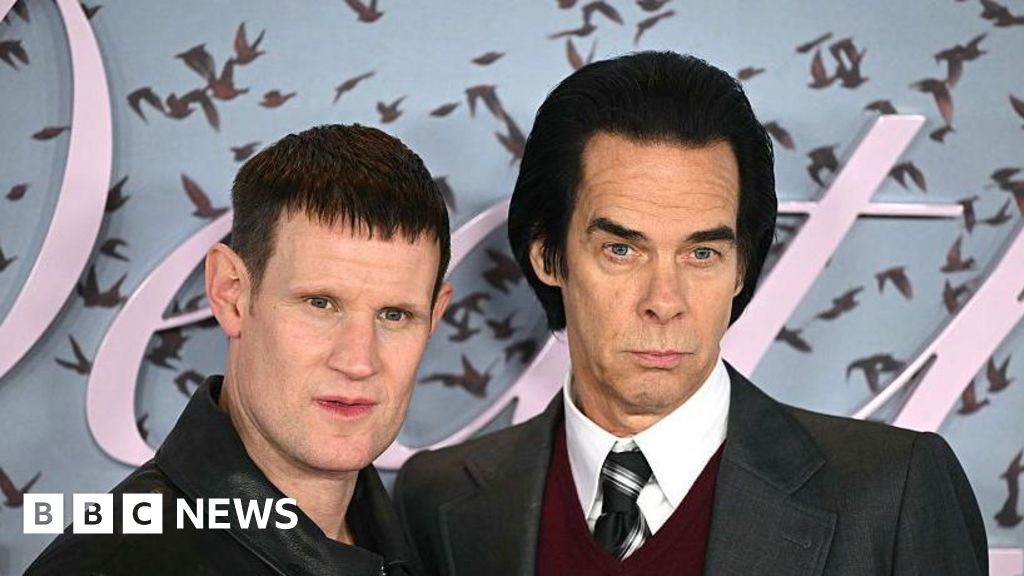
When Australian musician and author Nick Cave first witnessed Matt Smith embodying Bunny Munro-the flawed, sex-driven door-to-door salesman from Cave’s 2009 novel The Death of Bunny Munro-he was struck by a surprising transformation. Unlike the book’s original portrayal of Bunny as an inept and often ridiculed lothario, Smith’s interpretation brought a magnetic charm that added layers to the character.
“In the novel, Bunny is clumsy in his pursuits and often dismissed by women,” Cave explains. “But Matt’s portrayal introduces an allure that complicates Bunny’s interactions-women are drawn to him, which wasn’t the case before.”
From Page to Screen: A Darkly Comic Tale of Grief and Desire
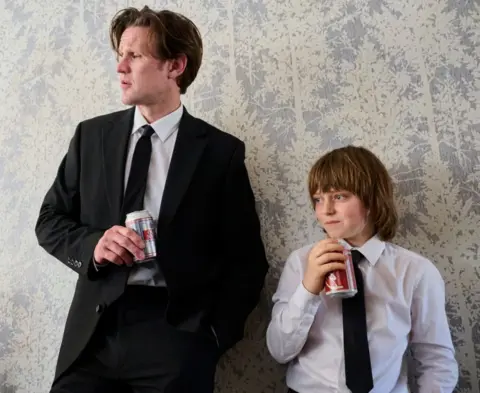
The story, a darkly humorous exploration of sex, guilt, and sorrow, has been adapted into a television series starring Smith, known for his roles in Doctor Who and The Crown. The narrative follows Bunny as he unravels following his wife’s tragic suicide, embarking on a turbulent road trip with his son in tow, desperately clinging to his job and carnal desires amid chaos.
Smith recalls, “I accepted the role immediately after meeting Nick. It was a compelling challenge to portray a man pushed to his limits by grief, sexuality, and the complexities of life.”
Exploring the Humanity Behind the Flaws
For Cave, Bunny remains a morally ambiguous figure, but not a villain. “I don’t see Bunny as an outlier,” he says. “He’s a deeply flawed individual wrestling with grief, legacy, and the universal struggles that define us.”
Smith’s portrayal emphasizes Bunny’s dangerous yet captivating nature, making his downfall resonate more profoundly. “He’s selfish and difficult, but also humorous, erratic, and strangely charismatic,” Smith notes. “I found myself drawn to his humanity and even his humor.”
The Emotional Core: A Father-Son Story
At its heart, the series is a poignant exploration of the bond between father and son. Smith describes it as “a touching narrative beneath the surface chaos.” Cave agrees, reflecting on how the story evokes a protective instinct toward his own children. “It’s a reminder of how vulnerable our children are and the importance of cherishing them while we can.”
Set in 2003 Brighton, the adaptation situates the story in a time that feels both recent and distant, highlighting shifts in societal attitudes toward men like Bunny. Despite this, both Cave and Smith avoid framing the series as a commentary on masculinity.
“That’s for viewers to interpret,” Smith says. “For me, it’s about the sins passed down from father to son and the younger Bunny’s struggle to break free.” Cave adds, “It’s a tale of inheritance-what we receive from our parents and what we choose to leave behind. Little Bunny must escape his father’s chaos for his own safety, yet we hope he retains the good parts.”
Deeper Reflections on Humanity and Loss
Cave suggests the story transcends gender themes, delving into how we confront our own nature and humanity. This introspection is a hallmark of Cave’s work, both in literature and music with The Bad Seeds, which often draws from his personal experiences.
Tragically, Cave endured the loss of two sons-Arthur in 2015 and Jethro in 2022-events that profoundly shaped his outlook. He has openly discussed the “immensity” of his grief and how these losses transformed him. After relocating to Los Angeles to escape the sorrow associated with Brighton, he eventually returned, realizing that grief travels with us regardless of location.
“My songs and lyrics reveal who I am and what I’ve endured,” Cave shares. “Even my darkest characters are fragments of my complex self.”
Personal Parallels and Distinctions
While Bunny Munro is not autobiographical, Cave acknowledges a personal connection to the character. “I wasn’t writing about someone I couldn’t understand,” he says. “Though I never pursued women as Bunny does, the internal masculine dialogue and primal impulses are familiar.”
However, Cave admits a key difference: his own shyness around women. “I’m quite intimidated by their power and have never felt entirely at ease in their presence,” he confesses, stripping away any rock-star bravado.
The Death of Bunny Munro premieres on Sky Atlantic from 20 November.