
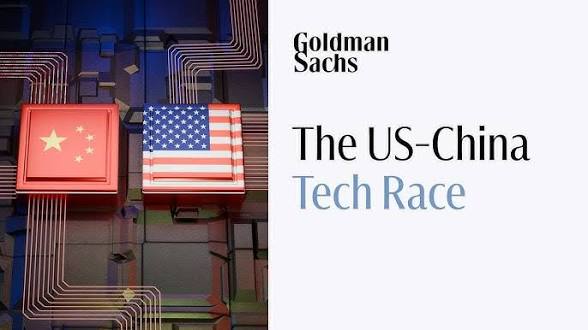
For years , Silicon Valley stood unchallenged as the absolute epicenter of global innovation.
However, over the past decade, a profound tectonic shift has occurred.
China has successfully shed its reputation as a mere low-cost manufacturing assembly line to emerge as a highly sophisticated, independent tech superpower.
By shifting from imitation to aggressive execution, China is no longer just absorbing the digital revolution—it is actively defining its parameters.
Below is an analytical examination of the ten core domains where China is outstripping its global competitors and capturing the technological future.
1. Metamorphosis Into an Innovation Hub
The narrative of China as the world’s generic factory floor is entirely outdated. Today, the nation spearheads pioneering breakthroughs in automation, hardware design, and robotics. Giants like Huawei, Xiaomi, and DJI have established global dominance not through cheap replicas, but via highly competitive, proprietary technology and massive patent portfolios. Even when targeted by severe international sanctions, Chinese semiconductor players like SMIC have continuously pushed boundaries in chip fabrication, proving that external supply chain disruptions are only accelerating the country’s drive toward absolute technological self-reliance.
2. Data Supremacy in the Era of AI
If data is the lifeblood of artificial intelligence, then China holds the keys to the world’s largest refinery. With a hyper-connected domestic population of 1.4 billion, home-grown conglomerates—including Baidu, Alibaba, Tencent, and SenseTime—possess an unmatched ocean of digital data. This massive resource allows them to train, refine, and deploy AI models with unprecedented speed. Supported by aggressive state infrastructure funding and a highly permissive, adaptive regulatory environment, China’s AI development cycle operates at a velocity that Western counterparts struggle to match.
3. Dominance in Next-Gen Telecommunications (5G to 6G):
While Western nations encountered political and infrastructural bottlenecks during their 5G rollouts, China executed a lightning-fast, comprehensive deployment. Telecom leaders like Huawei and ZTE blanketed hundreds of municipalities with high-speed networks, laying the groundwork for smart factories and autonomous logistics. Without stopping to celebrate, Chinese research institutes have already turned their full attention to 6G technology, aiming for speeds that could render traditional fiber optics obsolete and secure long-term control over global network architectures.
4. Living Blueprints of Tomorrow’s Smart Cities
In tech capitals like Shenzhen, Hangzhou, and Beijing, the future of urban engineering has already materialized. Driven by the central government’s New Infrastructure Plan, these cities operate as live testbeds for integrated IoT waste systems, AI-managed traffic frameworks, and autonomous mass transit. China’s distinct advantage lies in its ability to deploy at scale; while Western municipalities run localized, multi-year pilot programs, Chinese cities execute widespread urban transformations smoothly and systematically.
5. The Expansion of the Digital Silk Road
The physical reach of the Belt and Road Initiative is now reinforced by a highly potent digital counterpart: the Digital Silk Road. By exporting e-commerce infrastructure, surveillance technologies, and state-backed cloud computing platforms to developing economies across Africa, Latin America, and Southeast Asia, China is constructing the digital backbone for emerging markets. This deep infrastructure integration fosters long-term technological and economic reliance on Chinese platforms, shifting global geopolitical influence far beyond conventional trade treaties.
6. Direct Control of the Green Transition
The road to a decarbonized global economy goes directly through Beijing. China commands over 70% of global electric vehicle (EV) battery manufacturing. Automotive pioneers like BYD, NIO, and XPeng are fundamentally changing clean transportation dynamics, while battery titans like CATL act as the foundational suppliers to Western brands, including Tesla. By marrying this battery monopoly with dominant positions in solar panel manufacturing and green grid tech, China has effectively cornered the supply chains of the green energy transition.
7. The Quantum Frontiers of Security and Defense
In the high-stakes theater of quantum computing, achievements like the Jiuzhang quantum processor and the Micius quantum satellite showcase China’s advanced capabilities. By successfully testing computational systems that far exceed classical limitations, China is actively working to reshape the future of secure communication, cryptography, and defense systems. This gives them a significant advantage in the impending era of quantum-encrypted warfare.
8. Centralized Policy and Long-Term Strategic Planning
One of China’s strongest competitive advantages is its capacity for uninterrupted, multi-decade strategic planning—a stark contrast to the cyclical policy shifts typical of Western democracies. Frameworks like *Made in China 2025* and *China Standards 2035* are strictly executed, long-term blueprints designed to achieve total dominance in biotechnology, advanced manufacturing, and robotics. This alignment of state capital, academic focus, and corporate execution creates an unstoppable momentum.
9. Weaponizing Fintech via the Digital Yuan
The rollout of the e-CNY (Digital Yuan) marks the first time a major global economy has successfully operationalized a Central Bank Digital Currency (CBDC). By creating a sovereign, blockchain-adjacent financial tool, China has built an architecture capable of bypassing traditional Western-led financial mechanisms like SWIFT. This gives Beijing unprecedented control over capital flows and lays the groundwork for a new monetary system insulated from Western economic sanctions.
10. The Victory of Rapid, Scalable Execution
Ultimately, the global technology race is determined less by theoretical breakthroughs and more by rapid, scalable execution. China’s ascension proves that the nation that can commercialize, scale, and integrate technology fastest wins the field. China is not waiting for international consensus or permission; it is building its own version of the future, encoded in its own systems, languages, and hardware.
