
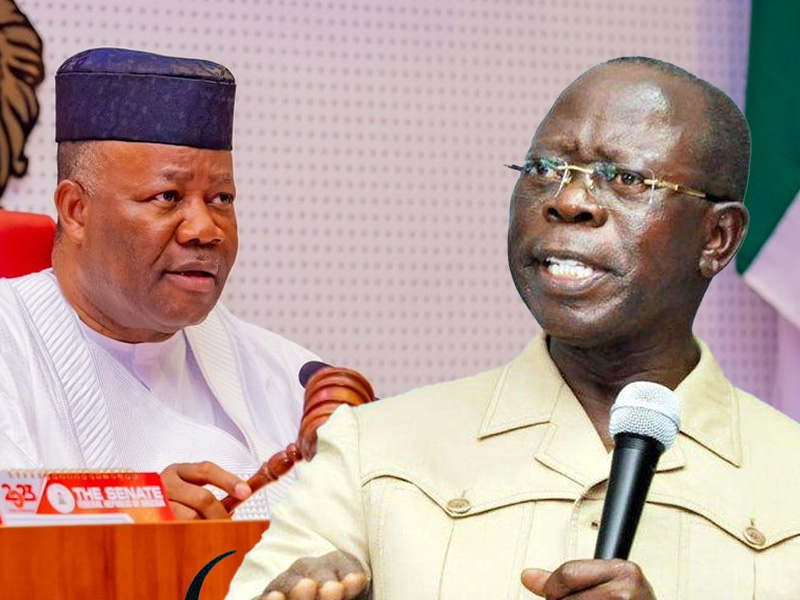
A political storm has erupted within Nigeria’s ruling establishment after former Edo State governor and senator, Adams Oshiomhole, accused Senate President Godswill Akpabio of protecting the Nigerian National Petroleum Company (NNPC) Limited from legislative scrutiny due to alleged personal interests linked to the national oil firm.
Speaking during a Senate session, Oshiomhole criticised what he described as attempts to frustrate efforts aimed at ensuring accountability and transparency within the NNPC. According to him, the Senate leadership’s posture on matters relating to the oil company has raised concerns about possible conflicts of interest.
The former president of the Nigeria Labour Congress alleged that Akpabio’s actions have consistently favoured the NNPC, despite growing public demands for greater oversight of the corporation’s operations. He maintained that public officials entrusted with leadership responsibilities must place national interest above personal considerations.
Oshiomhole argued that the Senate should not shy away from investigating issues concerning the management of the country’s oil resources, noting that Nigerians deserve clear explanations regarding the activities and financial dealings of the state-owned energy company.
In response to the allegations, Akpabio dismissed the claims, insisting that his decisions as Senate President have always been guided by established parliamentary rules and procedures. He denied having any personal interest in the NNPC and rejected suggestions that he had influenced Senate proceedings to shield the company from scrutiny.
The exchange has intensified debates over transparency and accountability within Nigeria’s petroleum sector, particularly at a time when the country continues to grapple with concerns over oil revenue management and the implementation of reforms under the Petroleum Industry Act.
Political observers believe the public disagreement between two prominent members of the ruling party could further heighten tensions within the National Assembly. The controversy is also expected to renew calls from civil society groups and opposition figures for more robust legislative oversight of agencies handling the nation’s vast oil wealth.
As the accusations and denials continue to dominate political discourse, many Nigerians will be watching closely to see whether the Senate takes concrete steps to address the issues raised and reassure the public of its commitment to transparency and accountability in governance.
