
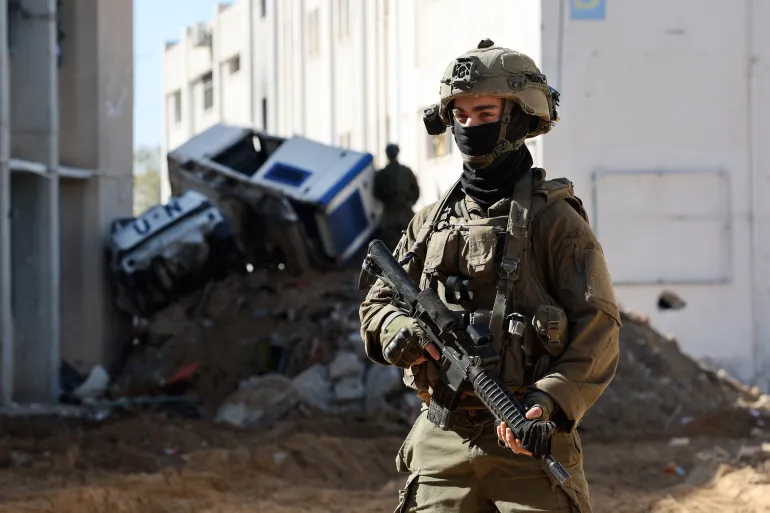
Israel has expanded its military control across parts of Gaza, southern Lebanon and Syria by approximately 1,000 square kilometres, according to an investigation published by Al Jazeera. The report argues that the territorial gains represent a significant shift in Israel’s military strategy, with analysts describing the move as an attempt to create new security realities on the ground amid ongoing regional conflicts.
The investigation states that Israeli forces have established or reinforced buffer zones and military positions in the three territories, effectively increasing the areas under direct military influence. Experts interviewed by Al Jazeera suggested that the expansion reflects a broader policy aimed at strengthening Israel’s strategic depth while addressing security concerns linked to armed groups operating near its borders.
In Gaza, satellite imagery and field reports indicate that Israeli forces have continued to consolidate control in areas previously expected to be vacated under ceasefire arrangements. Analysts warn that the growing military footprint could further worsen humanitarian conditions for Palestinians already displaced by months of conflict.
In Lebanon, the report notes that Israeli operations have moved deeper into southern regions amid ongoing hostilities involving Hezbollah. The developments have heightened tensions along the Israel-Lebanon border and raised concerns about the possibility of a prolonged military presence.
Meanwhile, in Syria, Israel is said to have strengthened its positions in areas it considers strategically important, citing the need to counter threats from Iran-backed groups and other militant actors operating in the region.
Political and military analysts quoted in the report argue that the territorial expansion may also serve a domestic political purpose for Israeli Prime Minister Benjamin Netanyahu, allowing his government to present visible achievements at a time when broader war objectives remain contested. Critics, however, contend that the moves risk increasing regional instability and could complicate future diplomatic efforts aimed at achieving lasting peace.
The latest developments underscore the increasingly complex security landscape in the Middle East, as military operations continue alongside international calls for de-escalation and renewed diplomatic engagement.
