
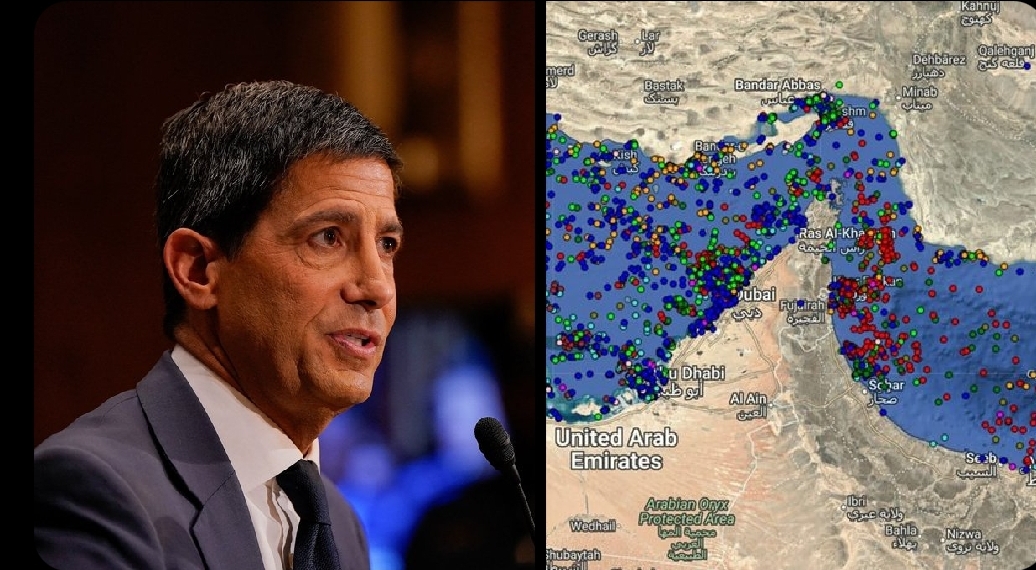
Economic alarm bells are intensifying after officials connected to the U.S. Federal Reserve warned that prolonged instability affecting the Strait of Hormuz could eventually force parts of the world to reduce oil and gas consumption if maritime shipping conditions fail to normalize.
The Strait of Hormuz remains one of the most strategically important energy corridors on Earth, serving as a critical passageway for a substantial portion of the world’s oil and liquefied natural gas exports. Any disruption to shipping traffic through the narrow waterway immediately impacts global energy prices, supply chains, inflation forecasts, and broader economic stability.
The warning reflects mounting fears that escalating tensions in the Middle East could evolve into a prolonged supply shock capable of destabilizing already fragile global markets. Economists note that modern industrial economies remain heavily dependent on reliable fossil fuel transportation, particularly for manufacturing, aviation, shipping, electricity generation, and agricultural production.
If disruptions persist, nations may be forced to implement emergency energy conservation strategies, increase strategic reserve usage, or accelerate transitions toward alternative energy sources. Developing economies would likely face the greatest pressure because rising energy prices tend to trigger inflation spikes that disproportionately affect transportation, food costs, and industrial output.
Financial markets are particularly sensitive to Hormuz-related developments because the strait effectively acts as a pressure point for the global energy system. Even limited shipping disruptions can send oil prices surging within hours due to fears of future shortages.
The Federal Reserve’s warning also underscores the growing intersection between geopolitics and economic policy. Central banks increasingly find themselves responding not only to domestic inflation pressures but also to international conflicts capable of reshaping commodity markets overnight.
