
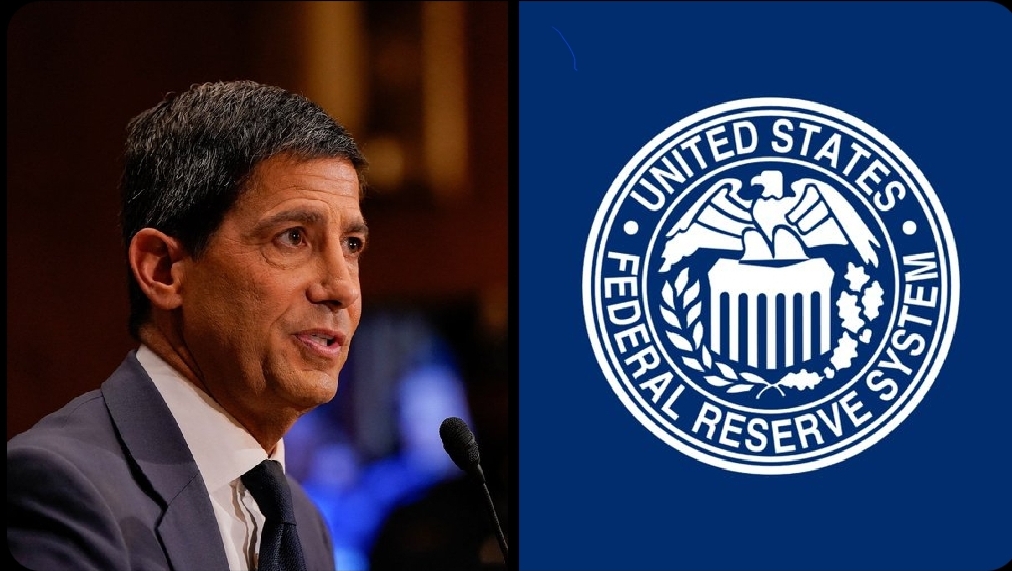
The United States has entered a new chapter in monetary leadership as Kevin Warsh was officially sworn in as the 17th Chair of the Federal Reserve, placing him at the center of one of the most challenging economic periods in recent years.
Warsh, a former Federal Reserve governor and longtime economic strategist, assumes leadership at a time when the U.S. economy faces multiple competing pressures including inflation concerns, interest rate management, slowing consumer confidence, global market volatility, and ongoing geopolitical uncertainty. His appointment immediately attracted attention from investors, financial institutions, and policymakers worldwide because the Federal Reserve’s decisions heavily influence not only the American economy but also global financial markets.
The Federal Reserve serves as the central banking system of the United States and plays a critical role in controlling inflation, stabilizing employment, regulating banking systems, and managing monetary policy. Any shift in leadership often signals potential changes in economic direction, especially regarding interest rates and financial regulation.
Warsh is widely regarded as a figure with strong ties to both Wall Street and conservative economic circles, leading analysts to speculate about how aggressively he may approach inflation control and economic growth. Some economists believe his tenure could prioritize maintaining market confidence and ensuring financial system stability amid fears of recessionary pressure. Others argue that balancing economic growth with inflation management may prove increasingly difficult as global supply chains, energy markets, and international conflicts continue influencing the economy.
His swearing-in also arrives during a broader transformation in the financial world, where digital currencies, AI-driven markets, and evolving banking technologies are reshaping the role of central banks globally. As a result, Warsh’s leadership may ultimately define not just America’s economic trajectory, but also how modern monetary policy adapts to a rapidly changing financial era.
