
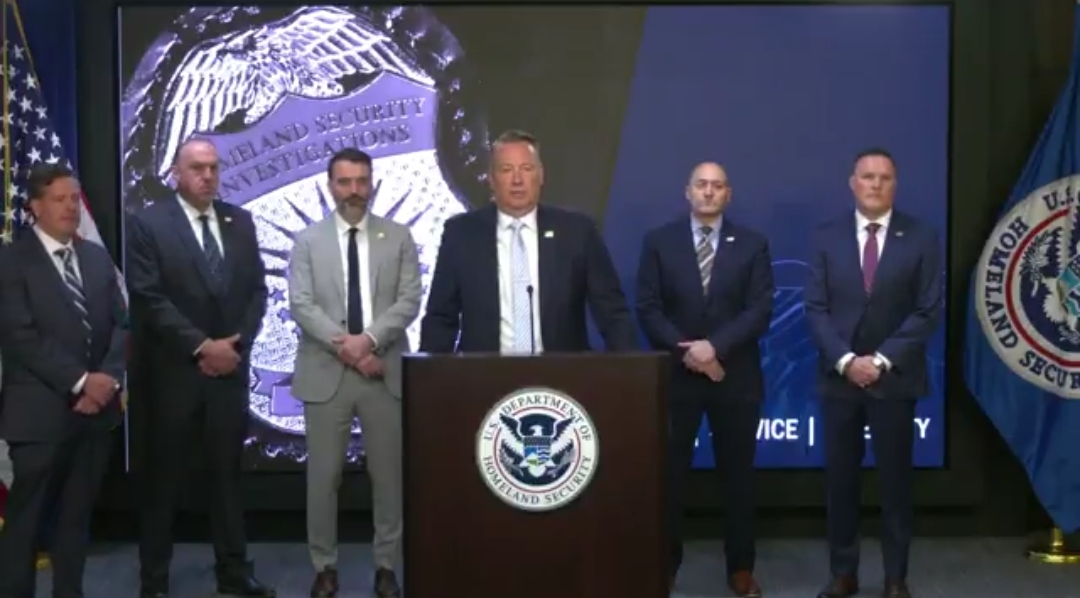
U.S. immigration enforcement agencies have revealed what officials describe as one of the most extensive fraud investigations ever connected to the Optional Practical Training (OPT) program, with thousands of foreign students allegedly linked to a nationwide network of fake employment operations. According to statements released by U.S. Immigration and Customs Enforcement, investigators uncovered evidence suggesting that more than 10,000 international students may have been tied to companies that existed largely on paper rather than as functioning workplaces.
The Optional Practical Training program allows international students studying in the United States to gain temporary work experience related to their academic fields after graduation. However, investigators from Homeland Security Investigations reported discovering empty office buildings, locked facilities, and multiple businesses listing hundreds of employees despite having no operational infrastructure. In several cases, hundreds of students reportedly claimed employment at identical addresses or at companies without leased office space, raising immediate concerns about systemic abuse.
Authorities say many suspected employers displayed major warning signs, including ongoing lawsuits, missing payroll documentation, offshore management structures, and international financial transfers inconsistent with legitimate employment activity. Some companies allegedly claimed to supervise thousands of students while maintaining minimal staff presence in the United States, with operational management reportedly handled overseas. Investigators also found examples where businesses officially listed only a handful of workers while federal databases showed hundreds of students claiming affiliation with the same organization.
Officials describe the scheme as coordinated rather than accidental, suggesting organized networks designed to exploit immigration pathways while moving funds internationally. Investigations spanning multiple states — including Virginia, Texas, New York, Florida, Illinois, and North Carolina — indicate a complex structure in which students were allegedly placed into unreported third-party roles, making oversight difficult and potentially raising national security concerns.
The case is likely to intensify debates around immigration oversight, student visa monitoring, and the balance between attracting international talent and preventing systemic exploitation. As federal authorities continue their investigation, the revelations may lead to tighter compliance measures and renewed scrutiny of employer verification processes within the OPT system.
