
Table of Contents
Supreme Court Verdict on April 30, 2026: A Turning Point for Nigeria’s Opposition Parties
Critical Judicial Rulings to Influence Nigeria’s Political Landscape
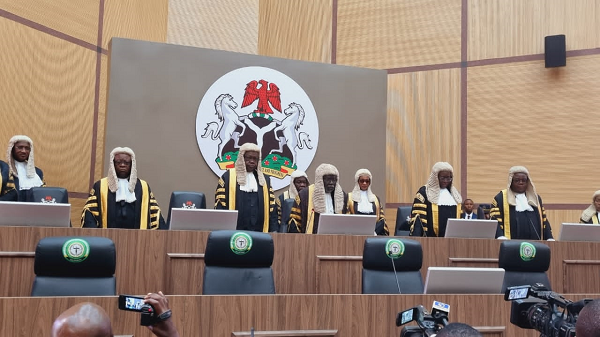
On April 30, 2026, Nigeria’s political arena will witness a pivotal moment as the Supreme Court prepares to issue rulings on the ongoing leadership disputes within two major opposition parties: the African Democratic Congress (ADC) and the Peoples Democratic Party (PDP). These judgments are anticipated to have far-reaching consequences, potentially redefining the organizational structures and strategic approaches of both parties ahead of the 2027 general elections.
Background of the Leadership Disputes
Both the ADC and PDP have been embroiled in internal conflicts over leadership legitimacy, which have caused significant disruptions in their political activities. The ADC’s factional disagreements have stalled decision-making processes, while the PDP’s leadership tussle has led to parallel claims of authority, undermining party cohesion. Such internal instability threatens to weaken their electoral competitiveness in a political environment where unity is crucial.
Implications for the 2027 General Elections
The Supreme Court’s verdict will likely determine the recognized leadership of these parties, thereby influencing candidate selection, campaign strategies, and alliance formations. Given that the 2027 elections are projected to be highly competitive-with recent polls indicating a surge in voter engagement and a growing youth electorate-the clarity in party leadership is essential for effective mobilization and voter confidence.
Comparative Insight: Lessons from Other Democracies
Similar leadership disputes have affected opposition parties in other democracies, such as the United Kingdom’s Labour Party in the early 2010s, where internal divisions delayed policy formulation and electoral readiness. Resolving such conflicts promptly is critical to maintaining party relevance and public trust, a lesson that Nigerian opposition parties can draw upon as they approach the upcoming elections.
Looking Ahead: The Road to Political Stability
As Nigeria approaches a crucial electoral cycle, the Supreme Court’s decisions will serve as a benchmark for judicial intervention in political party affairs. Ensuring transparent and fair resolutions to leadership conflicts not only strengthens democratic institutions but also enhances the prospects for a more stable and competitive political environment. Stakeholders and voters alike are closely monitoring these developments, recognizing their potential to shape Nigeria’s democratic trajectory.
