
Table of Contents
Tehran Calls for Demonstrations Amid Rising Tensions with US and Israel
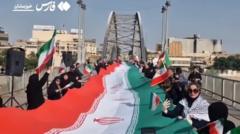
In response to former President Donald Trump’s warnings about striking civilian infrastructure, Iranian authorities have encouraged citizens to assemble near sites linked to the United States and Israel. This move reflects escalating hostilities and a strategic effort by Tehran to showcase public solidarity against perceived external threats.
Background: Heightened Hostilities and Strategic Messaging
Following Trump’s statements threatening military action targeting non-military facilities, Iran’s leadership swiftly mobilized its population to stage protests. This tactic serves a dual purpose: signaling defiance to Washington and Jerusalem, and rallying domestic support amid growing geopolitical tensions. Such calls for public gatherings are reminiscent of previous instances where Iran has leveraged mass demonstrations to project strength and unity.
Public Mobilization as a Political Tool
Historically, Tehran has utilized public demonstrations to communicate its stance both internally and internationally. For example, during the 2019 US-Iran tensions, widespread rallies were organized to condemn American policies and military presence in the region. These events often coincide with heightened diplomatic friction, serving as a barometer of national sentiment and a warning to adversaries.
Current Context and Regional Implications
As of mid-2024, the Middle East remains a hotspot for geopolitical rivalry, with Iran continuing to assert its influence across neighboring countries. The call for protests near US and Israeli installations underscores Tehran’s intent to maintain pressure on its rivals. Analysts note that such demonstrations can escalate into confrontations, increasing the risk of unintended military engagements.
International Reactions and Future Outlook
Global powers have expressed concern over the potential for these gatherings to spiral into violence. The United Nations and various diplomatic entities have urged restraint from all parties involved. Meanwhile, experts suggest that Iran’s strategy aims to strengthen its negotiating position amid ongoing nuclear talks and regional security discussions.
Conclusion: Navigating a Complex Geopolitical Landscape
The encouragement by Tehran for public demonstrations near US and Israeli targets highlights the fragile state of international relations in the Middle East. As tensions persist, the world watches closely, aware that such actions could either serve as a pressure valve or ignite further conflict. Understanding these dynamics is crucial for anticipating future developments in this volatile region.
