
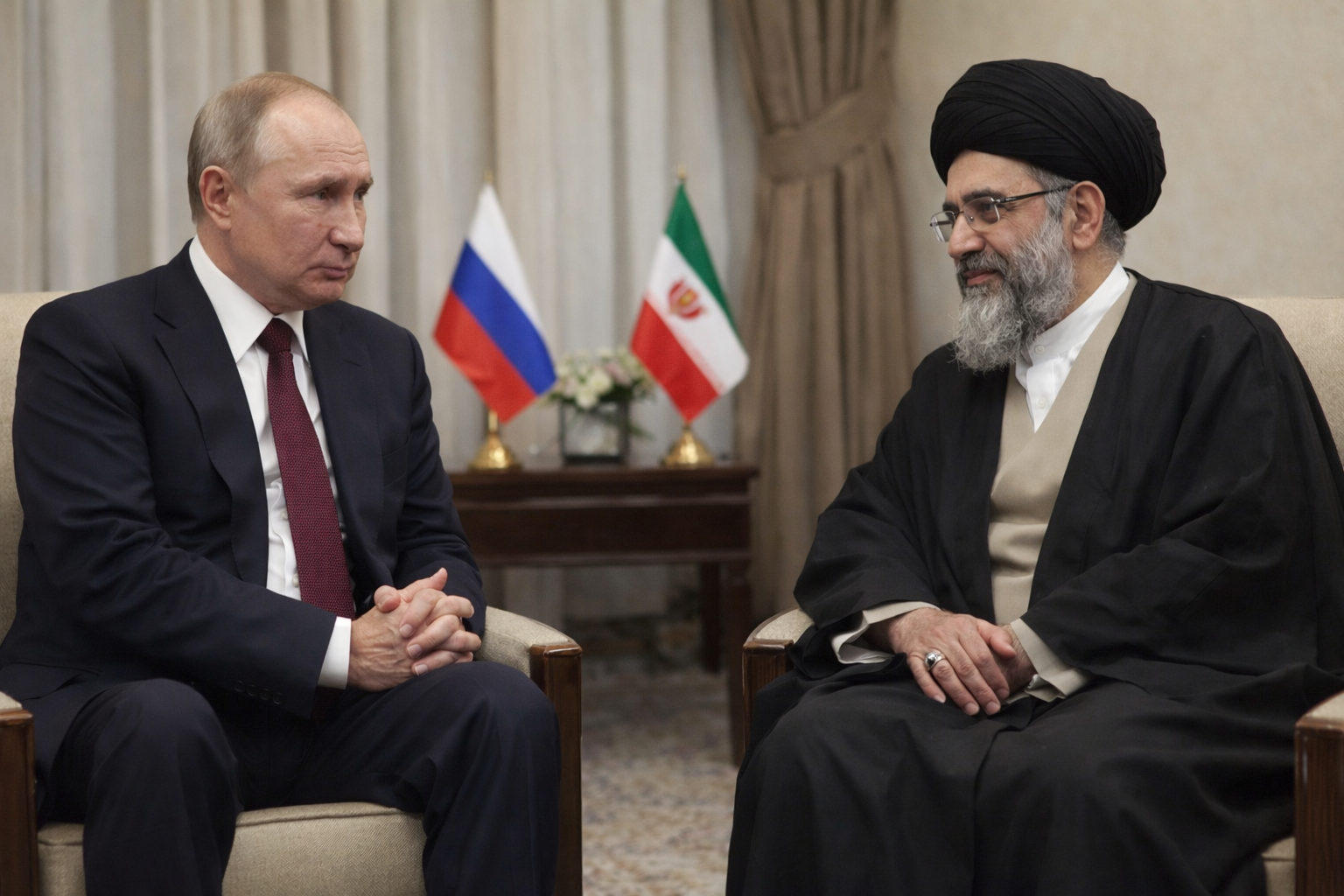
Russian President Vladimir Putin has reportedly offered “unwavering support” to Iran’s new Supreme Leader Mojtaba Khamenei, marking a potentially significant development in the evolving geopolitical crisis in the Middle East.
The message comes in the aftermath of the reported death of Iran’s longtime leader Ali Khamenei, who was said to have been killed during joint U.S.–Israeli strikes in late February.
Leadership Transition in Iran
Following the reported death of Ali Khamenei, attention quickly turned to his son, Mojtaba Khamenei, who has long been considered a powerful figure within Iran’s political and religious establishment.
His emergence as Iran’s new Supreme Leader marks a dramatic transition in the country’s leadership during one of the most volatile periods in recent Middle Eastern history.
Russia Signals Strategic Alignment
Putin’s statement of “unwavering support” suggests that Moscow may be positioning itself firmly alongside Tehran as tensions with the United States and Israel continue to escalate.
Russia and Iran have maintained increasingly close relations in recent years, cooperating in areas including military strategy, regional politics, and economic partnerships.
Analysts say this latest statement could signal deeper strategic alignment between the two countries during the ongoing conflict.
Global Implications
The development raises concerns among Western officials that the conflict could expand beyond regional actors and evolve into a broader geopolitical confrontation.
If Russia increases its involvement, politically, economically, or militarily, the situation could significantly reshape power dynamics across the Middle East.
For now, international observers are closely monitoring the situation as Iran’s new leadership consolidates power and global powers position themselves around the unfolding crisis.
