
European Union foreign ministers have failed to reach an agreement on imposing sanctions against Israeli National Security Minister Itamar Ben-Gvir, exposing divisions within the bloc over how to respond to the actions and rhetoric of some members of Israel’s far-right government.
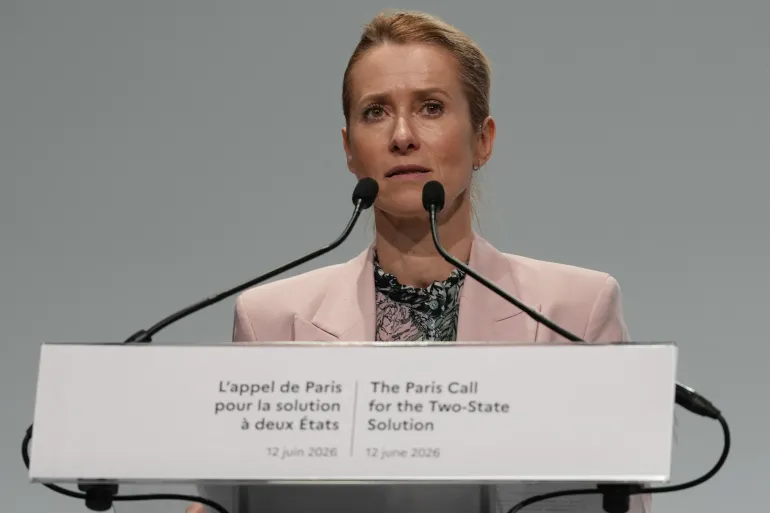
Speaking after a meeting of EU foreign ministers in Brussels on Monday, the European Union’s foreign policy chief, Kaja Kallas, said that although several member states supported the proposal, there was no unanimous backing required to move forward with sanctions.
The proposed measures reportedly included economic restrictions targeting Ben-Gvir, who has faced growing international criticism over comments and policies viewed by some governments as inflammatory towards Palestinians. However, opposition from several EU members prevented the bloc from adopting a common position.
The debate comes amid increasing pressure on European governments to reassess their relations with Israeli officials linked to controversial policies in the occupied Palestinian territories and Gaza. Some countries have advocated stronger action, arguing that sanctions could serve as a signal against incitement and human rights violations.
Despite the failure to secure EU-wide sanctions, individual European nations have taken their own steps against Ben-Gvir in recent months. The differing approaches have highlighted the challenge the 27-member bloc faces in forging a unified foreign policy stance on the Israeli-Palestinian conflict.
Analysts say the inability to reach consensus reflects broader political and diplomatic divisions within the EU, where member states maintain varying historical ties, security concerns and perspectives regarding Israel and the Middle East.
While the sanctions proposal has stalled for now, the issue is expected to remain on the agenda as the humanitarian and political situation in the region continues to draw international attention. Future developments could reignite discussions among EU leaders over whether additional measures against Israeli officials are warranted.
The Israeli government has consistently defended its policies, rejecting what it describes as unfair international criticism and maintaining that its actions are necessary for national security.
With no agreement reached, the European Union’s response remains fragmented, underscoring the complexities of achieving consensus on one of the world’s most contentious geopolitical issues.
EU foreign policy chief Kaja Kallas said that although “many” member states supported economic restrictions against Ben-Gvir, “no consensus on that was reached” during the meeting.
