Table of Contents
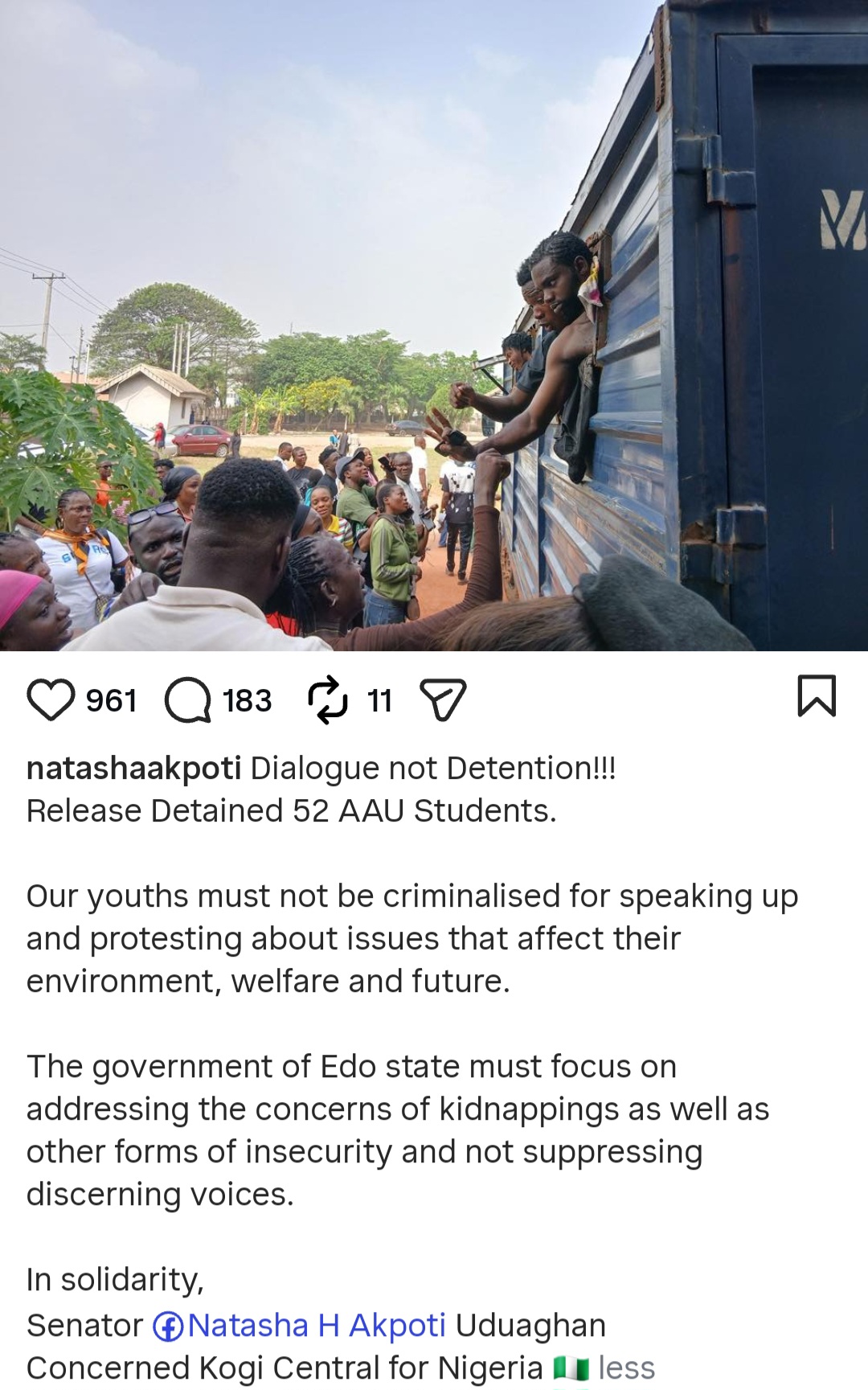
Senator Natasha Akpoti-Uduaghan Condemns Detention of 52 Ambrose Alli University Students
Senator Natasha Akpoti-Uduaghan has openly denounced the recent arrest of 52 students from Ambrose Alli University (AAU) in Ekpoma, Edo State. These students were taken into custody after peacefully protesting against the alarming rise in kidnappings and insecurity affecting their community.
Championing Youth Voices in Social Advocacy
In a resolute declaration, Senator Akpoti-Uduaghan stressed that young activists should not face punishment for advocating on pressing societal matters. She insisted, “Engagement, not incarceration!” urging authorities to promptly free the detained students. She highlighted the necessity for government focus on resolving the underlying causes of insecurity instead of suppressing those who raise awareness.
“It is unjust to criminalize our youth for voicing concerns about their environment, well-being, and future prospects,”
she stated, appealing to Edo State officials to respond constructively to the community’s grievances.
Details Surrounding the Demonstration and Subsequent Arrests
The demonstration in Ekpoma, situated in the Esan West Local Government Area, was a collective effort by students and residents demanding urgent government intervention to curb the surge in kidnappings and violent offenses. Reports indicate that many students were apprehended around 3 a.m. while resting in their dormitories and were later transported by police to court for formal charges.
Community Outcry and Wider Significance
The arrests have sparked significant backlash from human rights organizations, civil society, and the general public. This event highlights the escalating friction between government forces and citizens calling for transparency and enhanced security. According to the Nigeria Security Tracker, kidnappings in Edo State surged by more than 30% over the last year, fueling public concern and demands for decisive action.
Future Directions: Emphasizing Dialogue and Cooperation
Senator Akpoti-Uduaghan’s position mirrors a nationwide call for Nigerian authorities to embrace transparency and responsiveness in tackling security issues. Promoting open communication channels with youth advocates and local communities can build trust and yield more sustainable solutions. For instance, Lagos State’s recent community policing programs have demonstrated that partnerships between law enforcement and residents can effectively reduce crime and enhance safety.