
Table of Contents
Transforming Non-Communicable Disease Management in Uganda: The D-CARD Africa Program
A Patient-Centered Experience at Maziba Health Centre IV
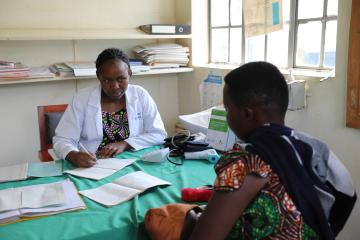
At Maziba Health Centre IV in Kabale district, clinical officer Jovita Atuheire carefully explains to Sarah, who presented with symptoms of persistent tiredness, that she has been diagnosed with hypertension. Thanks to integrated screening services embedded within routine care-supported by the World Health Organization (WHO) and the World Diabetes Foundation (WDF)-Sarah leaves with a comprehensive understanding of her blood pressure and glucose levels, alongside a personalized treatment plan designed to manage her condition effectively.
The D-CARD Africa Initiative: Integrating NCD Care into Existing Health Systems
Uganda and Ghana are pioneering the implementation of the four-year Diabetes and Cardiovascular Disease (D-CARD) Africa Project, launched in 2024. This innovative program incorporates screening for non-communicable diseases (NCDs) such as diabetes and hypertension into existing health services, including HIV, tuberculosis (TB), and malnutrition programs. This approach promotes a holistic and sustainable model of care. In Uganda, the initiative spans Kabale, Koboko, Lira, and Sembabule districts, reaching over 1.1 million residents through 10 primary healthcare facilities at Health Centre III and IV levels.
Enhancing Primary Healthcare for Timely NCD Detection and Treatment
Dr. Charles Oyoo, Commissioner for Non-Communicable Diseases at Uganda’s Ministry of Health, highlights that the project has markedly expanded access to NCD services at lower-level health facilities by prioritizing early diagnosis and management of diabetes and hypertension within primary healthcare settings.
In a significant development, WHO recently donated essential medical equipment to Uganda’s Ministry of Health as part of the D-CARD project. This included blood pressure monitors, glucometers, HbA1c analyzers, ECG machines, pulse oximeters, and other supplies, which were distributed to 40 primary health centers across the targeted districts to strengthen NCD management capabilities.
Capacity Building Through Comprehensive Training and Mentorship
More than 625 healthcare professionals in the focus districts have received extensive training-both in-person and through continuous medical education-centered on the prevention, early detection, and treatment of diabetes and hypertension. The mentorship program supports health facilities in implementing effective interventions, provides technical guidance on screening and clinical care, and encourages data-driven decision-making aligned with WHO standards.
“The training emphasized screening every patient, regardless of their presenting complaint. This approach has significantly enhanced our ability to detect hypertension and diabetes early, allowing for prompt intervention before complications arise,” shared Jovita Atuheire, a participant in the May 2025 training session.
Patient Empowerment Through Support Networks
Following healthcare provider training, patient-led support groups have been established at participating health centers, playing a vital role in improving medication adherence and treatment outcomes. For example, the Maziba Health Centre IV NCD Group, comprising over 100 members living with diabetes and hypertension, facilitates peer support through regular check-ins and appointment reminders.
Although medications are provided free of charge at public facilities, occasional stockouts present challenges. To mitigate this, the Maziba group has instituted a community fund where each member contributes UGX 2,000 (approximately USD 0.54) monthly. This pooled fund is used to purchase medicines from local pharmacies during shortages, ensuring continuous treatment.
Community Leadership and Engagement: Pillars of Sustainability
During a recent supervisory visit, Dr. Oyoo urged district officials to formalize patient support groups, emphasizing their potential to benefit from government programs such as Savings and Credit Cooperative Organizations (SACCOs) and the Parish Development Model (PDM). Active involvement of district leadership is crucial for sustaining NCD interventions and reinforcing community health systems.
“WHO commends the strong leadership at district and facility levels and recognizes patient support groups as essential platforms for community mobilization and early NCD detection,” stated Sanjana Marpadga, Technical Officer with the WHO Global Diabetes Compact.
The Critical Challenge of Diabetes and Hypertension in Uganda
Diabetes and hypertension remain significant public health challenges in Uganda, with many individuals unaware of their conditions, resulting in delayed treatment and heightened risk of severe complications. The 2023 Uganda STEPS Survey indicates that 26.4% of adults aged 18-69 have elevated blood pressure, yet only 10.4% are aware of their diagnosis, and just 3.5% have their condition under control. Additionally, 3.3% of adults live with diabetes, with over 59% of those aged 30 and above not receiving treatment. These diseases contribute substantially to complications such as vision impairment, kidney failure, heart attacks, strokes, and limb amputations.
Integrating Chronic Disease Services for Holistic Patient Care
The D-CARD project addresses critical service gaps by embedding diabetes and hypertension screening, diagnosis, and management into chronic care clinics. It also supports routine screening for HIV, TB, and malnutrition, fostering a more integrated and patient-focused healthcare delivery model.
Future Directions: WHO’s Vision for Expanding NCD Services in Uganda
WHO is committed to scaling up integrated NCD services across Uganda. Key priorities include formalizing patient support groups, expanding screening coverage, and ensuring a steady supply of essential medications. Continued healthcare worker training and improved data systems will support evidence-based decision-making, while multi-sector collaborations will mobilize resources to sustain these initiatives. Together, these efforts aim to accelerate early detection and comprehensive management of diabetes and hypertension, safeguarding millions and advancing Uganda’s goal of resilient primary healthcare.
