
Table of Contents
Accelerating Nigeria’s Drive to Eradicate Polio by 2030
Abuja, Nigeria-In partnership with the World Health Organization (WHO) and various stakeholders, Nigeria is intensifying its campaign to eliminate all poliovirus strains by 2030. This ambitious goal is being pursued through robust government leadership, active community participation, and focused immunization drives.
World Polio Day: Renewing Global Resolve
Each year on October 24, the international community unites to reaffirm its dedication to eradicating poliomyelitis-a debilitating disease that can cause permanent paralysis and even death. While Nigeria declared the eradication of wild poliovirus in 2020, the ongoing presence of circulating vaccine-derived poliovirus type 2 (cVDPV2) in some regions underscores the persistent challenge ahead.
Personal Stories Fueling the Fight
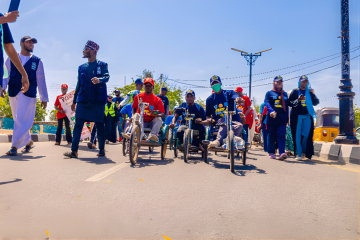
For polio survivors like Hassana Mohammed Bunur from Borno State and Bukar Modu, the battle against polio is more than a public health issue-it’s a personal mission. Hassana, who contracted polio as a young child and now relies on a wheelchair, actively advocates for vaccination within her community. Bukar, aged 45, reflects on his experience:
“If I had received the vaccine, my life would have been completely different. Now, I use my voice to protect others from the same fate.”
Their testimonies highlight the critical role of immunization and community advocacy in building a polio-free Nigeria.
Government’s Pivotal Role in Sustaining Momentum
The Nigerian government, led by the Federal Ministry of Health and Social Welfare (FMOH) alongside the National Primary Health Care Development Agency (NPHCDA), continues to spearhead efforts to maintain and expand polio eradication achievements. The country remains steadfast in its commitment to interrupt all poliovirus transmission by 2030 through enhanced surveillance, routine immunization, and supplementary immunization activities (SIAs).
Notably, the upcoming 2025 Measles-Rubella and Polio Vaccination Campaign aims to immunize over 106 million children, positioning it as one of the continent’s most extensive vaccination initiatives.
Addressing the Challenge of Vaccine-Derived Poliovirus
Despite Nigeria’s success in eliminating wild poliovirus, cases of cVDPV2 continue to emerge. National surveillance data reveals that as of October 20, 2024, 112 cVDPV2 cases were reported across 15 states. Encouragingly, by the same date in 2025, the number of cases dropped to 66 across 44 local government areas in 12 states-a 41% decline, signaling significant progress in curbing transmission.
Collaborative Efforts and Strategic Support
WHO, alongside national and international partners under the Global Polio Eradication Initiative (GPEI), provides critical support to Nigeria’s eradication campaign. This includes:
- Expert guidance in planning and implementing vaccination drives
- Logistical support to ensure vaccine delivery to remote and underserved communities
- Training and capacity-building for health workers in surveillance and outbreak management
- Data analysis and review to identify gaps, enabling targeted interventions such as redeploying vaccination teams, enhancing social mobilization, optimizing supply chains, and conducting focused mop-up campaigns
Additional partners like Rotary International, the Bill & Melinda Gates Foundation, Chigari Foundation, and UNICEF contribute through microplanning, community engagement, surveillance, and evidence-based decision-making.
Mobilizing Communities Across Nigeria
On World Polio Day, WHO state offices collaborated with government bodies, partners, and local communities to amplify advocacy for vaccination and strengthen surveillance systems. Highlights include:
- In Taraba State, Health Commissioner Dr. Buma Bordiya reaffirmed the state’s dedication to vaccinating every child, stating, “On World Polio Day 2025, we recommit to ensuring every child receives the vaccine, no matter where they live, until polio is eradicated.” Over 2.3 million children in Taraba received at least one polio vaccine dose during the April-June SIAs.
- Gombe State hosted a 3-kilometer awareness walk in partnership with the National Youth Service Corps (NYSC), Rotary, and other organizations to promote immunization.
- In Ebonyi State, the Health Commissioner expressed gratitude to the Nigerian government, WHO, and partners for their unwavering support in child vaccination efforts.
- Kano State’s commemorative event attracted over 500 participants, including health officials, traditional leaders, and polio survivors. The Polio Survivors Association Chairman called for sustained advocacy and the inclusion of survivors in outreach programs.
Similar events were held in Kwara, Kebbi, Kaduna, and Zamfara states, reinforcing the nationwide commitment to reach every child with the polio vaccine.
Envisioning a Polio-Free Tomorrow
For survivors like Hassana and Bukar, the eradication of polio is a deeply emotional and urgent cause. Bukar emphasizes, “Vaccines save lives. Though polio remains a threat, our collective action can ensure no child endures what I did.”
Dr. Kofi Boateng, WHO’s Polio Eradication Programme Cluster Lead, underscores the importance of vaccination:
“Poliovirus persists only because some children remain unvaccinated. The vaccine is both safe and effective, and it is imperative that every child is protected.”
Maintaining Momentum Through Unified Action
Nigeria’s unwavering government leadership, resilient communities, and strong partnerships are pivotal in steering the nation toward a polio-free status by 2030-ensuring every child, regardless of location, is safeguarded against this preventable disease.
Achieving this vision demands ongoing community involvement, timely immunization, and coordinated efforts from caregivers, health professionals, and partners alike. Together, they hold the key to ending polio once and for all.
