
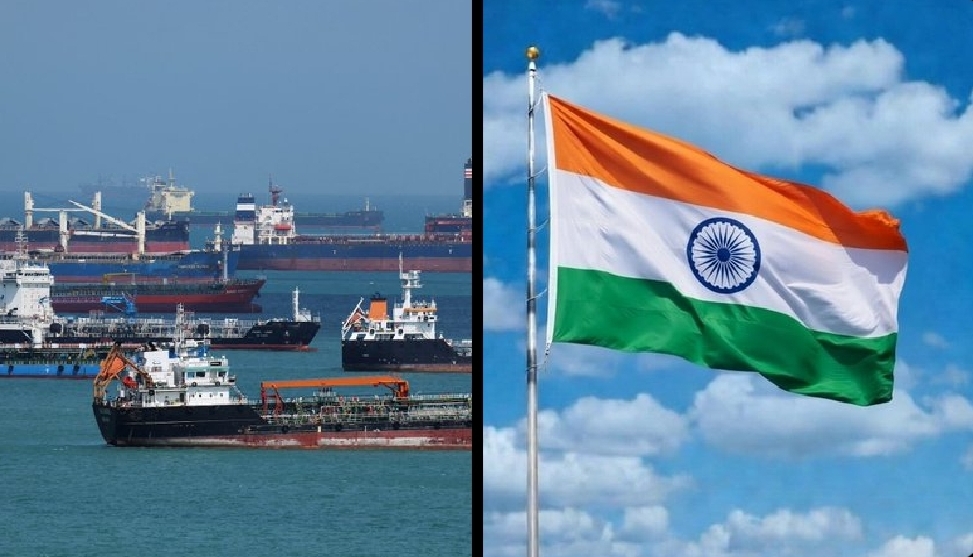
Energy security concerns are rapidly reshaping strategic planning in India as the government reportedly explores a plan to send national oil tankers into the Strait of Hormuz for loading operations amid rising instability linked to tensions involving Iran.
According to emerging reports, the initiative would involve the Shipping Corporation of India working alongside the Indian Navy to secure maritime operations in one of the world’s most strategically important waterways. The proposal still awaits final approval, but it reflects growing fears that disruptions around the Strait of Hormuz could threaten global oil flows and trigger sharp energy price increases.
Roughly one-fifth of the world’s oil supply passes through the narrow maritime corridor, making it a critical artery for international energy markets. For India — one of the world’s largest energy importers — any disruption in Gulf shipping routes poses immediate economic risks capable of affecting inflation, industrial output, and fuel availability.
Analysts say the discussions highlight how geopolitical instability in the Middle East increasingly influences Asian economic planning. By considering naval-backed tanker operations, India appears to be preparing for a scenario in which commercial shipping may require military coordination to ensure uninterrupted oil access.
The move also underscores how global powers are quietly adapting to the possibility that regional tensions around Iran could escalate into broader maritime security challenges with worldwide economic consequences.
