
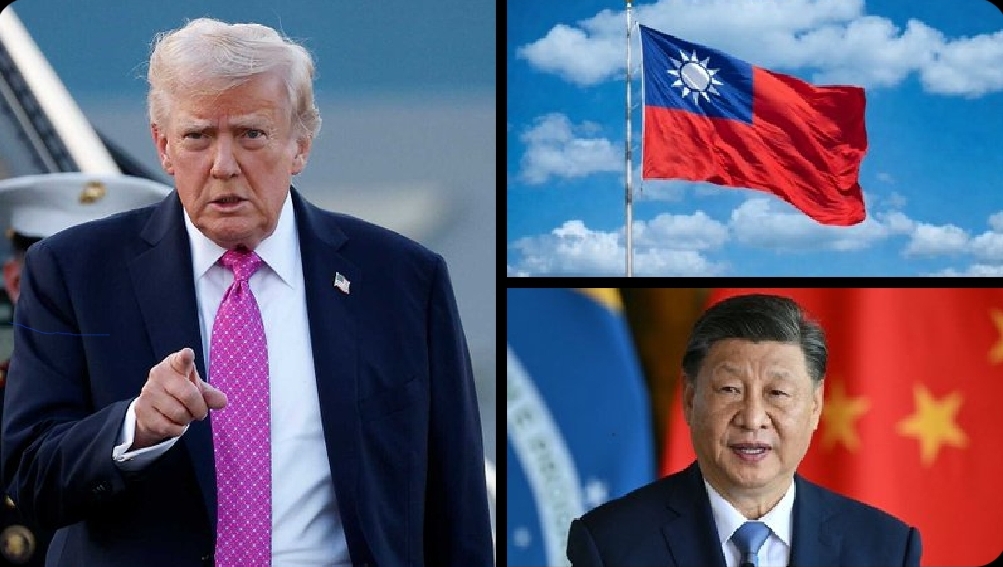
A new chapter in U.S.–China tensions may be unfolding after President Donald Trump revealed plans to directly discuss American weapons sales to Taiwan with Chinese leader Xi Jinping, a move that places one of the world’s most sensitive geopolitical flashpoints back at the center of global diplomacy.
Taiwan has long remained the most delicate issue in relations between Washington and Beijing. The United States maintains a policy of strategic ambiguity, officially recognizing China while simultaneously supporting Taiwan’s self-defense capabilities under longstanding security agreements. China, however, considers Taiwan a breakaway province and strongly opposes any foreign military assistance to the island.
Trump’s statement suggests an attempt to manage escalating tensions through direct leadership engagement rather than indirect diplomatic channels. U.S. weapons sales to Taiwan typically include missile defense systems, surveillance technology, and naval defense capabilities designed to deter potential military aggression. Beijing has repeatedly condemned such sales, viewing them as interference in China’s internal affairs.
The planned discussion comes at a time when military activity around the Taiwan Strait has intensified, with increased naval patrols and airspace incursions raising concerns among regional allies. Analysts believe the talks could either stabilize relations through negotiation or deepen strategic rivalry depending on how concessions and security guarantees are handled.
Financial markets and global security observers are closely watching developments, as stability in the Taiwan Strait is critical not only for regional peace but also for global semiconductor supply chains and international trade routes. The outcome of any Trump-Xi dialogue may therefore carry consequences far beyond diplomacy, influencing economic confidence and military positioning across the Indo-Pacific region.
